 My Roofing Tech
SPRI Rooftop Equipment Securement Standard: What Commercial Property Managers Need to Know
Quick Answers for Property & Facility Managers
What does the new SPRI rooftop equipment securement standard mean for commercial property managers?
The SPRI standard is intended to give owners, designers, contractors, manufacturers, and code officials consistent criteria for evaluating rooftop equipment securement systems. It addresses static and cyclic loading, environmental exposure, corrosion resistance, and water-tightness. For property managers, it creates a more structured basis for reviewing equipment supports, roof penetrations, wind-uplift risk, and long-term roof-system performance.
Will the SPRI standard replace building codes or manufacturer requirements?
No. The SPRI performance-evaluation standard is not a substitute for adopted building codes, structural engineering, project specifications, or roofing-system manufacturer requirements. Facility teams should continue to verify compliance with the applicable IBC provisions, local amendments, wind-design criteria, warranty conditions, and approved installation details. The standard can supplement those requirements by providing consistent performance criteria for securement systems.
Why is rooftop equipment securement a roofing issue?
Rooftop equipment loads are transferred through supports, attachments, curbs, or penetrations that interact with the roof assembly. Poorly designed or deteriorated securement can contribute to movement, membrane damage, flashing failure, leaks, and wind-uplift exposure. Evaluating both structural performance and water-tightness helps owners protect HVAC, solar, communications, and other equipment without compromising TPO, PVC, EPDM, modified bitumen, BUR, metal, or coated roof systems.
SPRI’s Rooftop Equipment Securement Standard Targets a Commercial Roofing Risk
SPRI, an association representing sheet membrane and component suppliers to the commercial roofing industry, announced that it is establishing a performance-evaluation standard for rooftop equipment securement systems installed on low-slope roof assemblies. The announcement addresses a gap in the construction industry: the lack of a consensus American National Standard specifically focused on evaluating these systems.
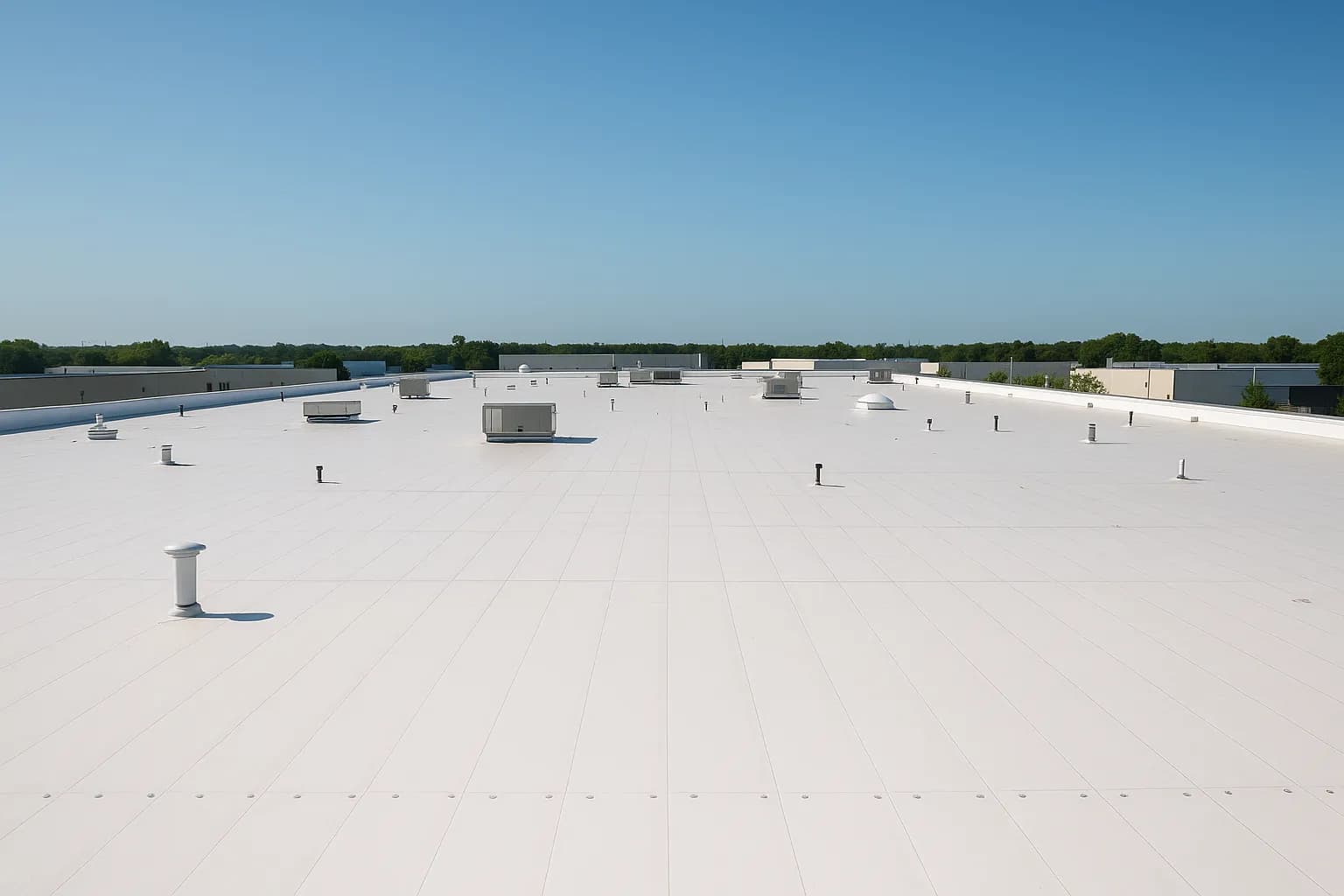
For facility managers, property managers, and commercial real estate professionals, the development matters because rooftop equipment securement sits at the intersection of structural performance, roofing durability, building operations, and insurance risk. HVAC units, exhaust fans, condensers, photovoltaic components, communications equipment, screens, and service platforms may impose concentrated loads or require roof penetrations. Their supports must remain secure while preserving the roof’s weather barrier.
Roofing Contractor reported that the proposed requirements address static and cyclic loading, environmental exposure, corrosion resistance, water-tightness, and related performance characteristics. SPRI says the standard is intended to provide consistent criteria for specification, testing, and acceptance.
What the Standard Could Mean for Wind-Uplift and Roof Penetration Decisions
Wind performance is a central concern on commercial low-slope roofs. Equipment and its supports can experience repeated movement and fluctuating forces during severe weather. Securement that appears stable during a routine inspection may still require engineering review when equipment is replaced, relocated, elevated, or exposed to different wind conditions.
Property teams should treat rooftop equipment securement as part of the building’s overall wind-resilience strategy rather than as an isolated mechanical installation. The applicable International Building Code provisions, local amendments, project-specific wind criteria, structural design, and manufacturer data remain controlling requirements. A qualified design professional should determine the required loads and attachment approach for the building and location.
The standard’s focus on cyclic loading is especially relevant to long-term asset management. Repeated movement can stress fasteners, frames, curbs, welds, membranes, and flashing details. A securement evaluation that considers only initial static capacity may not fully represent service conditions over the life of a commercial roof.
Water-Tightness Is as Important as Structural Capacity
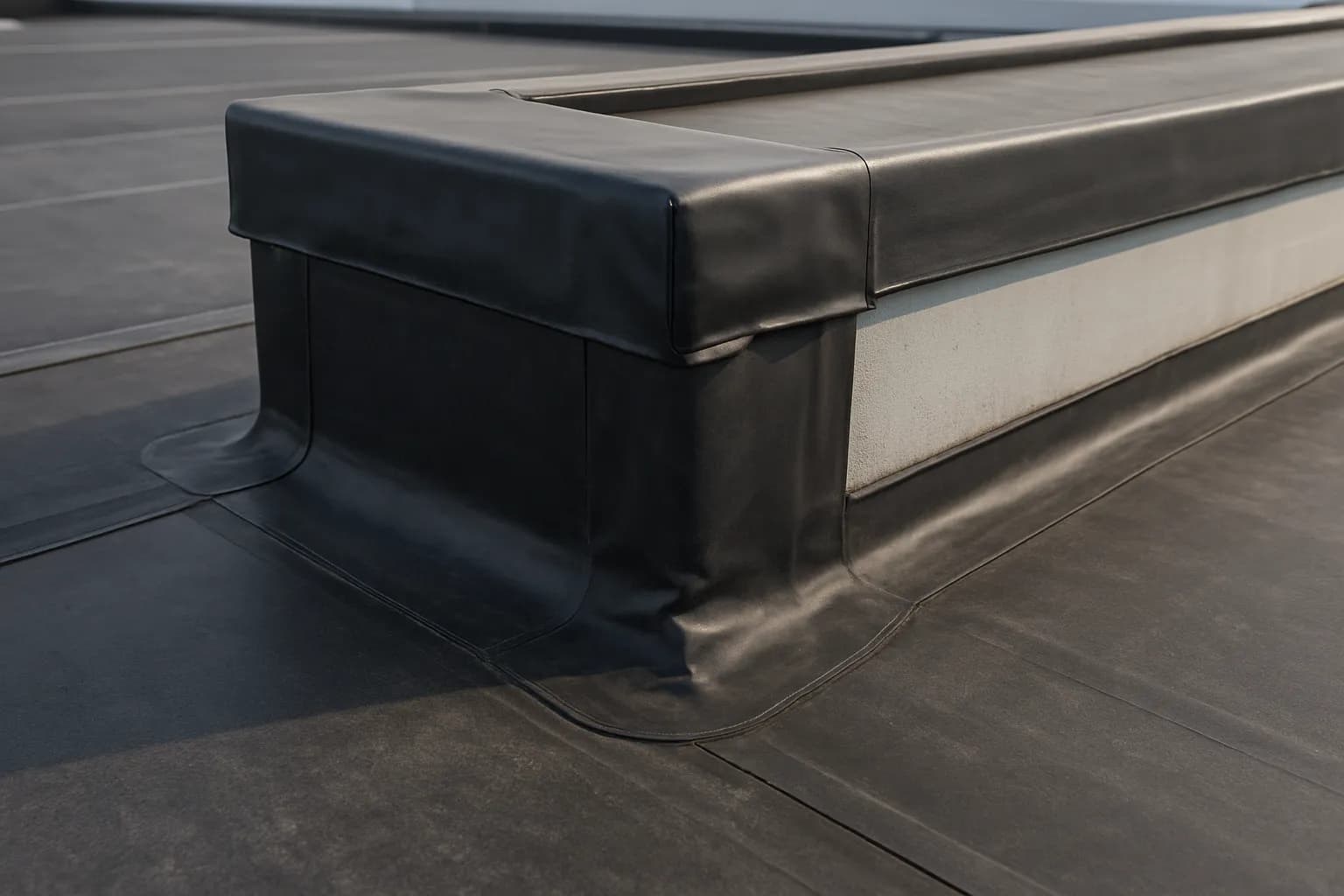
A rooftop support can have adequate structural capacity and still create a roofing problem if its attachment or flashing detail allows water into the assembly. Penetrations through TPO, PVC, EPDM, modified bitumen, BUR, metal roofing, or roof coatings must be designed and installed in accordance with the applicable roof-system requirements.
SPRI’s stated focus on water-tightness reinforces a practical priority for owners: securement systems should be evaluated for their effect on the complete roof assembly, not just the hardware. Review should include curbs, pitch pans where applicable, compression seals, membrane flashings, counterflashings, termination points, fasteners, and transitions between dissimilar materials.
Facility managers should also consider drainage. Equipment supports, housekeeping pads, curbs, and reinforcement can obstruct drainage paths or create localized areas where water remains after rainfall. Ponding water can increase exposure to membrane aging, flashing stress, biological growth, and leak-related service calls. A securement design that preserves positive drainage is preferable to one that solves an equipment problem while creating a maintenance problem.
Corrosion and Environmental Exposure Affect Lifecycle Performance
Rooftop equipment securement systems operate in demanding conditions. Ultraviolet exposure, temperature changes, moisture, wind, pollutants, freeze-thaw cycles, and chemical exposure can affect metals, coatings, sealants, membranes, and fasteners. Coastal, industrial, healthcare, and manufacturing properties may have particularly important compatibility and corrosion considerations.
Corrosion resistance should be reviewed for the full assembly, including fasteners, brackets, welds, plates, supports, dissimilar-metal interfaces, and protective finishes. A component may be durable by itself but vulnerable when paired with a different metal or exposed to chemicals from a mechanical process. The proposed SPRI framework’s environmental and corrosion criteria could help project teams compare securement solutions using more consistent performance information.
For existing buildings, inspection should look for rust, coating loss, loose fasteners, distorted supports, damaged sealants, membrane abrasion, cracked flashing, and evidence of movement. Conditions near cooling towers, exhaust discharge points, chemical storage areas, or coastal air may justify more frequent review and documentation.
How the Standard Relates to NRCA, FM Global, ASTM, and Warranties
The SPRI standard should be used alongside—not instead of—recognized roofing guidance and project requirements. NRCA recommendations can inform roof-system design, detailing, inspection, and maintenance. ASTM roofing standards may apply to membrane materials, coatings, test methods, fasteners, and related components. FM Global property-loss-prevention guidance may influence wind-uplift, securement, roof assembly, and equipment-installation decisions where FM requirements apply.
Building owners should also review the roof-system manufacturer’s warranty before approving new equipment or modifications. Manufacturers commonly require approved details, compatible materials, authorized contractors, documented repairs, and specific procedures for penetrations or alterations. Unauthorized attachments can create warranty disputes even when the equipment itself operates correctly.
Cool-roof and energy-code requirements, including applicable California Title 24 provisions, may affect membrane color, insulation, reflectance, roof replacement, and equipment-support design. These requirements do not eliminate the need to address securement, flashing, drainage, and wind uplift. Instead, they should be coordinated during design so that energy, structural, roofing, and operational objectives are addressed together.
Practical Actions for Commercial Facility and Property Managers
The standard is being established for evaluation and performance criteria, so owners should not assume that every existing rooftop installation is automatically compliant. The most useful immediate step is to improve documentation and review practices for current and planned equipment.
- Inventory rooftop equipment, supports, curbs, penetrations, screens, walk pads, and access routes across each property.
- Record roof system type, installation date, warranty status, manufacturer, and known repair history.
- Request engineering documentation for new or replacement equipment, including design loads, attachment details, and applicable wind criteria.
- Require roofing review whenever equipment work affects a membrane, flashing, curb, coating, metal panel, or roof drain pathway.
- Confirm that proposed materials and details are compatible with the existing roof assembly and manufacturer warranty.
- Inspect for corrosion, loose or displaced components, membrane damage, failed sealants, and blocked drainage after severe weather and during scheduled roof inspections.
- Use qualified commercial roofing and structural professionals for complex penetrations, high-wind sites, aging roofs, and occupied critical facilities.
These steps apply across office buildings, retail centers, warehouses, industrial facilities, healthcare properties, multifamily buildings, schools, and institutional campuses. The project scale may range from a single rooftop unit replacement to a portfolio-wide mechanical upgrade, but the same coordination principle applies: equipment securement must protect both the asset and the roof.
Planning Capital Projects Around Securement and Roof Service Life
Rooftop equipment work often exposes a mismatch between mechanical planning and roofing life-cycle planning. Replacing a unit on a roof near the end of its service life may require temporary repairs, new flashing, or a broader roof replacement strategy. Conversely, installing equipment on a recently warranted roof requires careful coordination to avoid damaging a high-value asset or compromising warranty coverage.
During capital planning, owners should evaluate equipment securement, roof condition, drainage, insulation, energy-code requirements, access, and future replacement sequencing together. The cost of a compliant attachment detail is only one part of the decision. Potential costs also include leak investigation, interior damage, emergency response, business interruption, warranty disputes, corrosion remediation, and premature roof replacement.
SPRI’s announced standard may provide a stronger common reference for future specifications and acceptance procedures. Until project requirements identify the applicable edition and adoption status, managers should continue relying on the adopted code, the design professional’s calculations, roofing-system manufacturer instructions, NRCA guidance, applicable FM Global requirements, and relevant ASTM standards.
For commercial property stakeholders, the key takeaway is straightforward: rooftop equipment securement should be managed as a building-envelope and risk-management issue. A secure system must resist expected loads, withstand environmental exposure, limit corrosion, preserve water-tightness, and remain compatible with the roof assembly throughout the property’s operating life.
Frequently Asked Questions
Does the SPRI rooftop equipment securement standard apply to existing commercial roofs?
The announced standard is intended to establish evaluation methods and performance criteria for rooftop equipment securement systems on low-slope roof assemblies. Whether it applies contractually or is required by a specific project depends on adoption, specifications, jurisdiction, and owner requirements. For existing roofs, property managers can still use its subject areas—loading, cyclic movement, corrosion, environmental exposure, and water-tightness—as a framework for condition assessments and capital-project reviews.
What rooftop equipment should commercial property managers review first?
Begin with equipment that has significant wind exposure, visible corrosion, concentrated support loads, recent modifications, or penetrations through the roof membrane. Prioritize HVAC units, exhaust equipment, screens, solar-related supports, communications equipment, and installations on aging or leak-prone roofs. Critical facilities, coastal properties, high-rise buildings, and buildings with complex roof geometry should receive early engineering and roofing review.
How can rooftop equipment securement affect a commercial roof warranty?
Equipment installations can affect warranty coverage when they alter the membrane, flashing, insulation, fasteners, curbs, or drainage system without following the manufacturer’s approved details. Before work begins, owners should confirm warranty requirements, identify authorized roofing contractors where required, document compatible materials, and obtain written approvals when appropriate. Warranty review should be part of procurement, not an after-the-fact repair step.
What should be included in a rooftop equipment securement specification?
A commercial specification should identify the equipment and support system, design loads, applicable wind criteria, structural attachment requirements, roof-system compatibility, flashing and water-tightness details, corrosion protection, access requirements, inspection procedures, testing or acceptance documentation, and warranty obligations. It should also coordinate the requirements of the structural engineer, mechanical engineer, roofing manufacturer, roofing contractor, building code, and owner’s facility standards.
Can securement improvements reduce commercial roofing risk and operating costs?
Properly coordinated securement can reduce avoidable exposure to equipment movement, membrane damage, flashing failure, corrosion, and water intrusion. The return is not limited to the attachment hardware: preventing a leak or premature roof repair may protect interiors, inventory, tenants, operations, and warranty rights. Owners should evaluate improvements using lifecycle cost, roof condition, equipment replacement timing, occupancy risk, and insurance requirements.
Related Reading on My Roofing Tech
- Roof Coating Services: A Commercial Building Owner’s Guide to Repair, Maintenance, and ROI
- Commercial Roofing Fall Safety Fines: What Facility Managers Need to Know
Find a Qualified Commercial Roofing Contractor
Need help acting on this? Browse roofing contractors in your area, or explore commercial roofing services like preventative maintenance, inspections, and emergency response. Are you a contractor? List your business on My Roofing Tech to reach property and facility managers actively searching for help.
Sources
Originally sourced from Roofing Contractor