 My Roofing Tech
ABC Supply CEO Transition: What It Means for Commercial Roofing Buyers
Quick Answers for Property & Facility Managers
How will ABC Supply’s CEO transition to Mike Jost impact commercial roofing projects and capital plans?
For most facility and property managers, ABC Supply’s CEO transition should be operationally seamless in the near term. The company’s scale and existing contracts mean TPO, PVC, EPDM, metal, and coating supply should remain stable, but it is smart to review multi‑year budgets and confirm pricing, service, and warranty support commitments with your distributor.
Should facility managers change their roofing procurement strategy because ABC Supply is naming a new CEO?
You generally do not need to change your procurement strategy solely due to ABC Supply’s CEO change. Instead, use this transition to audit your portfolio’s roofing spend, confirm contract terms on key systems like TPO and EPDM, and ensure your distributor alignment supports code compliance, warranty requirements, and long‑range capital planning.
What questions should property managers ask ABC Supply in light of the leadership change?
Property managers should ask how ABC Supply plans to support commercial roofing service levels, pricing transparency, and long‑term warranty and technical support under the new CEO. Clarify expectations around lead times, code‑compliant assemblies, manufacturer relationships, and portfolio‑wide programs for preventative maintenance and leak response.
ABC Supply’s CEO Transition: Why It Matters to Commercial Roofing Decision-Makers
ABC Supply has announced that Keith Rozolis will retire as CEO at the end of 2026 and that Mike Jost will become the company’s next chief executive. As one of the largest distributors serving the commercial roofing market, ABC Supply’s leadership changes matter for facility managers, property managers, and commercial real estate professionals who rely on steady access to TPO, PVC, EPDM, modified bitumen, BUR, metal, and roof coatings for low-slope portfolios.
While field crews feel the day-to-day logistics, the strategic impact is on owners’ ability to plan multi-year roof spend, maintain compliance with national standards, and protect manufacturer warranties. This article focuses on what this CEO transition means for your capital plans, procurement strategy, and risk management across office, industrial, retail, healthcare, multifamily, and institutional properties.
ABC Supply’s Role in the Commercial Roofing Supply Chain
ABC Supply is a national distributor that supplies a significant share of materials used on commercial flat and low-slope roofs. For most property portfolios, the company is either a primary or secondary source for membrane systems like TPO, PVC, EPDM and bituminous assemblies, as well as accessories such as insulation, cover boards, metal edge, fasteners, coatings, and roof drain components.
As a large distributor, ABC Supply sits between manufacturers and roofing contractors. It aggregates products that are tested and listed under bodies such as FM Global (for wind-uplift and system approvals), and it supports assemblies designed to comply with the International Building Code (IBC) roofing provisions and energy codes such as ASHRAE 90.1 and state requirements like California Title 24 for cool roofs.
For owners and managers, this role affects:
- Material availability for time-sensitive leak repairs, storm response, and capital replacement on TPO, PVC, EPDM, and BUR roofs.
- System consistency across portfolios, ensuring that a 60-mil TPO or ballasted EPDM system installed in different cities follows similar manufacturer and code requirements.
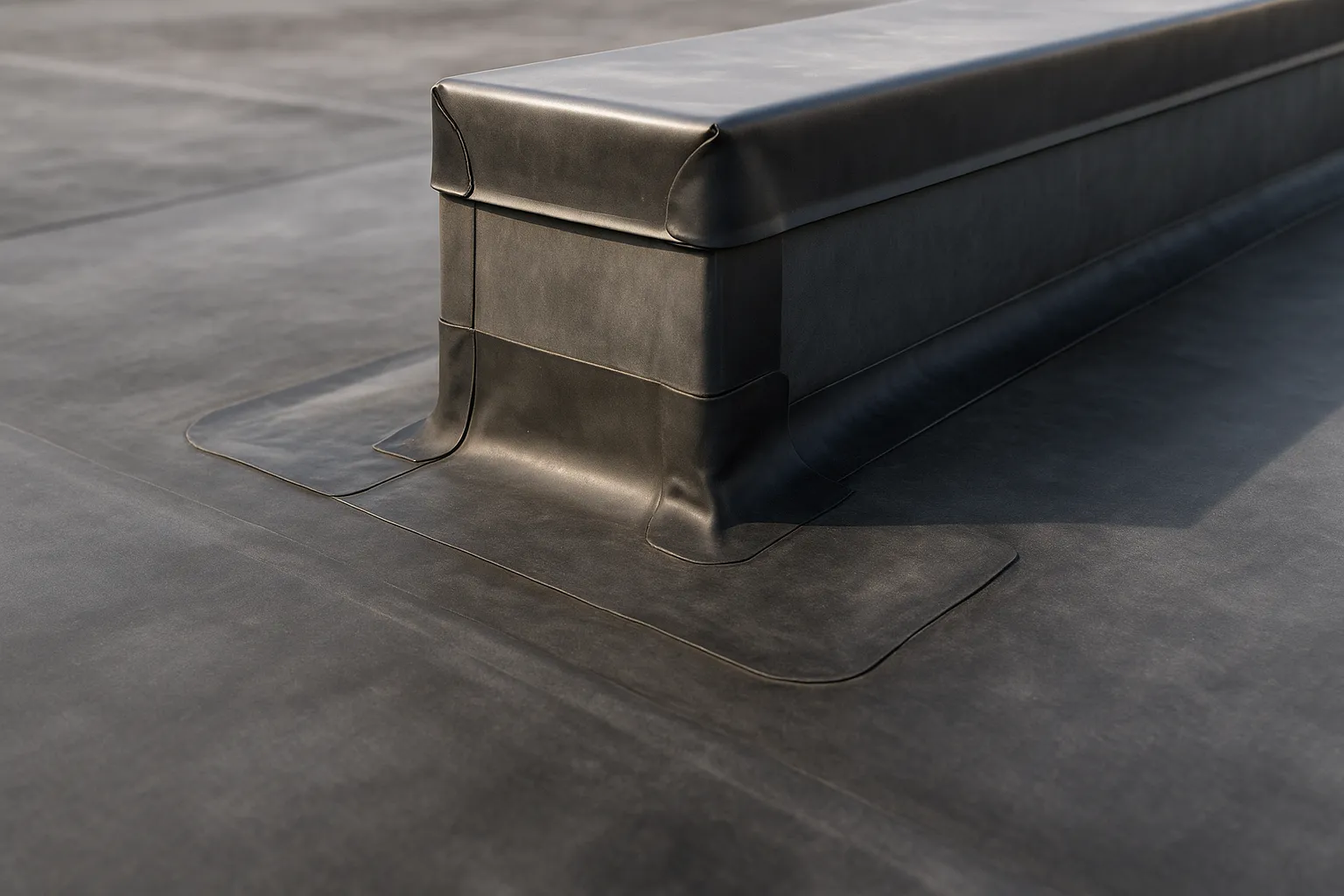
- Technical support around detail choices—such as perimeter metal, penetrations, and flashing assemblies—that impact wind-uplift performance, ponding water resistance, and warranty compliance.
Because ABC Supply is a central hub, any strategic shift under a new CEO can influence how quickly you can execute capital plans and how predictably you can forecast roofing costs.

Leadership Stability and What It Means for Commercial Roof Planning
Leadership transitions at major distributors do not typically disrupt day-to-day material flow overnight. However, they often coincide with longer-term changes in product mix, service focus, technology investment, and pricing strategies. For facility and property managers, the practical consideration is: how might those changes ripple through your roofing budgets and project timelines over the next 3–7 years?
Key factors to watch include:
- Service model emphasis: A new CEO may prioritize enhanced logistics, digital ordering, and portfolio-level support programs that make it easier to track roofs, schedule preventative maintenance, and align projects with manufacturer warranties.
- Product strategy: There may be shifts in emphasis among TPO, PVC, EPDM, modified bitumen, coatings, and metal offerings, including increased focus on high-reflectance cool-roof membranes to help portfolios meet energy codes like Title 24 and local performance standards.
- Supplier relationships: ABC Supply’s partnerships with major membrane and insulation manufacturers affect which FM Global-approved and ASTM-tested assemblies are most readily available for your contractors to install.
From a risk management standpoint, commercial real estate teams should view the CEO transition as a signal to confirm that long-range roof strategies—whether focused on TPO recover projects, EPDM replacements, or coating-based life extensions—are properly aligned with the distributor’s capabilities and road map.
Implications for TPO, PVC, EPDM, and Other Low-Slope Roof Systems
Your capital planning models often assume consistent access to core low-slope systems for offices, warehouses, logistics facilities, and healthcare buildings. ABC Supply’s scale means it is a key source for these systems, and a leadership change invites a review of how you specify and procure them.
TPO and PVC membranes are commonly selected for their reflectivity, weldable seams, and compatibility with cool-roof and energy code requirements. Availability of specific thicknesses, colors, and attachment methods (mechanically fastened, adhered, or ballasted) can influence bid pricing and schedule. Under new leadership, there may be further emphasis on energy-efficient assemblies and insulation packages that support higher R-values.
EPDM systems remain prevalent on older industrial and institutional facilities, especially where black membranes and ballast were historically preferred. For portfolios planning phased replacement, consistency of EPDM sheet sizes, seam technologies, and accessory offerings from ABC Supply simplifies project management and warranty documentation.
Modified bitumen and BUR are still common on some hospitals, schools, and older office buildings, especially where multi-ply redundancy is part of the risk strategy. Continued support for compatible primers, adhesives, and surfacings is essential when owners choose partial tear-offs, overlay strategies, or coatings to extend life while meeting NRCA best-practice guidelines.
Metal and coatings also depend on distributor stability. Metal edge, wall panels, and retrofit metal roof systems must align with wind-uplift design, often referencing FM Global data and IBC requirements. Coatings used for maintenance—such as elastomeric, silicone, or acrylic products—must be properly paired with the existing membrane and installed in line with manufacturer instructions to avoid voiding warranties.
Code Compliance, Risk Management, and Warranty Alignment
Leadership at a major distributor can influence how aggressively the organization supports code compliance and risk reduction initiatives across its contractor and owner customer base. For facility and property managers, this is particularly important around:
- Wind-uplift requirements: FM Global and IBC call for assemblies designed and installed to resist site-specific wind pressures, especially at perimeters and corners. Ensuring ABC Supply’s stocking strategies and technical guidance emphasize properly tested systems helps reduce roof blow-offs and related business interruption risk.
- Energy and cool-roof codes: Compliance with ASHRAE 90.1, IECC, and state-specific codes such as Title 24 drives choices on membrane reflectivity, insulation thickness, and roof color. Distributor leadership can influence which compliant products are promoted and kept readily available.
- ASTM roofing standards: Many membranes and components are manufactured in accordance with ASTM standards that define physical properties like tensile strength, elongation, and thickness. Access to products meeting these standards supports long-term performance on TPO, PVC, EPDM, and bituminous roofs.
- Manufacturer warranties: Distributors play a key role in helping contractors assemble complete, warrantable systems from a single manufacturer. ABC Supply’s approach under its new CEO will matter for portfolio strategies that rely on 20–30 year warranties and require careful control of system components.
For real estate owners with FM Global-insured assets or critical operations—data centers, cold storage, medical facilities—aligning distributor practices with insurer and code expectations is central to risk management. Monitoring how ABC Supply frames its support for these standards under new leadership can help you fine-tune specifications and vendor selection.
Action Steps for Facility and Property Managers During the Transition
Most portfolios do not need to make immediate changes because of this CEO announcement. Instead, use the transition period through 2026 as an opportunity to strengthen your roofing program and confirm that ABC Supply and other distributors are positioned to support your long-term goals.
Practical steps include:
- Review multi-year capital plans for roofs across offices, industrial facilities, and retail centers. Confirm that planned TPO, PVC, EPDM, or coating projects align with current material pricing and lead times from ABC Supply or alternative distributors.
- Engage your roofing contractors and ask how they expect ABC Supply’s leadership change to affect product availability, logistics, or technical support, especially for complex assemblies such as FM Global-approved systems or high R-value roofs.
- Audit warranty strategies on critical buildings. Verify that your contractors and distributors are aligned on manufacturer requirements for membrane type, insulation, fastening density, perimeter edge design, and flashing details.
- Strengthen preventative maintenance programs. Use distributor resources to standardize inspection checklists across membranes, focusing on flashings, roof edges, drains, and areas of ponding water to reduce emergency leak calls.
- Clarify expectations around service levels. As leadership evolves, confirm that ordering platforms, delivery commitments, and portfolio reporting tools meet your internal standards for transparency and predictability.
By approaching this CEO transition as a structured review point instead of a disruption, facility and property managers can improve the resilience and cost-effectiveness of their commercial roofing programs while maintaining access to critical materials.

Positioning Your Portfolio for Future Changes in the Commercial Roofing Market
The commercial roofing market continues to evolve, driven by labor constraints, material innovations, stricter building and energy codes, and growing emphasis on resilience and sustainability. Leadership changes at major distributors like ABC Supply are part of that broader shift. For owners and managers, the priority is building a roofing strategy that can adapt while preserving compliance, warranties, and lifecycle ROI.
Consider positioning your portfolio with:
- Standardized assemblies for common building types—such as a TPO system standard for single-story retail, PVC or TPO for healthcare and food processing (where chemical resistance and hygiene matter), and EPDM or modified bitumen for legacy industrial roofs.
- Clear purchasing criteria that emphasize system approvals, code compliance, and manufacturer backing over short-term price alone. This will remain important regardless of who leads your primary distributor.
- Vendor diversification where appropriate, balancing ABC Supply’s strengths with regional distributors to mitigate local disruptions while keeping specification consistency.
- Data-driven preventative maintenance so that roofs are inspected and serviced regularly, reducing unplanned leak repairs that depend on rapid material availability.
ABC Supply’s announcement that Keith Rozolis will retire at the end of 2026 and that Mike Jost will become the next CEO signals continuity at a key player in the roofing distribution space. For facility managers, property managers, and commercial real estate professionals, the most effective response is to use this moment to validate your assumptions about supply reliability, code compliance, and warranty support—and ensure your roofing program is aligned with the evolving commercial market.
Frequently Asked Questions
Will ABC Supply’s CEO transition increase commercial roofing material costs for my portfolio?
Leadership changes can coincide with pricing strategy reviews, but material costs are primarily driven by manufacturer pricing, raw material markets, and demand. Rather than assume increases, facility managers should lock in multi‑year budgets, review current contracts, and confirm how pricing, freight, and surcharges will be handled through and after the transition.
How should risk managers at FM Global-insured properties respond to ABC Supply’s leadership change?
Risk managers should verify that planned roof assemblies remain aligned with FM Global and IBC requirements for wind‑uplift, fire, and drainage performance. Use the transition as a checkpoint to confirm your contractors are sourcing FM‑approved materials and that distributor relationships support documentation, inspections, and long‑term warranty obligations on critical facilities.
Does the CEO change affect manufacturer warranties on TPO, PVC, or EPDM roofs purchased through ABC Supply?
Manufacturer warranties are issued and controlled by the membrane producer, not the distributor, so existing warranties should remain intact. However, distributors influence how complete and consistent system components are. During the transition, confirm that specified assemblies still meet manufacturer requirements and that documentation and submittals remain well coordinated.
Should commercial real estate owners diversify distributors because ABC Supply is naming a new CEO?
Diversification can be useful for risk management, but it should be based on objective criteria such as service quality, material availability, and portfolio coverage, not solely on a leadership change. Evaluate ABC Supply’s performance against alternatives, focusing on critical materials, delivery reliability, technical support, and the ability to support standardized, code‑compliant roof assemblies.
How does a major distributor’s leadership strategy influence ROI on commercial roof replacements?
Distributor strategy affects ROI indirectly through material availability, logistics efficiency, and support for code‑compliant, warrantable systems. Reliable supply of high‑performing TPO, PVC, EPDM, and insulation enables better bid competition, fewer delays, and lower lifecycle risk. Proactive communication during leadership changes helps owners keep projects on schedule and avoid costly disruptions.
What should facility managers prioritize when discussing the CEO transition with their roofing contractors?
Facility managers should focus on practical outcomes: continuity of supply for priority systems, clarity on lead times, support for FM Global and IBC‑compliant assemblies, and reliable warranty support. Ask contractors how they see ABC Supply’s transition affecting their operations and agree on contingency plans for key projects and emergency leak response across the portfolio.
Related Reading on My Roofing Tech
- ABC Supply CEO Change: What It Means for Commercial Roofing Buyers
- Commercial Metal Roofing: Practical Guide for Facility and Property Managers
Find a Qualified Commercial Roofing Contractor
Need help acting on this? Browse roofing contractors in your area, or explore commercial roofing services like preventative maintenance, inspections, and emergency response. Are you a contractor? List your business on My Roofing Tech to reach property and facility managers actively searching for help.
Originally sourced from My Roofing Tech