 My Roofing Tech
Flat Roof Materials: A Commercial Property Manager’s Guide
Quick Answers for Property & Facility Managers
What are the best flat roof materials for commercial buildings?
The best flat roof material depends on the building, climate, roof deck, drainage, use, and budget. TPO and PVC offer heat-welded seams; EPDM provides flexible rubber performance; modified bitumen and BUR offer asphalt-based redundancy; coatings may extend serviceable roofs; and metal suits selected low-slope applications. A qualified commercial roofer should evaluate the existing assembly before selection.
How should a property manager choose between roof repair and replacement?
Choose repair when damage is localized, the membrane and insulation remain serviceable, and drainage is functioning. Plan restoration or replacement when leaks are widespread, insulation is saturated, seams repeatedly fail, ponding persists, or the system is near the end of its expected service life. Compare immediate repair costs with recurring maintenance, business disruption, warranty, and lifecycle costs.
Which commercial flat roofing material offers the best return on investment?
No single material delivers the best return for every property. ROI depends on installed cost, expected service life, energy performance, maintenance access, leak consequences, warranty terms, and replacement complexity. Request a lifecycle comparison for each viable assembly, including insulation, edge metal, flashing, drainage improvements, inspections, repairs, and likely disruption to tenants or operations.
How to Evaluate Flat Roof Materials for Commercial Properties
Choosing flat roof materials is a capital-planning decision, not simply a product purchase. Facility managers and property managers should evaluate the complete roof assembly: membrane or covering, insulation, cover board, vapor control, roof deck, drainage, perimeter edge, penetrations, flashing, rooftop equipment, and warranty requirements.
Start with the building’s operational profile. An occupied healthcare facility may require strict infection-control planning and limited odors or noise. A warehouse may prioritize durable traffic paths and equipment access. An office or retail property may place greater value on tenant protection, appearance, energy performance, and predictable scheduling. A multifamily or institutional building may require phased work to avoid disrupting occupants.
Document roof age, previous repairs, active leaks, wet insulation, ponding water, membrane attachment, deck condition, and rooftop additions. A core sample or moisture survey can help distinguish a localized repair from a replacement-scale problem. Ask bidders to identify assumptions and exclusions rather than comparing only the lowest initial price.
Comparing TPO and PVC Membranes for Low-Slope Roofs
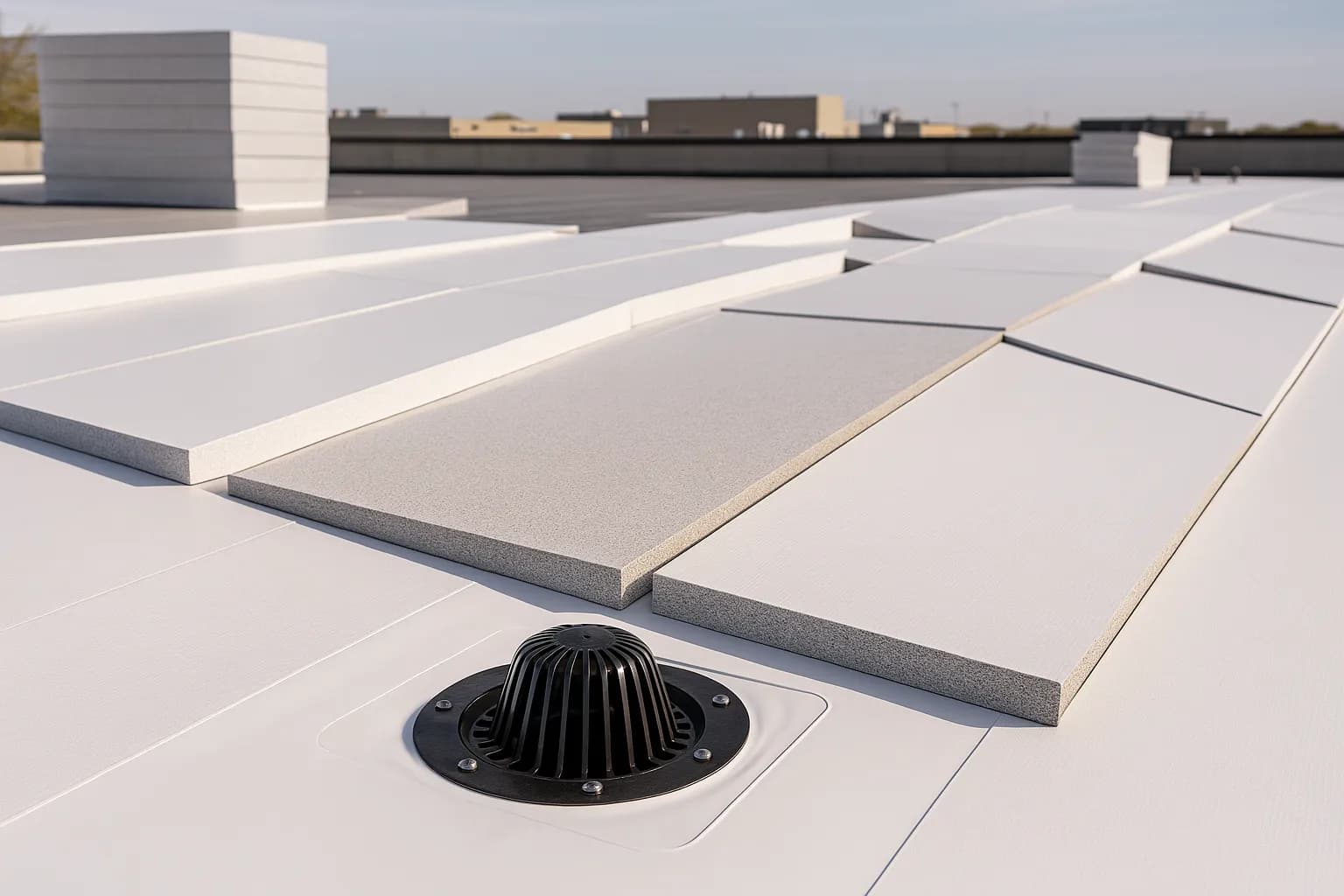
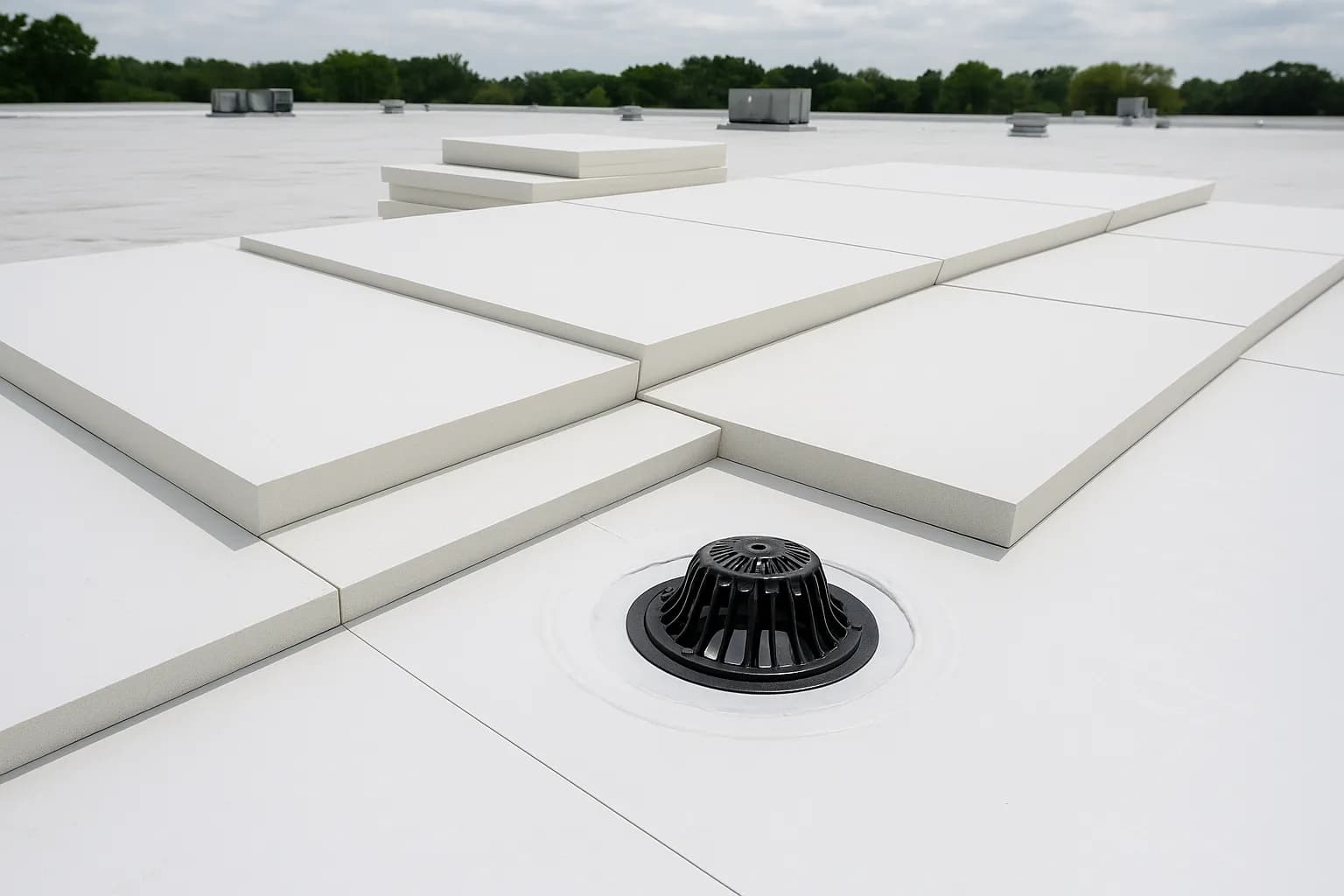
TPO, or thermoplastic polyolefin, is a single-ply membrane commonly used on commercial low-slope roofs. Its seams are heat welded, creating continuous welded joints when properly installed. TPO is available in reflective colors and can support cool-roof objectives where climate, insulation, utility rates, and building design make those objectives valuable. The U.S. Department of Energy notes that low-slope roofs can use cool thermoplastic membranes, coatings, and metal products, while expected savings vary by roof and building conditions.[1]
PVC membrane is another heat-welded thermoplastic system. PVC can be selected where resistance to particular chemicals, grease, or rooftop exhaust is important, subject to the manufacturer’s compatibility requirements. Both TPO and PVC require careful detailing at penetrations, curbs, drains, corners, and perimeter conditions. Their performance depends heavily on seam quality, substrate preparation, securement, walkway planning, and compatible accessories.
- Request the proposed membrane thickness, reinforcement, attachment method, cover board, insulation package, and approved accessories.
- Confirm whether rooftop grease, chemicals, oils, or process emissions require a specific membrane.
- Require documented inspection of welded seams and flashing before closeout.
- Review manufacturer warranty conditions, exclusions, inspection requirements, and obligations for future alterations.
EPDM Rubber Roofing: Flexible Performance and Repair Planning
EPDM is a synthetic rubber membrane used on many commercial low-slope roofs. It is flexible and available in large sheets that can reduce field seams, although seams and flashing remain critical leak-control points. EPDM systems may use adhesive, ballasted, or mechanically attached assemblies, depending on the design and project requirements.
EPDM repairs require compatible materials and correct preparation. A property manager should not assume that a generic patch will satisfy a manufacturer warranty or remain reliable around aged membrane, failed bonding adhesive, ponding, or movement. Repeated repairs around drains, seams, rooftop equipment, and perimeter flashing may indicate broader system deterioration.
When evaluating EPDM, ask the contractor to map repairs and distinguish membrane punctures from condensation, masonry, coping, curb, or plumbing-related water entry. Include walkway pads or designated traffic routes where maintenance personnel and service contractors regularly access rooftop equipment.
Modified Bitumen and Built-Up Roofing for Redundancy
Modified bitumen uses asphalt modified with polymers and is commonly installed in multi-layer systems. Depending on the specification, sheets may be torch applied, hot asphalt applied, cold adhered, or self-adhered. The assembly can provide robust detailing and repair options, but installation must account for fire controls, odor, hot-work permitting, substrate condition, and building occupancy.
Built-up roofing, or BUR, uses multiple plies of reinforcing felts set in asphalt, often finished with aggregate, cap sheet, or another surfacing. Multiple plies can provide redundancy, but the total assembly may be heavier and more disruptive to replace. Verify the structural capacity of the deck and building before adding new materials or recovering an existing roof.
- Require a written hot-work plan where torches, kettles, or other ignition sources are proposed.
- Coordinate odor, noise, smoke, and access controls with tenants, healthcare administrators, and facility operations.
- Inspect base flashing, penetrations, drains, expansion joints, and edge metal—not only the field membrane.
- Confirm whether recovery is permitted by the manufacturer, code, moisture findings, and existing assembly condition.
Metal and Standing Seam Options for Commercial Low-Slope Roofs
Metal roofing and standing seam systems can serve commercial buildings with suitable slopes, drainage, structural support, and detailing. They are not a universal substitute for membrane roofing on very low-slope areas. Seams, fasteners, laps, penetrations, curbs, gutters, transitions, and thermal movement require design attention.
Standing seam systems may be appropriate for warehouses, industrial buildings, institutional facilities, and additions where the geometry supports positive drainage. Inspectors should look for corrosion, loose or failed fasteners, damaged panels, failed sealants, open seams, inadequate penetrations, and movement-related distress. Metal roof coatings may be considered only after confirming substrate condition, adhesion, corrosion treatment, drainage, and manufacturer compatibility.
For any metal project, require panel profiles, gauge, finish, corrosion protection, attachment details, expansion provisions, edge conditions, and repairability to be identified in the specification. Coordinate skylights, rooftop units, solar equipment, and future penetrations before installation.
Coatings, Repairs, and Maintenance Versus Full Replacement
Roof coatings can be useful when the existing roof is fundamentally sound, dry, properly drained, and suitable for coating. Acrylic, silicone, and polyurethane products differ in adhesion, elongation, weathering, traffic tolerance, and moisture compatibility. A coating does not correct saturated insulation, deteriorated decking, failed flashing, structural movement, or chronic ponding by itself.
Use this decision process:
- Commission a condition assessment that documents the roof assembly, moisture, drainage, penetrations, edge conditions, and leak history.
- Separate emergency leak response from permanent corrective work.
- Repair active defects and correct drainage or flashing failures before considering a coating or recover system.
- Obtain repair, restoration, and replacement options with clearly stated service assumptions and warranty terms.
- Compare total project cost, disruption, energy implications, maintenance obligations, and remaining useful life.
- Approve the option that controls risk over the ownership period—not merely the lowest bid.
Repair is usually most defensible for isolated damage on a serviceable system. Maintenance is the recurring work that preserves drains, seams, flashings, coatings, and accessories. Replacement becomes more likely when wet insulation is widespread, leaks are recurring, the deck or flashing is deteriorated, ponding remains unresolved, or repairs are no longer producing predictable results.
Commercial Flat Roof Materials: Procurement and Closeout Checklist
Use a written scope and require comparable bids. The scope should identify the existing roof, proposed assembly, tear-off or recovery limits, insulation values, cover board, attachment, membrane thickness, flashing, edge metal, drains, penetrations, walkway protection, temporary protection, waste handling, and project schedule.
- Verify contractor licensing, insurance, safety program, references, and commercial roofing experience.
- Request manufacturer-approved assembly details and clarify who controls design responsibility.
- Confirm permits, code requirements, fire classifications, wind-uplift criteria, and local energy provisions.
- Require a leak-response plan for occupied buildings and protection for interiors, inventory, equipment, and tenants.
- Confirm fall-protection planning. OSHA requires protection for roofing employees exposed to unprotected low-slope roof edges 6 feet or more above lower levels, subject to the applicable standard and exceptions.[3]
- Specify daily cleanup, material storage, access routes, noise controls, and weather contingencies.
- Obtain final photographs, inspection reports, as-built information, warranty documents, maintenance instructions, and a roof plan marking penetrations and repairs.
Before approval, compare lifecycle costs rather than relying on generic service-life claims. Include planned inspections, drain cleaning, membrane repairs, coating renewal, equipment access, warranty administration, energy effects, and the financial impact of interior damage or business interruption. A properly documented commercial roofing program turns flat roof materials into a manageable asset decision for facility teams and building owners.
Frequently Asked Questions
Are TPO, PVC, and EPDM suitable for every commercial flat roof?
No. Each system must be matched to the existing assembly, climate, roof geometry, rooftop chemicals, traffic, wind exposure, drainage, and warranty requirements. TPO and PVC provide heat-welded seams, while EPDM offers flexible rubber membrane performance. A qualified commercial roofing professional should verify substrate condition, compatibility, attachment, flashing details, and manufacturer-approved assemblies before procurement.
Can a commercial roof be coated instead of replaced?
Sometimes. Coating is most appropriate when the roof is structurally sound, sufficiently dry, well drained, and compatible with the proposed product. It is not a substitute for correcting saturated insulation, deteriorated decking, failed flashing, or persistent ponding. Require adhesion testing, moisture evaluation, repairs, drainage correction, estimated coating thickness, renewal obligations, and a manufacturer-backed warranty.
How does ponding water affect flat roof material selection?
Persistent ponding increases risk at seams, laps, flashings, coatings, drains, and penetrations and may indicate inadequate slope, blocked drainage, deflection, or insulation problems. Material selection alone will not solve the cause. Require a drainage assessment, structural review where appropriate, tapered insulation or crickets when feasible, and a written plan for eliminating or managing recurring water.
What should commercial buyers verify in a roofing warranty?
Verify the warranty issuer, term, covered assembly, workmanship scope, wind provisions, puncture coverage, inspection requirements, maintenance obligations, exclusions, repair response, transfer rights, and procedures for rooftop alterations. Manufacturer warranties commonly depend on approved materials, approved contractors, documented inspections, and compliant maintenance. Treat warranty language as a procurement requirement, not a marketing promise.
Do cool roof materials always reduce operating costs?
No. Reflective materials can reduce heat gain and cooling demand, but results depend on climate, roof reflectance, insulation, utility rates, HVAC efficiency, building use, and local incentives. The Department of Energy identifies these variables as factors affecting expected savings.[5] Request a project-specific energy and lifecycle review rather than assuming a universal payback.
Related Reading on My Roofing Tech
- Section 179D Commercial Roofing Incentive Faces June 2026 Deadline
- TPO Roofing Installation: A Commercial Building Owner’s Guide
Find a Qualified Commercial Roofing Contractor
Need help acting on this? Browse roofing contractors in your area, or explore commercial roofing services like preventative maintenance, inspections, and emergency response. Are you a contractor? List your business on My Roofing Tech to reach property and facility managers actively searching for help.