 My Roofing Tech
TPO Roofing Material: A Commercial Facility Manager’s Guide to Selection, Repair, and ROI
Quick Answers for Property & Facility Managers
What is TPO roofing material used for?
TPO roofing material is a reinforced thermoplastic single-ply membrane used on commercial low-slope and flat roofs. It is commonly installed on offices, warehouses, retail buildings, healthcare facilities, and institutional properties. Seams are heat-welded, and the system may be mechanically attached, adhered, or ballasted depending on the building, wind requirements, insulation assembly, and project specifications.
Is TPO a good choice for a commercial roof?
TPO can be a strong commercial roofing choice when the membrane, insulation, attachment method, flashing details, and drainage design are properly specified and installed. Its heat-welded seams can provide reliable water resistance, while light-colored surfaces may support cool-roof objectives. Suitability depends on climate, rooftop traffic, chemicals, wind exposure, existing conditions, warranty requirements, and qualified contractor availability.
Should a facility repair, maintain, or replace a TPO roof?
Repair is generally appropriate for localized membrane damage, isolated seam issues, or failed flashing when the roof remains broadly serviceable. Preventative maintenance is the best value when inspections identify manageable wear before leaks occur. Full replacement becomes more defensible when moisture is widespread, insulation has lost performance, drainage is inadequate, defects are systemic, or recurring repairs approach the cost and disruption of a new warranted system.
TPO Roofing Material: What Commercial Property Teams Should Know
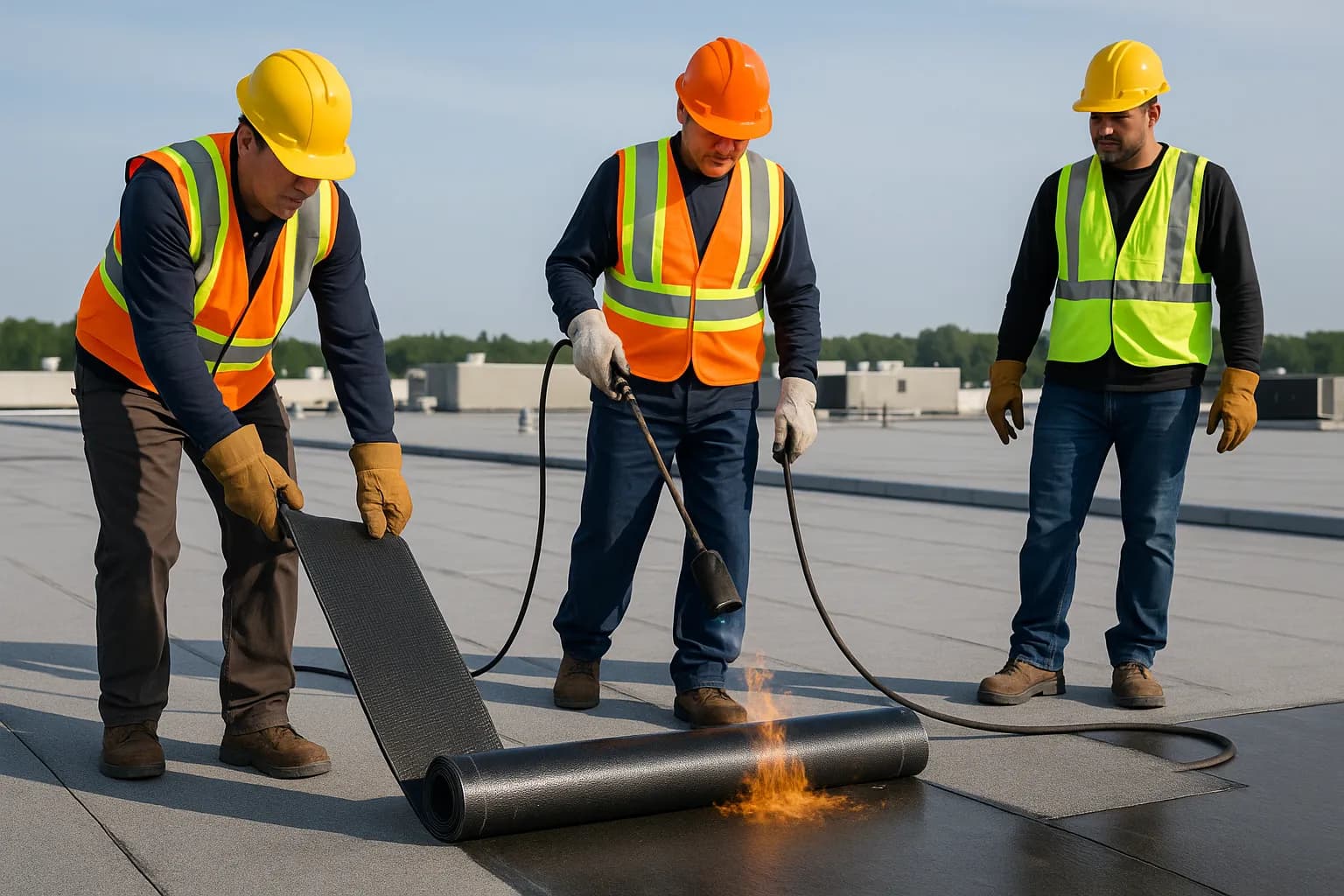
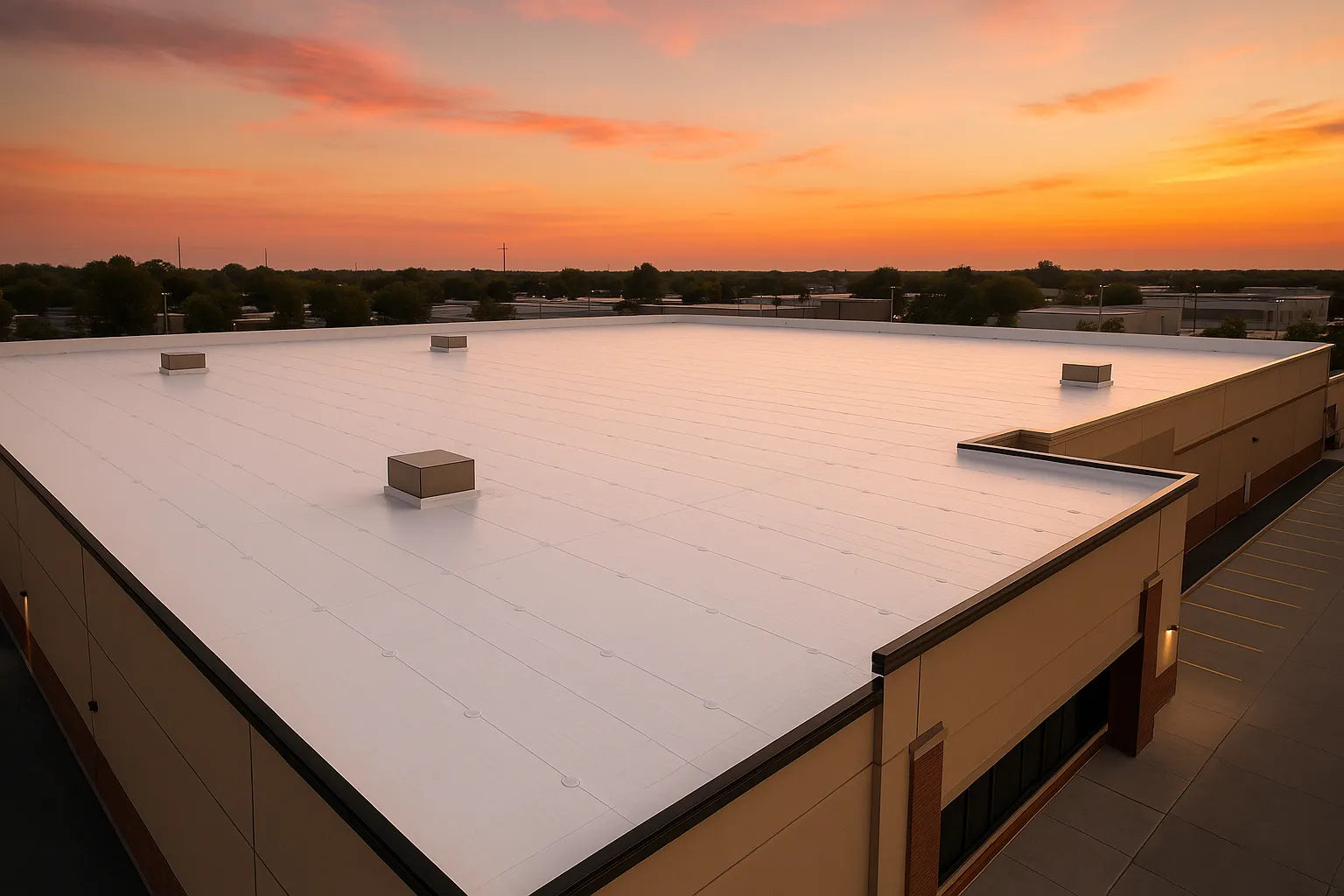
TPO, or thermoplastic polyolefin, is a reinforced single-ply membrane designed for low-slope commercial roofing. It is supplied in rolls and installed over insulation or an existing suitable roof assembly using mechanical attachment, adhesive, or ballast. Adjacent sheets are joined with hot-air welding rather than relying only on field-applied sealant.
For facility managers, property managers, and commercial real estate professionals, the material is only one part of the roof system. Performance also depends on deck condition, vapor control, insulation, drainage, perimeter securement, penetrations, curbs, wall flashings, walkway pads, and installation quality. A roof proposal that names the membrane but omits these components is incomplete.
TPO is frequently considered for offices, retail properties, warehouses, industrial buildings, healthcare facilities, multifamily buildings, and institutional campuses. Light-colored membranes may support cool-roof objectives, but energy results depend on insulation, HVAC efficiency, climate, roof geometry, and operating conditions rather than membrane color alone.
How to Evaluate TPO Roofing Material Against Other Commercial Systems
Use the building’s risk profile and existing conditions—not product popularity—as the starting point for selection.
- TPO: A heat-weldable thermoplastic membrane with reinforced sheets. Review seam quality, puncture exposure, chemical conditions, wind design, rooftop traffic, and manufacturer-approved details.
- PVC membrane: Another heat-weldable thermoplastic system. PVC may be considered where resistance to certain oils, grease, or chemicals is important, subject to the manufacturer’s compatibility guidance.
- EPDM rubber: A flexible synthetic-rubber membrane commonly used on low-slope roofs. Seams typically rely on tapes or adhesives, so flashing and seam maintenance deserve close attention.
- Modified bitumen: A polymer-enhanced asphalt membrane available in several application configurations. It can be suitable for repairable, multi-layer assemblies and properties where asphalt-based construction is preferred.
- Built-up roofing: A multi-ply asphalt system with reinforcing felts and surfacing. BUR may offer redundancy through multiple plies, but inspections should address blisters, gravel displacement, membrane wear, and flashing conditions.
- Metal and standing seam: Durable systems for appropriate slopes and architectural or industrial applications. Panels, fasteners, seams, penetrations, sealants, corrosion, and thermal movement require specialized evaluation.
For a replacement project, require a written comparison of expected service conditions, attachment, insulation, drainage, fire and wind criteria, warranty terms, maintenance obligations, and repairability. For a recover project, require a moisture investigation and confirmation that the existing assembly is eligible for the proposed system.

TPO Roof Inspection and Leak-Response Checklist
Commercial roof leaks are business-continuity issues. A small opening above a data room, retail area, production line, or patient-care space can create operational, electrical, mold, and interior-finish risks. Establish a documented response procedure before the next storm.
- Record the reported location, time, weather, affected occupants, and business impact.
- Protect contents and isolate electrical hazards through the appropriate building procedures.
- Contact the roofing contractor or emergency provider and document temporary measures.
- Inspect the roof surface, seams, penetrations, curbs, drains, scuppers, edge metal, wall flashings, and rooftop equipment.
- Check for punctures, open welds, membrane shrinkage, tenting, fishmouths, displaced accessories, and failed sealants.
- Trace water carefully; the interior stain may not align with the roof entry point.
- Photograph the condition with location references and record temporary and permanent repairs separately.
- Review the warranty before authorizing work that could affect coverage.
Schedule professional inspections at least twice yearly when required by the manufacturer, warranty, or property risk profile, and add inspections after severe weather. Manufacturer guidance may require inspection records, photographs, qualified contractors, and maintenance documentation to preserve enhanced coverage.
Step-by-Step TPO Maintenance and Repair Planning
1. Establish the roof baseline. Collect as-built drawings, membrane and insulation specifications, installation date, warranty or guarantee documents, prior leak logs, repair invoices, rooftop equipment records, and previous inspection reports.
2. Map risk areas. Create a roof plan showing drains, scuppers, penetrations, HVAC curbs, access paths, expansion joints, perimeter edges, patches, ponding areas, and locations with recurring interior leaks.
3. Classify each condition. Separate immediate leak response, routine maintenance, capital repair, and replacement-level defects. Ponding water, deteriorated insulation, widespread seam failure, and repeated temporary patches should receive management attention rather than being treated as isolated cosmetic issues.
4. Obtain a repair method statement. The contractor should identify the membrane type and thickness, preparation method, patch dimensions, welding or bonding procedure, flashing materials, testing approach, and limitations. Avoid approving generic “seal and patch” descriptions for critical repairs.
5. Verify completion. Require photographs, marked-up roof plans, material documentation, repair locations, observations about drainage, and recommendations with time horizons. Update the roof asset record after every visit.
Use manufacturer-compatible materials and qualified personnel. Do not assume that a coating, adhesive, sealant, or accessory is compatible with every TPO formulation or existing roof assembly.
Repair, Preventative Maintenance, or Full TPO Replacement?
Repair is usually the appropriate first response when damage is localized and the surrounding membrane, insulation, flashings, and drainage remain sound. Examples include isolated punctures, limited seam defects, damaged pipe boots, and discrete edge-detail failures.
Preventative maintenance produces value by addressing conditions before they become active leaks. Typical work includes cleaning drains and scuppers, repairing minor seam or flashing defects, maintaining walkway protection, correcting loose accessories, documenting ponding, and removing incompatible rooftop debris or abandoned equipment where permitted.
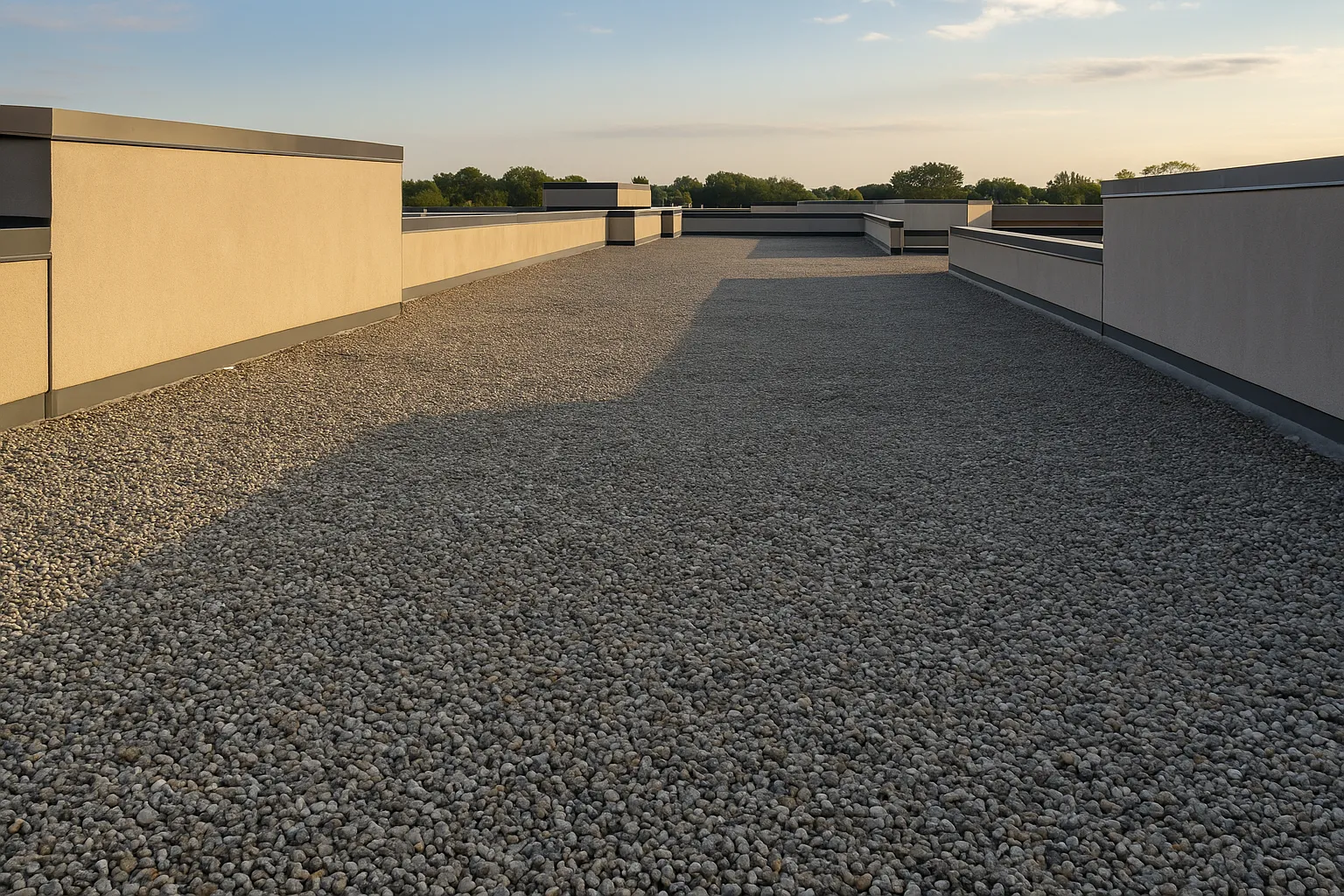
Replacement should be evaluated when moisture surveys show widespread wet insulation, the membrane has pervasive deterioration, the roof cannot reliably support new repairs, drainage or slope deficiencies are systemic, or the building’s operational needs have changed. A replacement budget should include deck repairs, insulation, tapered crickets, edge metal, curbs, access controls, interior protection, permits, testing, commissioning, and warranty requirements.
Compare options using total cost of ownership rather than bid price alone. A lower initial repair cost may be poor value if it extends recurring leaks for only a short period. Conversely, replacing a roof that can be economically maintained may divert capital from higher-risk building systems. Ask bidders to price a defined repair program, a maintenance plan, and a replacement alternative with clearly stated assumptions.
Commercial TPO Warranty, Specification, and Procurement Controls
Warranty language varies by manufacturer, assembly, contractor certification, attachment method, project size, and inspection requirements. Some manufacturer programs provide material-only coverage, while enhanced or system guarantees may address specified workmanship or leak obligations subject to exclusions, monetary limits, maintenance rules, and approved details.
Before award, require the contractor and manufacturer to identify:
- Membrane manufacturer, product line, thickness, reinforcement, color, and accessory compatibility.
- Attachment method, wind-uplift design, fastener layout, adhesive requirements, and perimeter securement.
- Insulation type, thickness, thermal performance, cover board, vapor-control strategy, and fire classification.
- Drainage design, tapered insulation, overflow provisions, penetrations, curbs, expansion joints, and edge metal.
- Inspection, testing, documentation, maintenance, and warranty-registration requirements.
- Exclusions for rooftop traffic, hail, puncture, ponding, chemicals, unauthorized repairs, or neglected maintenance.
Obtain closeout documents before final payment: approved drawings, product data, photographs, test reports, warranty certificates, maintenance instructions, emergency contacts, and a roof plan. The asset record should make future leak response faster and reduce the risk of uninformed work by a later contractor.
TPO Roofing Material ROI for Offices, Warehouses, Retail, and Healthcare Buildings
ROI should be measured through avoided disruption, reduced emergency calls, protection of inventory and equipment, improved maintenance planning, and preservation of warranty rights—not only through energy projections. For a warehouse, the priority may be inventory protection and minimal shutdown time. For healthcare, infection control, access restrictions, and continuity of operations can dominate the decision. Retail and office properties may prioritize tenant disruption, appearance, and predictable capital planning.
Build a roof lifecycle dashboard with age, system type, remaining warranty term, leak frequency, repair spending, ponding locations, moisture findings, inspection dates, and upcoming capital needs. Rank projects by consequence of failure, not roof area alone. A smaller roof above critical electrical or clinical functions may warrant earlier action than a larger roof above low-risk storage.
For every capital recommendation, document three scenarios: continue maintenance with defined limits, execute targeted repairs, or replace the assembly. Include assumptions about access, phasing, occupied areas, weather protection, permits, disposal, insulation, deck repairs, and manufacturer inspections. This approach gives owners and managers a defensible basis for funding decisions without treating TPO as a one-size-fits-all solution.
Frequently Asked Questions
How long can a commercial TPO roof last?
Service life depends on membrane formulation and thickness, installation quality, climate, UV exposure, rooftop traffic, drainage, maintenance, repairs, and the condition of the full assembly. A manufacturer guarantee is not the same as a guaranteed service life. Facility teams should track actual condition through documented inspections and moisture evaluation rather than relying only on the installation date or warranty expiration.
What does a TPO roofing warranty usually cover?
Coverage varies significantly. A material warranty may address manufacturing defects, while an enhanced manufacturer guarantee may include specified workmanship or leak obligations. Exclusions can include unauthorized repairs, neglect, rooftop traffic, punctures, hail, ponding, chemicals, and altered details. Before procurement, review term, covered components, monetary limits, maintenance duties, inspection requirements, claim procedures, and contractor eligibility with the manufacturer.
Can a commercial building install TPO over an existing roof?
A recover installation may be feasible when the existing assembly is structurally sound, sufficiently dry, compatible, and allowed by code and the manufacturer. Wet insulation, deteriorated decking, trapped moisture, excessive layers, poor drainage, or incompatible materials may require removal. Require a written investigation, core cuts or other moisture assessment, code review, and a clear explanation of how the proposed warranty treats a recover system.
How should ponding water on a TPO roof be handled?
Document the location, depth, duration, weather conditions, and nearby seams or penetrations, then have a qualified commercial roofing professional assess the cause. Ponding may result from settlement, blocked drains, inadequate slope, displaced insulation, or structural conditions. Cleaning drains may solve a maintenance issue, but recurring ponding may require tapered insulation, drainage modifications, structural review, or replacement planning.
Is TPO more cost-effective than EPDM, PVC, modified bitumen, BUR, or metal?
There is no universal lowest-cost system because price depends on roof size, access, tear-off, insulation, deck repairs, attachment, detailing, labor market, warranty, and building operations. Compare complete installed assemblies and lifecycle obligations rather than membrane price alone. TPO may be attractive for heat-welded seams and broad commercial availability, while PVC, EPDM, asphalt, BUR, or metal may better fit specific chemical, traffic, design, or existing-assembly conditions.
Related Reading on My Roofing Tech
- Westlake Royal Consolidates US Tile and Newpoint Commercial Roofing Brands
- Roof Inspection Cost for Commercial Buildings: Complete Planning Guide
Find a Qualified Commercial Roofing Contractor
Need help acting on this? Browse roofing contractors in your area, or explore commercial roofing services like preventative maintenance, inspections, and emergency response. Are you a contractor? List your business on My Roofing Tech to reach property and facility managers actively searching for help.