 My Roofing Tech
How to Get Insurance to Pay for Roof Replacement: A Commercial Guide
Quick Answers for Property & Facility Managers
How do I get insurance to pay for a commercial roof replacement?
To improve the likelihood of coverage, document the suspected storm or other covered event, notify the insurer promptly, prevent further damage, and obtain an independent commercial roof inspection. Provide maintenance records, dated photographs, roof plans, warranties, invoices, and an itemized scope distinguishing covered damage from excluded wear, age, and deferred maintenance.
Will commercial property insurance pay for an old or leaking roof?
Usually, commercial property insurance does not pay to replace a roof solely because it is old, leaking, or beyond its expected service life. Coverage generally depends on a covered, sudden cause such as wind, hail, fire, or another insured peril. Policy exclusions, deductibles, valuation terms, depreciation, and endorsements control the final outcome.
Can insurance pay for code-required commercial roof upgrades?
Potentially. Some commercial policies include ordinance-or-law or roof replacement expense coverage that may address added costs caused by current building-code requirements, but it is not automatic. Review limits and exclusions with the broker, ask the adjuster to evaluate code-related work, and obtain written requirements from the local building authority before approving the replacement scope.
How to Get Insurance to Pay for Roof Replacement on a Commercial Building
For facility managers, property managers, and commercial real estate professionals, the central issue is causation: commercial property insurance generally responds to physical damage caused by a covered, sudden event, not routine aging, deferred maintenance, ponding caused by long-term drainage problems, or ordinary wear. A claim for an office, retail center, warehouse, healthcare facility, or multifamily property must connect the observed roof damage to the policy’s covered peril and satisfy its notice, documentation, valuation, and proof-of-loss requirements.
Do not assume that a leaking roof automatically qualifies for full replacement. The insurer may owe emergency protection, a localized repair, or replacement of damaged components rather than an entirely new roof. Coverage depends on the policy wording, exclusions, deductible, roof age, valuation method, endorsements, prior claims, and the facts documented by qualified professionals.
1. Review the Commercial Property Policy Before Filing
Ask the broker, risk manager, or claims representative to identify the relevant coverage before committing to a replacement scope. Review the declarations, causes-of-loss form, exclusions, conditions, deductibles, roof limitations, actual-cash-value or replacement-cost provisions, ordinance-or-law coverage, equipment breakdown coverage, business-income coverage, and any vacancy or protective-safeguard conditions.
- Confirm whether the suspected cause—such as wind, hail, fire, falling objects, or a named event—is covered.
- Check the applicable deductible, including wind, hail, named-storm, or percentage deductibles.
- Determine whether the policy pays replacement cost, actual cash value, or a staged amount after completed work.
- Ask whether code upgrades, insulation changes, tear-off, debris removal, temporary protection, and interior damage have separate limits.
- Identify notice deadlines, proof-of-loss requirements, appraisal provisions, and emergency-repair rules.
Commercial policies vary materially. A broker or qualified coverage attorney can explain policy language, but neither the roofing contractor nor the adjuster should be treated as the final authority on coverage.
2. Preserve Evidence and Report the Loss Promptly
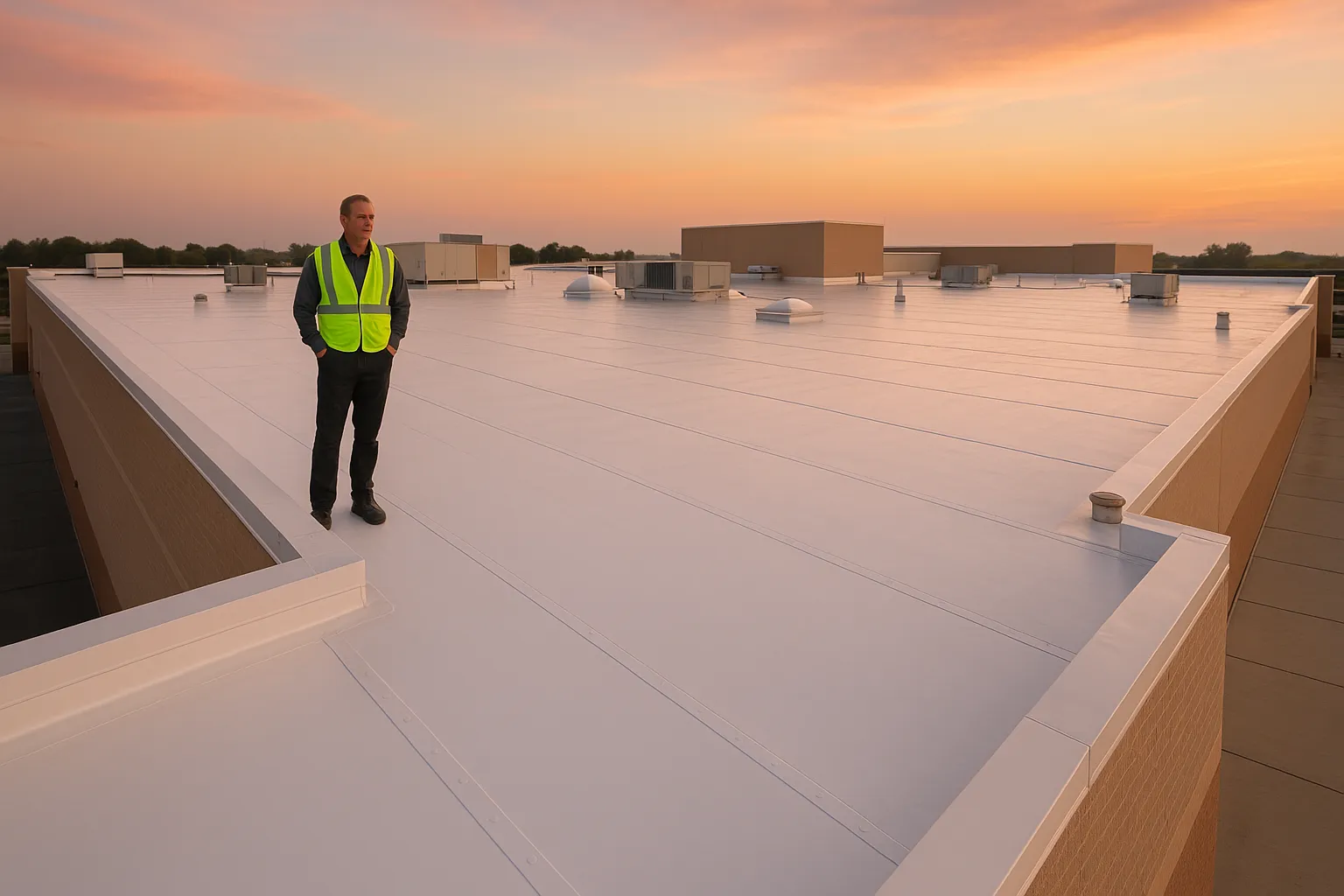
Once damage is suspected, protect people and the building without destroying evidence. Restrict unsafe roof access, place interior protection where appropriate, and arrange temporary measures such as tarping or emergency leak control. Photograph the roof and interior conditions before cleanup or permanent repair when it is safe to do so. Keep invoices and records for reasonable emergency work.
- Record the date, approximate time, location, and type of weather or other event.
- Photograph punctures, lifted seams, displaced flashings, damaged edge metal, hail impacts, debris, wet insulation, ceiling damage, and affected contents.
- Mark each condition on a roof plan or building-area diagram.
- Preserve damaged materials when practical and do not discard evidence before the insurer or consultant has inspected it.
- Notify the carrier or broker in writing according to the policy and retain confirmation, claim numbers, adjuster contacts, and a communication log.
Separate photographs of storm damage from images showing pre-existing deterioration. A factual record is more useful than a conclusion that the entire roof must be replaced.
3. Commission an Independent Commercial Roof Inspection
Before permanent work begins, obtain an independent inspection from a qualified commercial roofing professional or building-envelope consultant. Request a written report that identifies the roof assembly, observed damage, likely cause, affected areas, moisture conditions, repairability, and recommended scope. The inspection should distinguish sudden event damage from age-related conditions and deferred maintenance.
Provide the consultant with installation records, previous inspection reports, repair invoices, maintenance logs, warranty documents, roof plans, leak histories, and weather information. For large warehouses, healthcare campuses, retail portfolios, and multi-building properties, use a roof-by-roof inventory and prioritize occupied areas, critical operations, and locations with interior water damage.
Do not authorize destructive testing, core sampling, or removal of membrane and insulation without coordinating access, safety, evidence preservation, and the claims process. Moisture surveys and test cuts can help determine whether insulation or deck materials are affected, but their results should be interpreted with the roof assembly and policy scope in mind.
4. Match the Claim Documentation to the Roof System
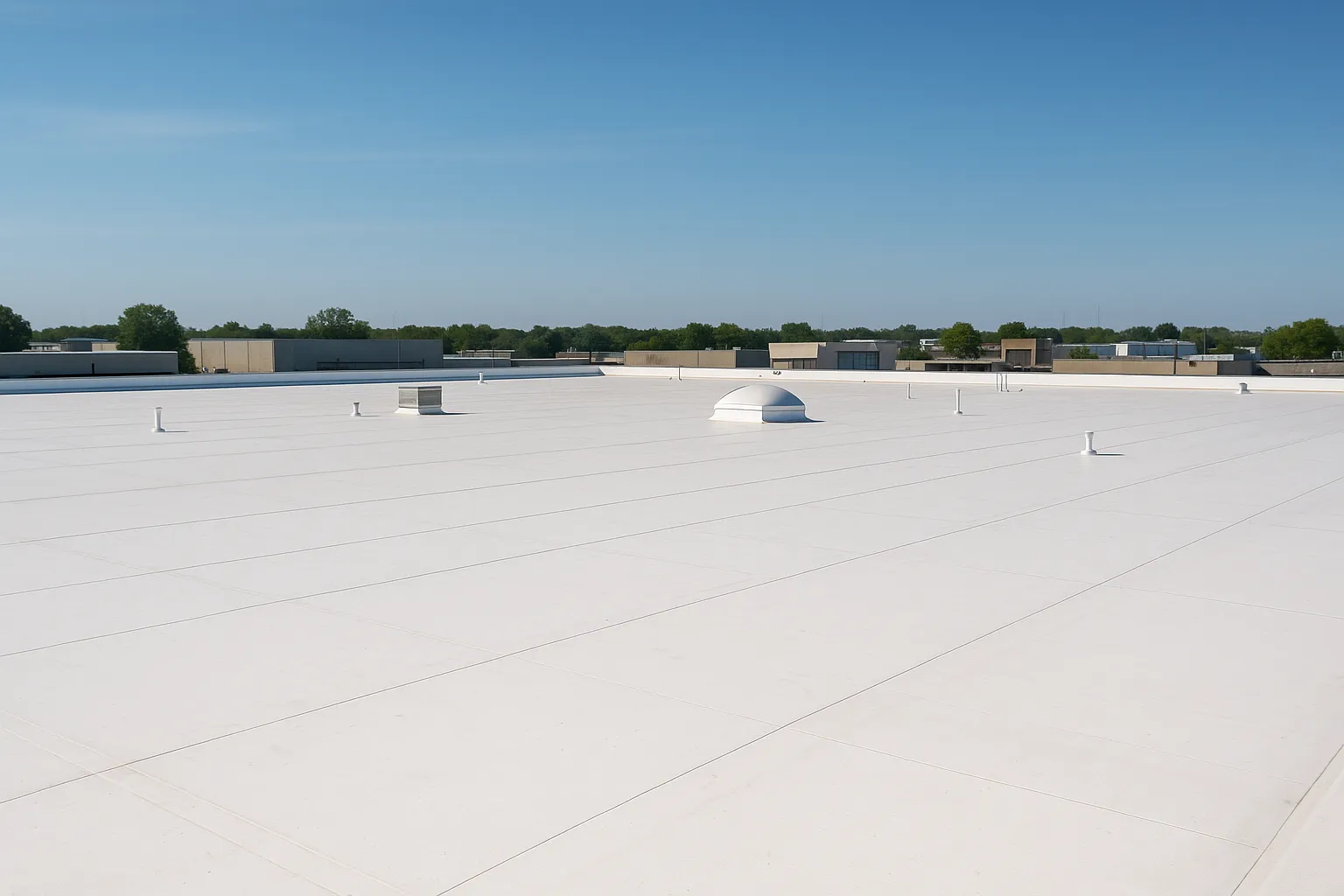
Damage presents differently across commercial roof assemblies, so the inspection and estimate must use system-specific terminology and repair methods.
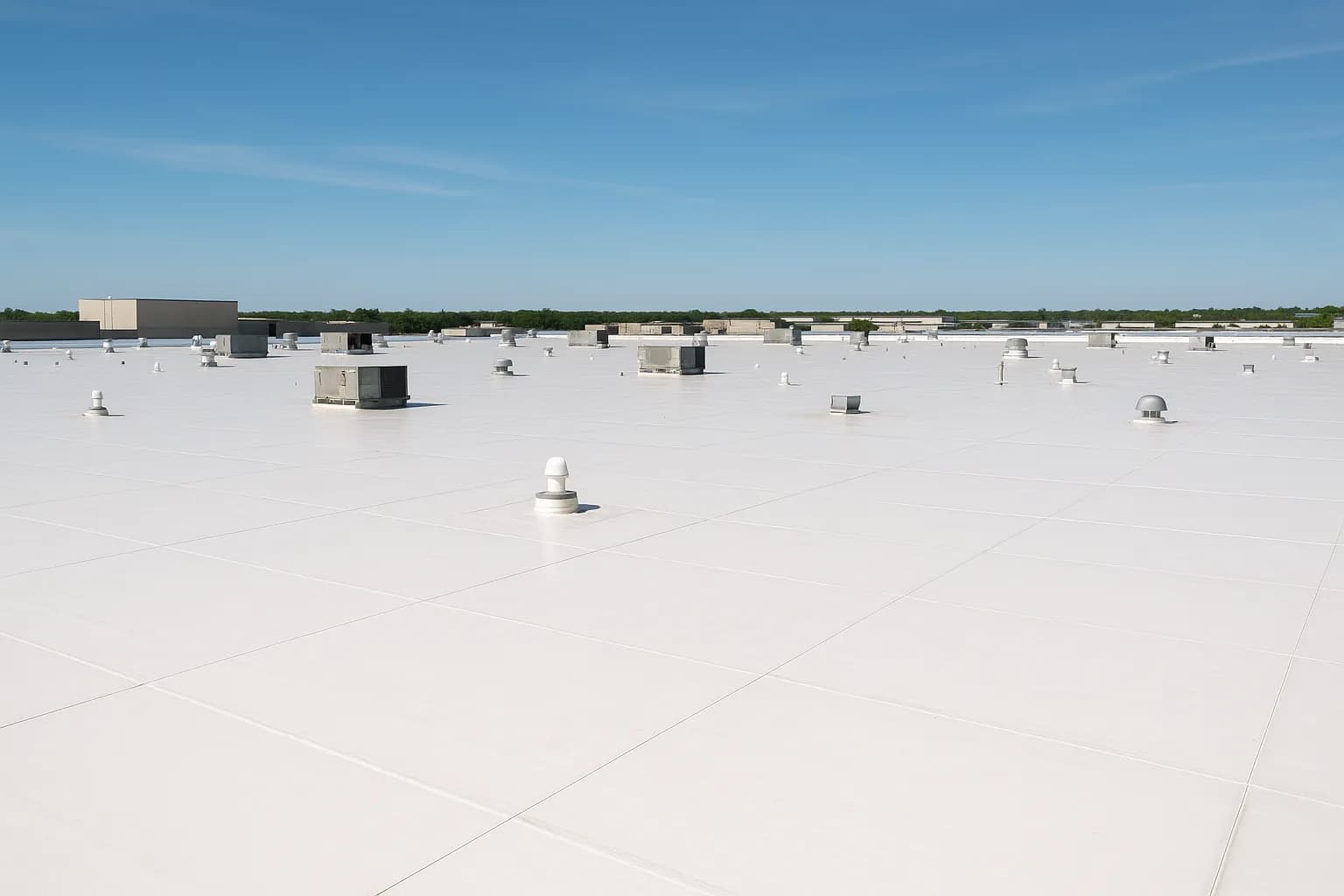
- TPO thermoplastic membrane: Document wind-lifted seams, punctures, membrane tears, failed perimeter securement, damaged flashings, and wet insulation. Seam repairs, patches, membrane replacement, insulation replacement, and attachment requirements should be itemized separately.
- PVC membrane: Identify damaged heat-welded seams, flashings, penetrations, walkway pads, and exposed or saturated insulation. Confirm whether compatible materials and manufacturer procedures are required.
- EPDM rubber: Record splits, punctures, open laps, failed adhesives, shrinkage-related flashing stress, and damaged edge conditions. Explain whether repairs can restore watertightness or whether widespread deterioration affects replacement feasibility.
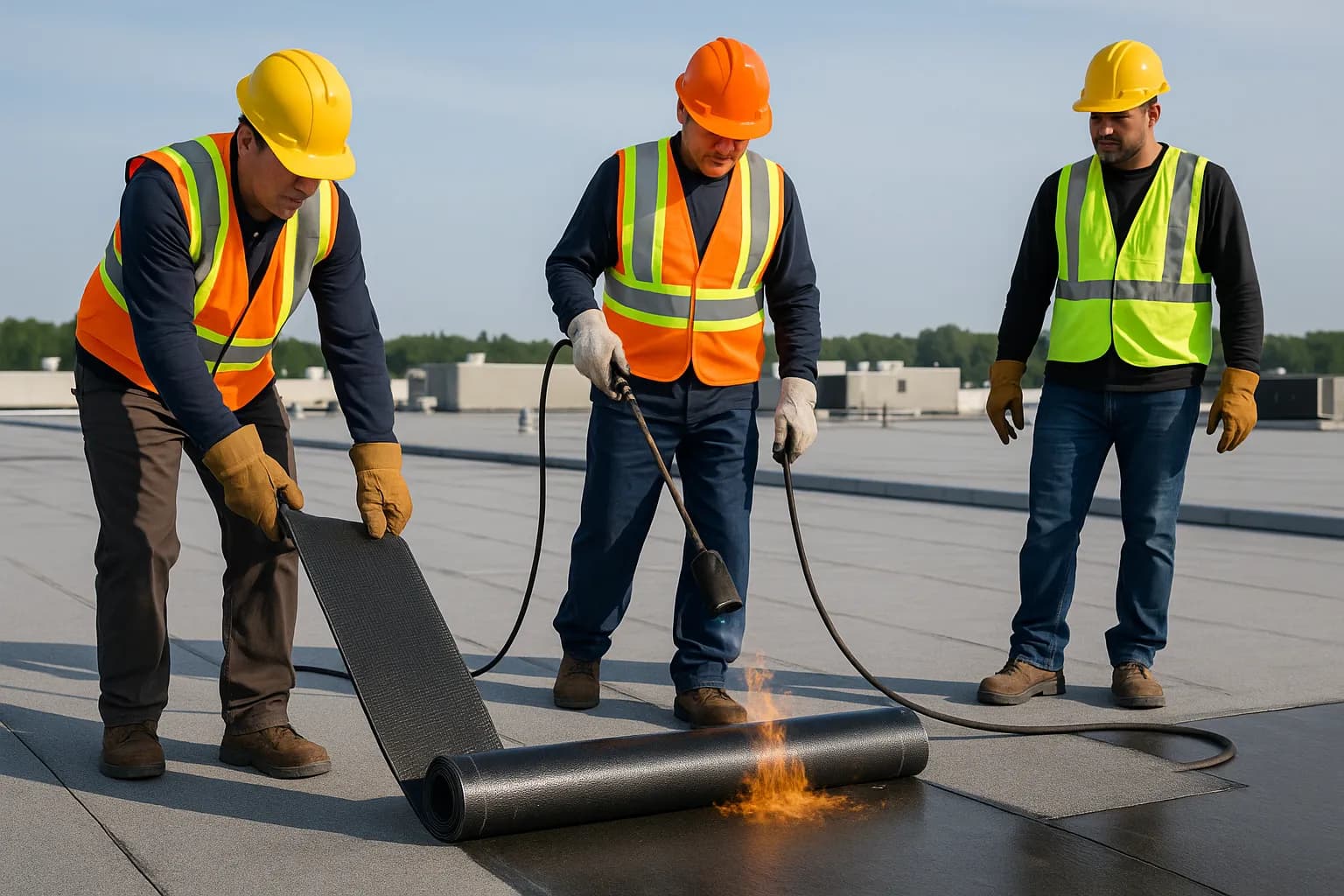
- Modified bitumen: Photograph blisters, splits, open laps, damaged cap sheets, flashing failures, and wind-created membrane displacement. Separate localized torch-applied, self-adhered, or cold-process repairs from areas requiring multi-layer replacement.
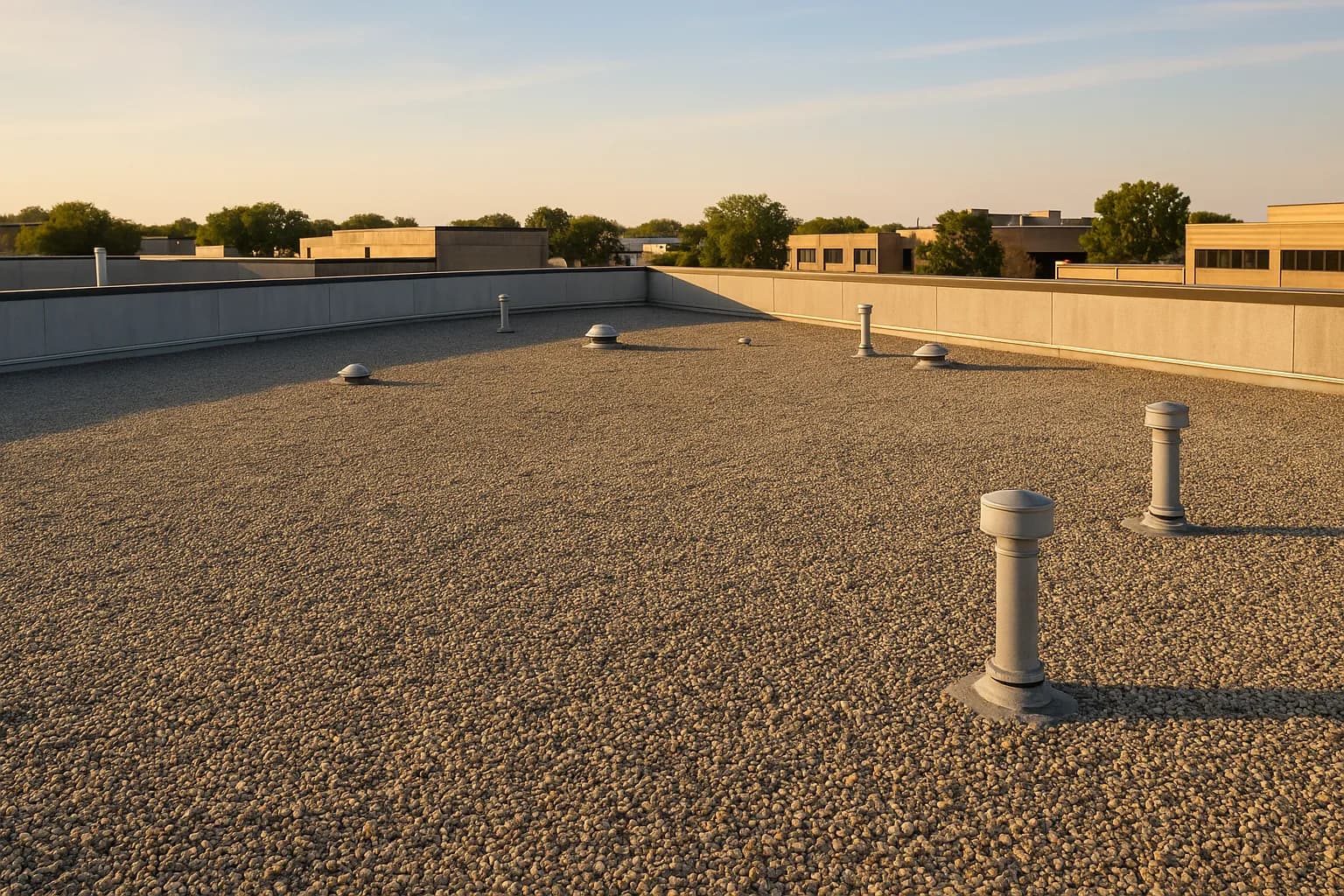
- Built-up roofing BUR: Document plies, gravel surfacing, flashing, drain conditions, wet insulation, and damage to the deck. A replacement scope should identify tear-off, recovery-board decisions, insulation, vapor-control considerations, and new surfacing.
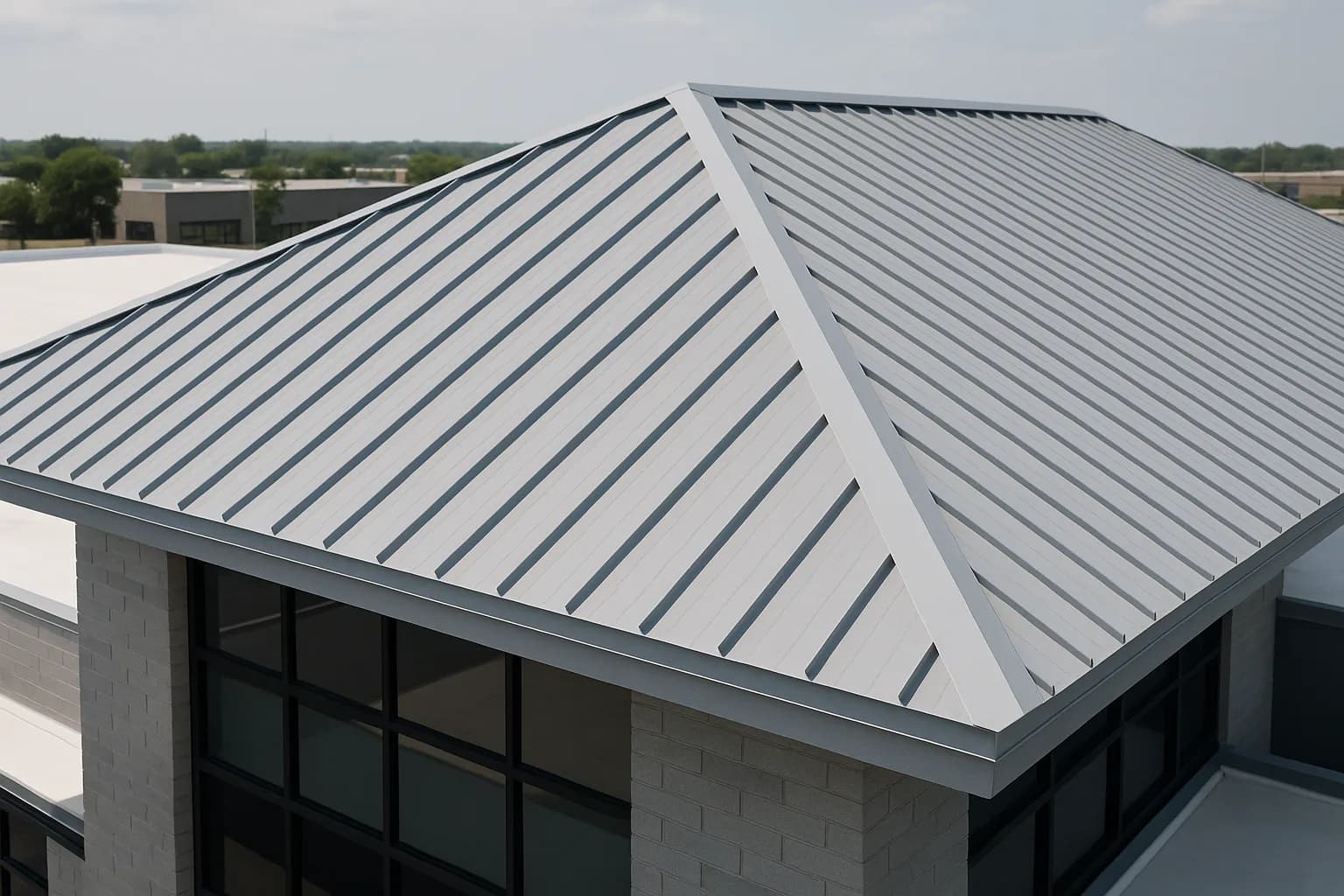
- Metal or standing seam: Identify displaced panels, failed fasteners, damaged seams, uplifted flashings, corrosion, impact dents, penetrations, and damaged gutters or edge metal. Determine whether individual panels can be replaced without compromising system performance.
For every system, request an estimate that distinguishes emergency protection, repair, replacement of damaged components, code-required work, betterments, and optional improvements.
5. Build a Defensible Replacement Scope
Insurance is more likely to evaluate a claim efficiently when the scope is transparent and tied to documented damage. Ask a commercial roofing contractor to prepare a detailed proposal that includes roof areas, quantities, materials, labor, access, tear-off, disposal, cranes or lifts, temporary protection, insulation, flashing, drains, edge metal, penetrations, testing, permits, and warranty requirements.
Replacement may be reasonable when damage is widespread, membrane continuity cannot be restored, insulation or deck moisture is extensive, matching materials are unavailable, or code and manufacturer requirements make a partial repair impractical. It is not automatically justified because a contractor prefers a new system. For a large project, obtain competitive bids from qualified commercial contractors while ensuring each bidder prices the same scope.
- Ask the contractor to identify repairable areas and explain why any proposed replacement is necessary.
- Request roof plans, marked-up photographs, quantities, unit prices, and allowances for concealed conditions.
- Compare like-for-like restoration with eligible upgrades such as increased insulation, tapered insulation, recover boards, coatings, or drainage improvements.
- Obtain manufacturer confirmation when a warranty, approved repair procedure, or discontinued membrane affects the scope.
- Confirm that permits, inspections, fall protection, occupant protection, and fire-safety requirements are included.
6. Manage Adjuster Review, Supplements, and Disagreements
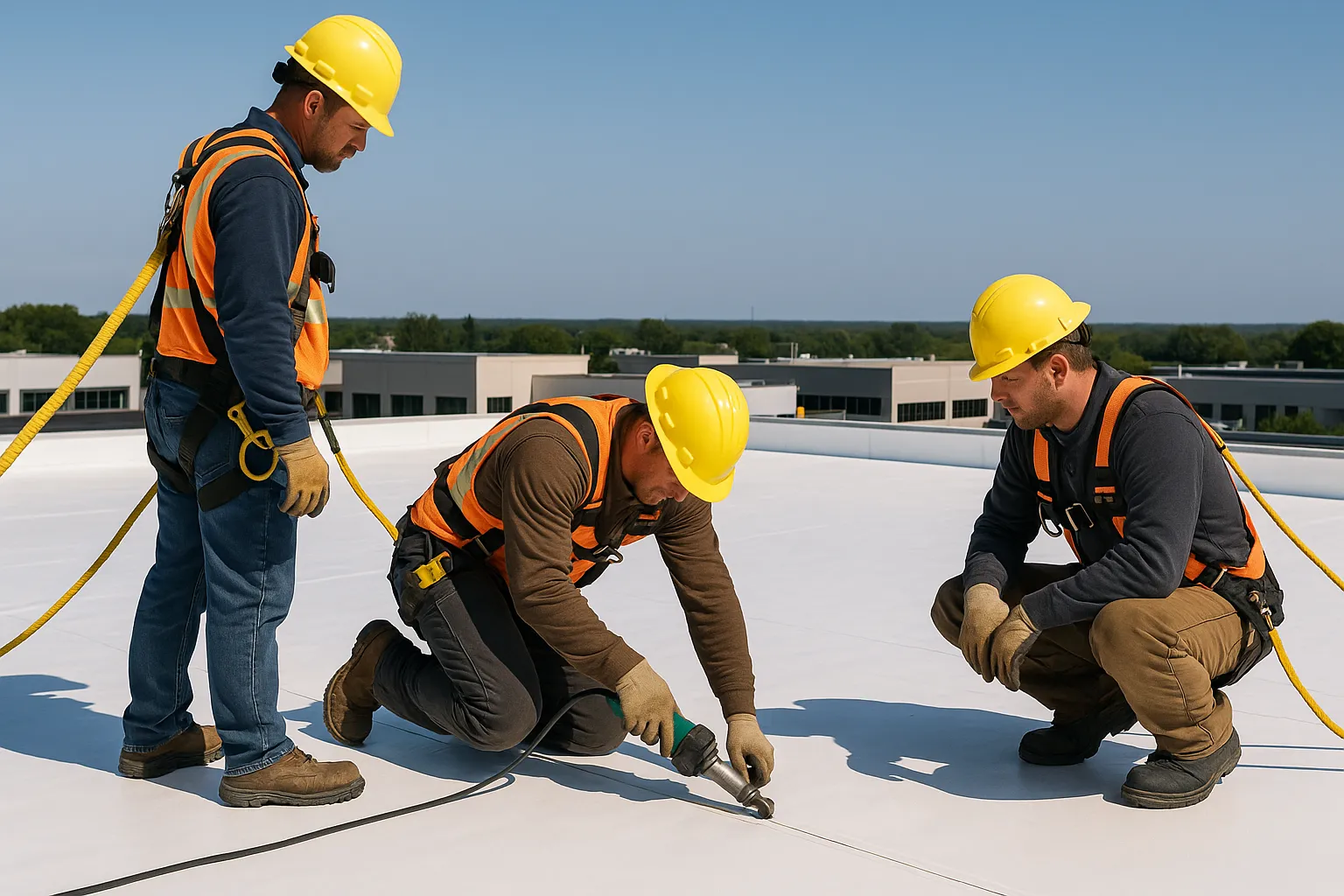
Meet the adjuster with the broker, consultant, and contractor when appropriate. Walk the roof by documented area rather than relying on a general statement that the system is damaged. Provide the inspection report, maintenance history, photographs, weather documentation, proposals, invoices, and roof age information in an organized claim package.
If concealed damage is discovered during authorized work, stop in the affected area when safe, photograph the condition, preserve samples, and request written direction before proceeding. Submit a supplemental estimate that explains the newly discovered damage and its relationship to the covered event. Keep covered damage, maintenance, betterments, and unrelated repairs separated in the accounting.
A denial or partial payment is not necessarily the end of the process. Request the insurer’s written coverage position, cited policy provisions, damage findings, depreciation calculation, and explanation of disputed items. Use the policy’s internal dispute, appraisal, mediation, or appeal procedures, and obtain qualified legal advice where the financial exposure is substantial.
Repair, Maintenance, or Full Replacement: Compare Cost and ROI
Insurance proceeds should not replace a facility’s capital-planning analysis. A targeted repair may be the best option for isolated punctures, a limited flashing failure, or a small storm-affected area when the remaining TPO, PVC, EPDM, modified bitumen, BUR, or metal system is serviceable. Preventive maintenance may provide the strongest operational return when leaks are caused by clogged drains, deteriorated sealants, damaged penetration flashings, or neglected coatings rather than a covered event.
Full replacement can reduce recurring leak response, protect inventory and critical equipment, improve energy performance, support warranty requirements, and avoid disruption from repeated repairs. Evaluate the total cost of ownership, including emergency calls, interior damage, tenant disruption, business interruption, access, disposal, code compliance, expected service life, maintenance, and financing. For portfolio owners, compare buildings by condition and risk instead of applying one replacement standard to every roof.
Before approving a project, document the insurer’s covered scope separately from owner-funded improvements. Coordinate the final design with the manufacturer, local building authority, roofing contractor, and facility operations team. Secure closeout documents, warranties, photographs, permits, inspection records, maintenance requirements, and a roof asset register so future claims and capital decisions begin with reliable evidence.
Frequently Asked Questions
Does insurance cover commercial roof replacement caused by wear and tear?
Ordinary wear, aging, deterioration, and lack of maintenance are commonly excluded from commercial property insurance. Coverage generally requires physical damage from a covered cause of loss. An old roof can still have a valid storm-damage claim, but the policyholder must document the event, show the condition before the event when possible, and separate covered damage from pre-existing deficiencies. Depreciation and roof-specific limitations may reduce payment.
Will insurance pay to replace the entire commercial roof after hail or wind damage?
Not automatically. The insurer may pay for repair or replacement of the physically damaged portion unless the policy, building code, matching requirements, or system-specific conditions support broader replacement. A qualified commercial roof consultant should document the extent of damage and explain why a partial repair would not restore a watertight, code-compliant roof. The adjuster’s scope should be reviewed against the policy and engineering evidence.
What records help support a commercial roof insurance claim?
Useful records include the policy, roof age and installation documents, manufacturer and contractor warranties, inspection reports, maintenance and repair invoices, leak logs, dated photographs, roof plans, weather documentation, interior damage records, emergency invoices, and contractor estimates. These records help establish causation, prior condition, reasonable mitigation, and the cost of restoring the building. Keep separate records for owner-funded upgrades and unrelated maintenance.
Can a roofing contractor file or negotiate a commercial insurance claim for the property owner?
A contractor can inspect, document, estimate, and explain roofing damage, but coverage interpretation and claim decisions belong to the insurer and policyholder. Property managers should verify licensing, insurance, references, manufacturer credentials, and commercial experience before hiring a contractor. Avoid agreements that assign policy benefits or authorize broad claim control without review by the owner, broker, and qualified counsel.
Are code upgrades covered when a commercial roof is replaced through insurance?
Code-related costs may be covered when the policy includes ordinance-or-law or comparable roof replacement expense coverage, subject to limits and exclusions. Current requirements can affect insulation, attachment, edge securement, drains, fire classification, wind design, and other components. Obtain written direction from the local authority and ask the insurer to identify which code costs are covered, limited, depreciated, or owner-funded before construction.
How should a property manager evaluate repair versus insurance-funded replacement?
Compare the documented covered scope with the roof’s remaining serviceability, moisture conditions, repair history, expected maintenance, tenant or operational risk, and total cost of ownership. Repair is often appropriate for isolated damage; replacement may be more economical when failures are widespread or the assembly cannot be restored reliably. Request a condition assessment and at least one like-for-like repair option before approving capital upgrades.
Related Reading on My Roofing Tech
- Industrial Roof Project Planning: What Facility Managers Need to Know
- Commercial Flat Roofing: A Practical Guide to Systems, Maintenance, Repairs, and Replacement
Find a Qualified Commercial Roofing Contractor
Need help acting on this? Browse roofing contractors in your area, or explore commercial roofing services like preventative maintenance, inspections, and emergency response. Are you a contractor? List your business on My Roofing Tech to reach property and facility managers actively searching for help.