 My Roofing Tech
Roof Inspection Cost for Commercial Buildings: Complete Planning Guide
Quick Answers for Property & Facility Managers
How much does a commercial roof inspection cost?
Commercial roof inspection cost commonly ranges from several hundred dollars for a basic visual inspection to several thousand dollars for large, complex, or diagnostic inspections. Price depends on roof size, access, height, system type, report detail, travel, safety requirements, and testing such as infrared scanning, moisture surveys, or core sampling. Request itemized proposals before comparing bids.
What is included in a commercial roof inspection?
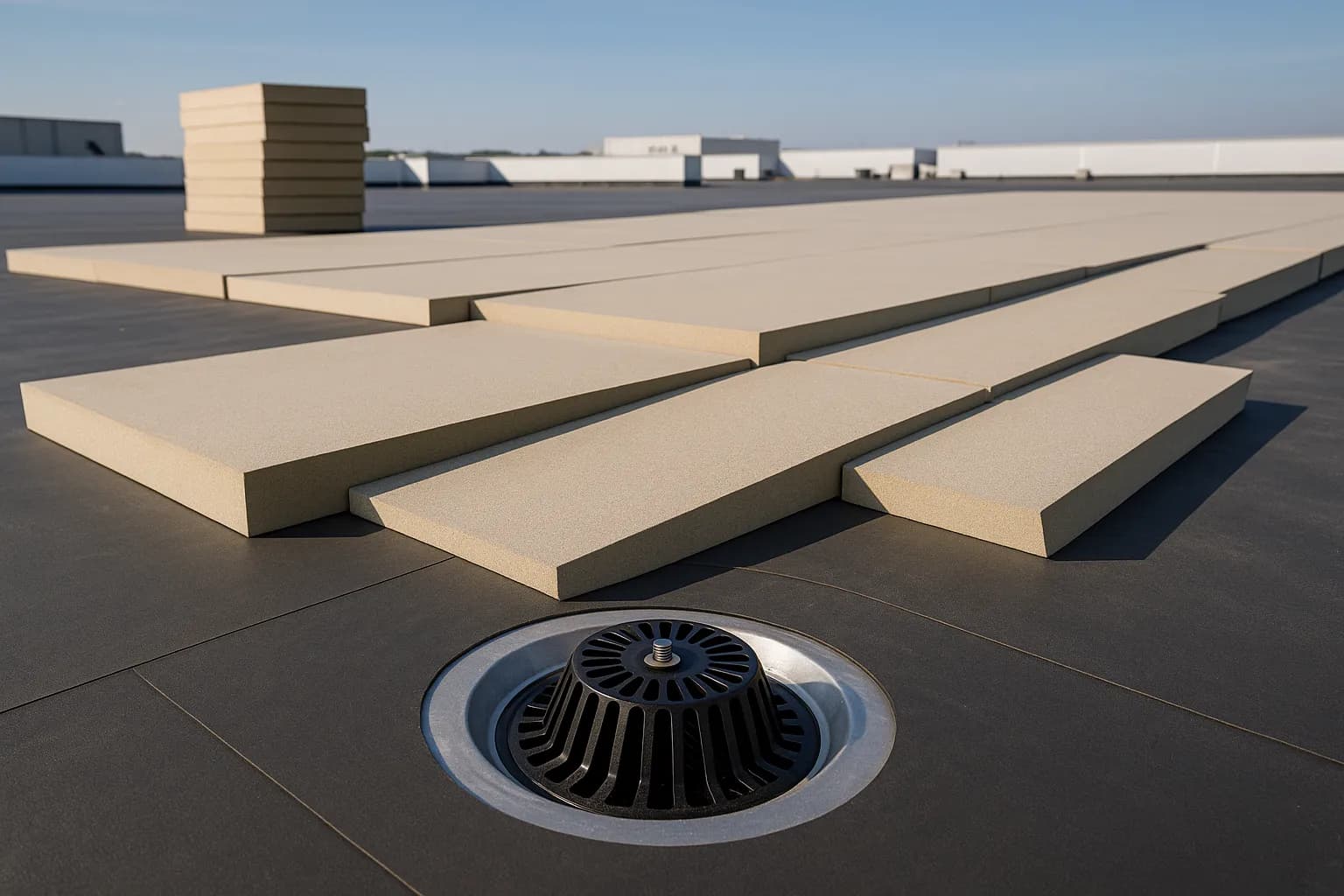
A commercial inspection should document membrane or panel condition, seams, flashings, penetrations, drains, scuppers, edge metal, rooftop equipment, ponding water, and visible interior leak evidence. Ask for dated photographs, roof-plan annotations, prioritized deficiencies, recommended actions, repair urgency, warranty considerations, and a budgetary outlook for maintenance, repair, or replacement.
Is a commercial roof inspection worth the cost?
Yes, when the inspection produces actionable information. A documented inspection can identify active leaks, blocked drainage, failed flashing, membrane deterioration, and warranty risks before they damage insulation, decking, interiors, inventory, or operations. The value is highest when findings are converted into a scheduled maintenance plan and tracked against the roof’s remaining service life.
Roof Inspection Cost: What Commercial Property Managers Should Budget
Roof inspection cost is not a single national price. A basic visual review may cost several hundred dollars, while a large industrial, healthcare, office, retail, or multifamily property requiring detailed documentation and diagnostic testing may cost several thousand dollars. Published commercial roofing guidance identifies roof size, access, height, roof type, report detail, travel, safety requirements, and specialty testing as major cost factors.[11]
Use these figures as planning ranges, not guaranteed quotes: some industry estimates place basic commercial inspections around $250 to $750, detailed photo reports around $750 to $1,500, and large-property, due-diligence, moisture, or infrared assignments at $1,500 to $4,000 or more.[11] Regional labor rates, roof complexity, building occupancy, and procurement requirements can materially change the final proposal.
For facility managers and property managers, the important question is not simply “What does the inspection cost?” It is “What decision will the inspection support?” Define whether you need routine preventive maintenance, leak diagnosis, warranty documentation, capital planning, property acquisition due diligence, or a replacement feasibility assessment.
What Drives Commercial Roof Inspection Cost?
- Roof area and number of buildings: A single small warehouse is generally faster to document than a campus with multiple office, retail, healthcare, or institutional structures.
- Access and safety: Height, locked roof areas, fragile surfaces, rooftop traffic, fall-protection requirements, limited staging, and occupied-building restrictions can increase labor and scheduling costs.
- Roof complexity: Multiple elevations, many penetrations, equipment curbs, skylights, expansion joints, parapets, internal drains, scuppers, and transitions require more inspection time.
- Report requirements: A short service note costs less than a photo-rich condition assessment with roof plans, deficiency locations, repair priorities, lifecycle recommendations, and capital-budget estimates.
- Diagnostic testing: Infrared scanning, moisture surveys, core samples, adhesion testing, or other nondestructive and destructive methods add cost but may be appropriate when concealed wet insulation or widespread deterioration is suspected. GSA roofing service descriptions recognize inspection, moisture analysis, wind-uplift testing, and infrared scanning as distinct services.[3]
- Warranty and compliance needs: Manufacturer warranty reviews, third-party verification, insurance documentation, procurement requirements, and engineering coordination may require qualified inspectors and additional deliverables.

Commercial Roof Inspection Checklist by Roof System
The inspection method should match the roof assembly. Request system-specific observations rather than a generic “roof is good” statement.
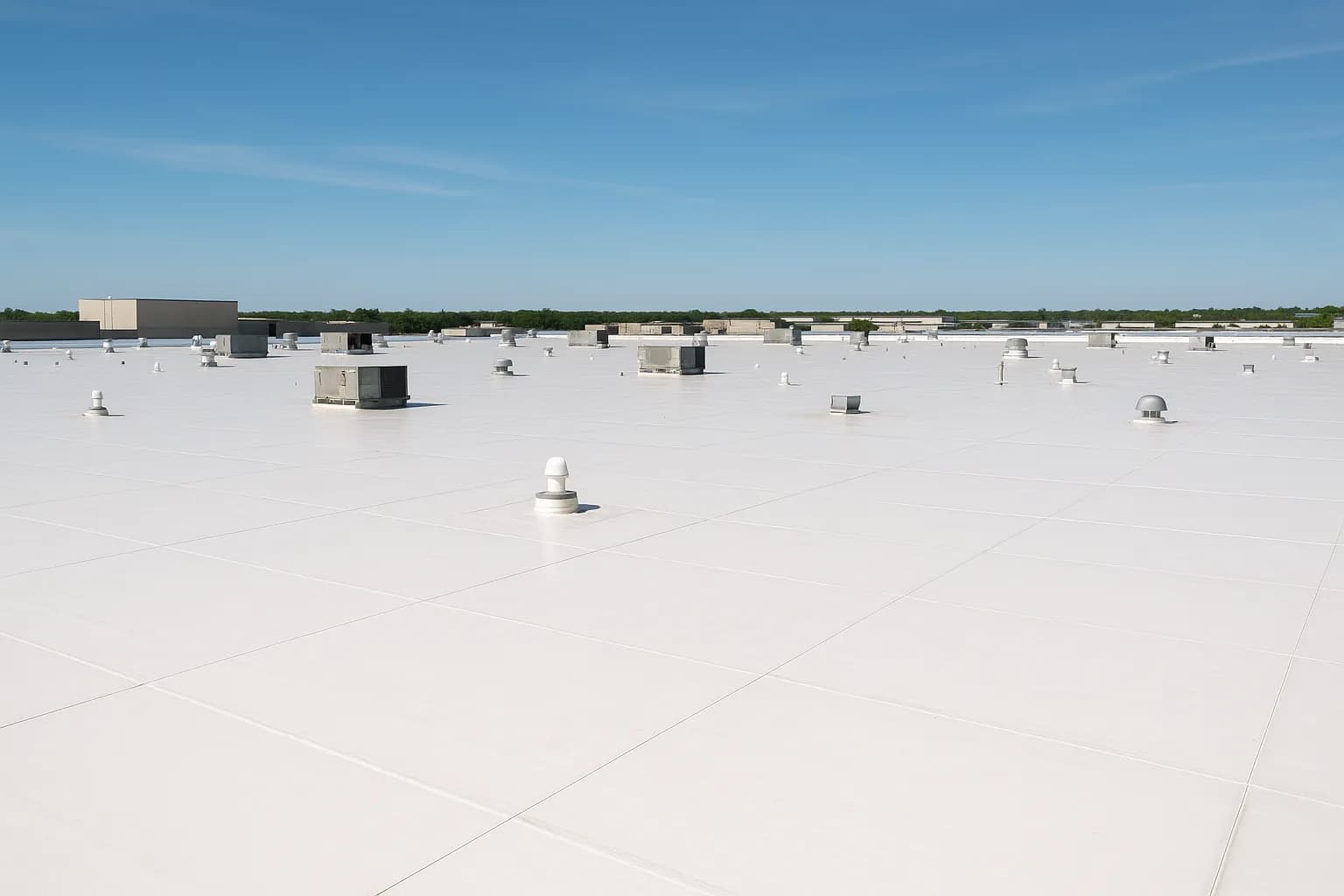
- TPO thermoplastic membrane: Check heat-welded seams, membrane shrinkage, punctures, exposed reinforcement, flashings, termination bars, edge metal, walkway pads, and rooftop traffic damage. Document questionable welds and areas where repairs may affect manufacturer warranty requirements.
- PVC membrane: Examine welded seams, details at pipes and curbs, membrane brittleness or chemical exposure, flashing transitions, fasteners, and areas exposed to grease or incompatible materials. Confirm that proposed repairs use compatible products.
- EPDM rubber: Inspect seams and seam tape, uncured flashing, adhesive transitions, pipe boots, perimeter securement, punctures, weathering, and areas of ponding. EPDM repairs often depend on clean, properly prepared surfaces and compatible accessories.
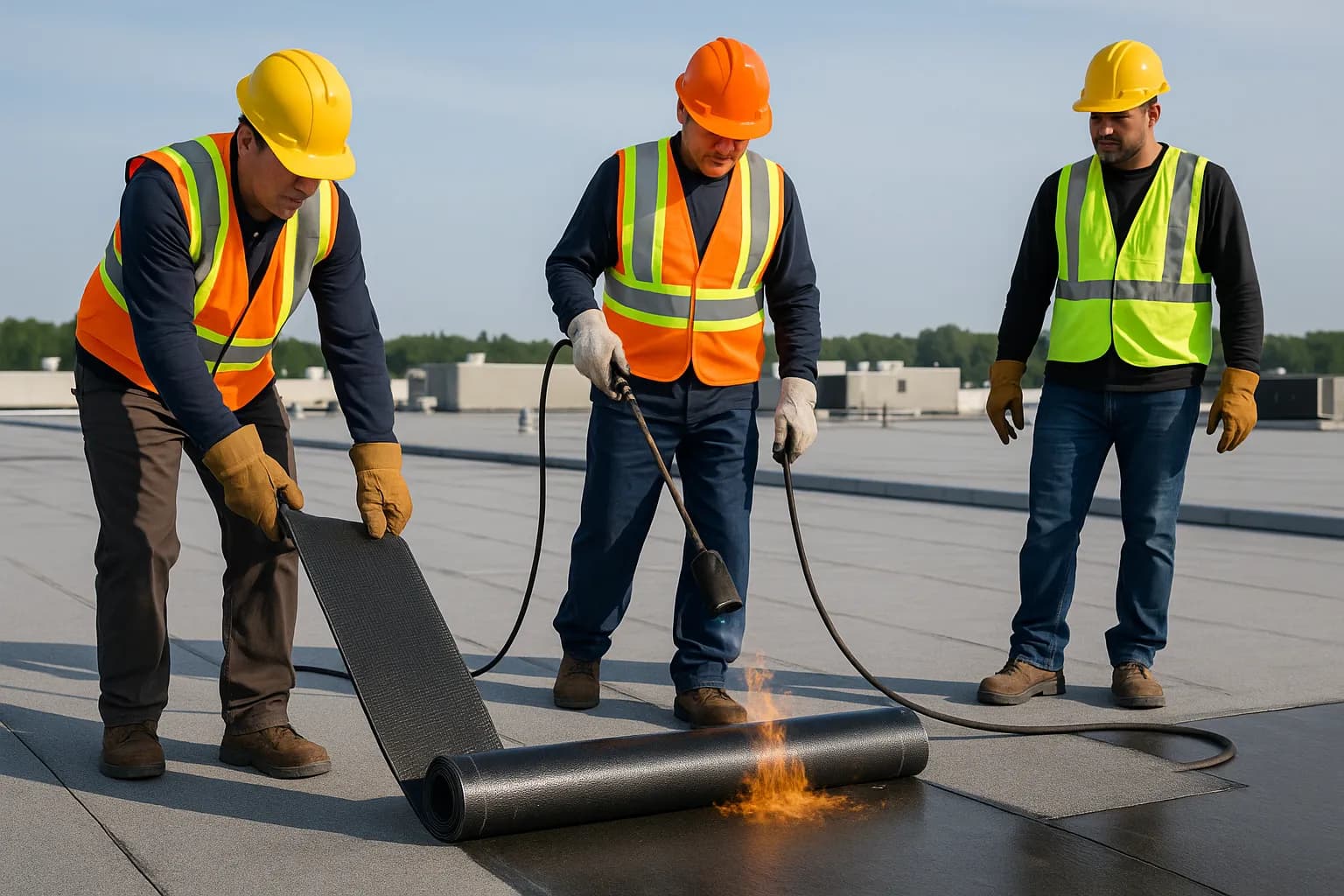
- Modified bitumen: Look for open laps, blistering, fishmouths, splits, exposed reinforcement, deteriorated granule surfacing, failed flashing, and damage around equipment. Record whether the assembly is torch-applied, cold-applied, or self-adhered before specifying repairs.
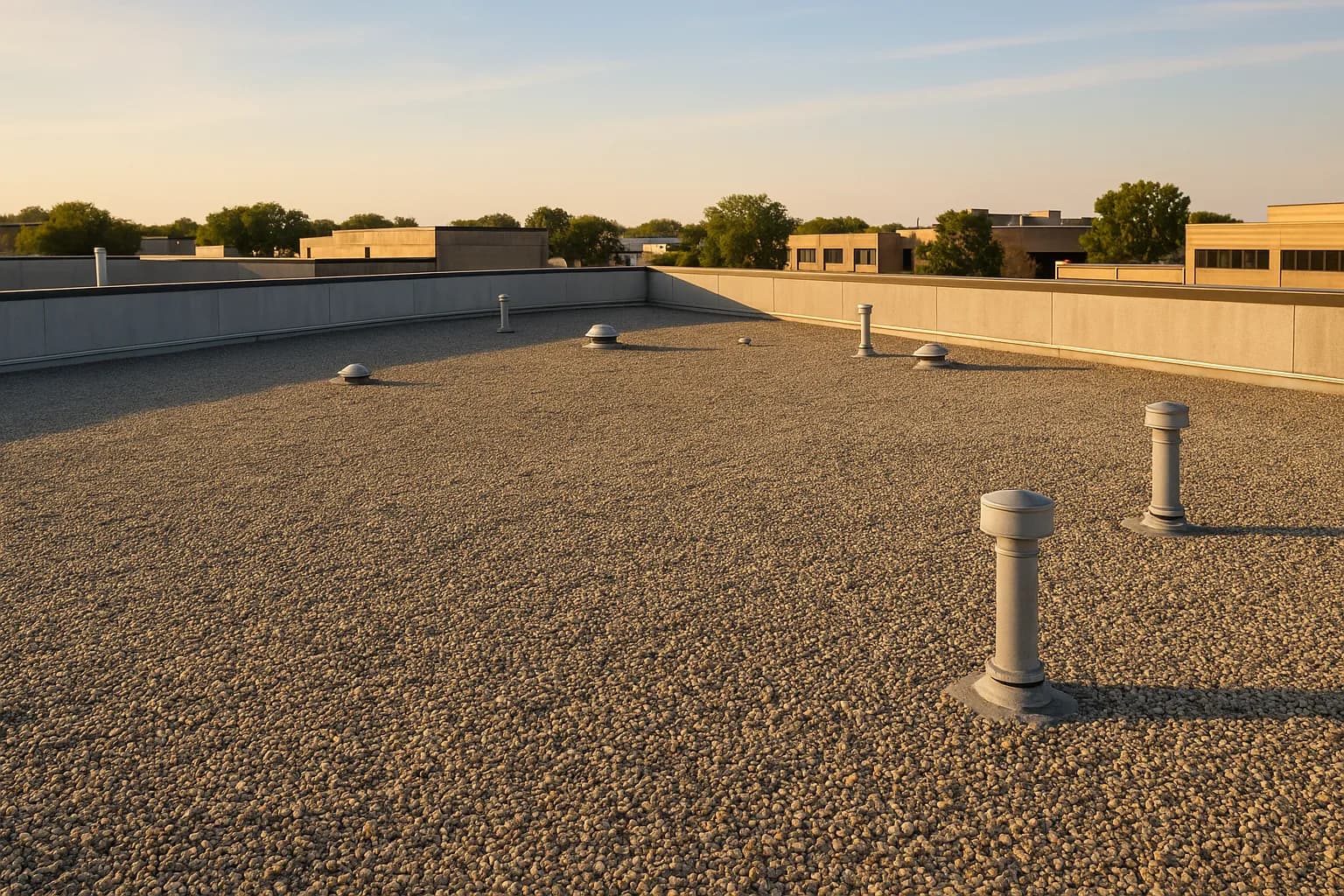
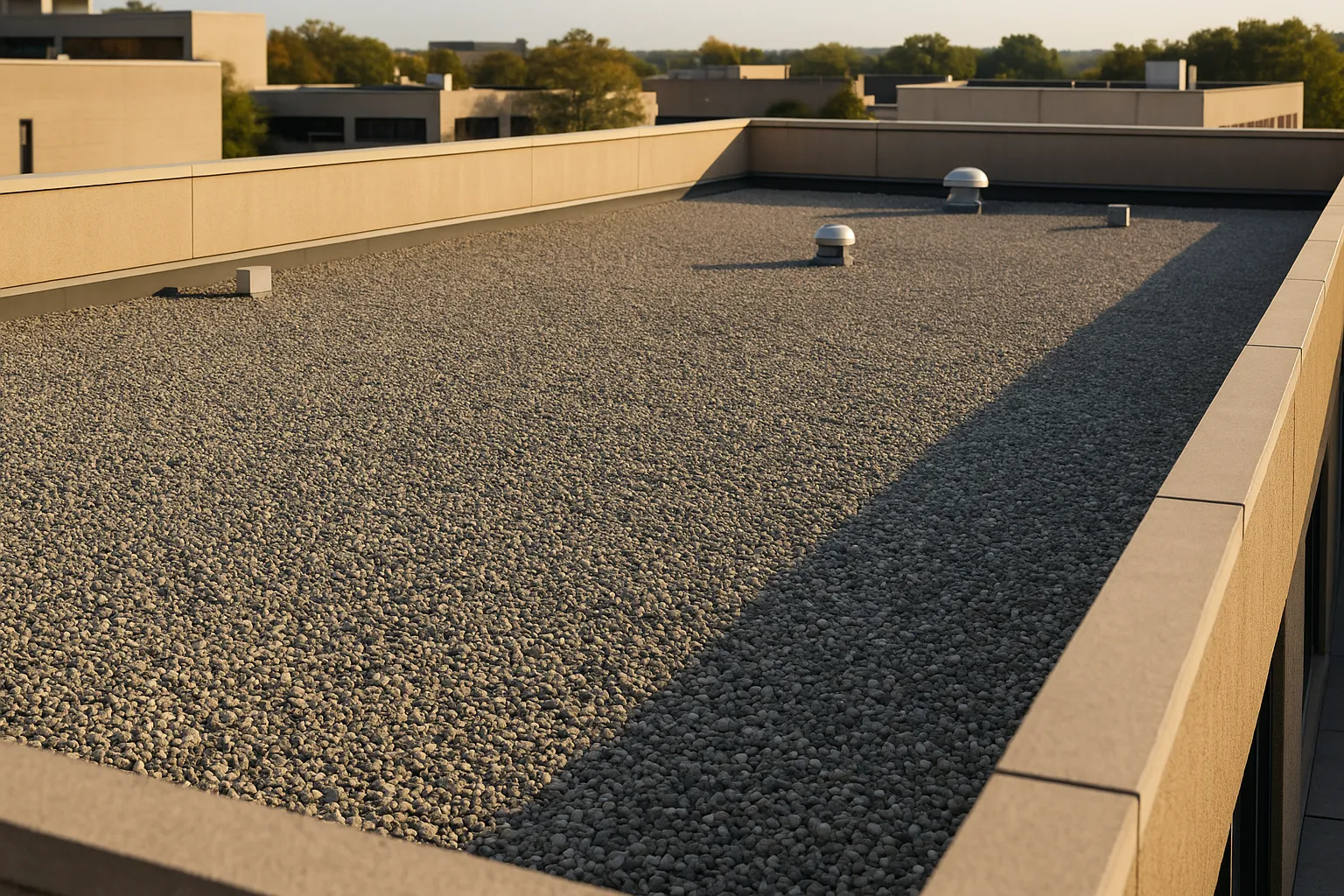
- Built-up roofing, or BUR: Review surfacing, felts, flashing, blisters, splits, exposed asphalt, gravel displacement, perimeter details, and drainage. Moisture testing may help distinguish localized defects from broader concealed deterioration.
- Metal and standing seam: Check panel seams, fasteners, penetrations, closures, ridge and eave details, oxidation, coating failure, oil canning, loose trim, movement-related distress, and dissimilar-metal corrosion. Inspect sealants at transitions without assuming sealant alone is a permanent repair.
Step-by-Step Process for Managing a Commercial Roof Inspection
- Assemble records: Gather original construction documents, roof plans, previous inspection reports, repair invoices, leak logs, warranties, maintenance contracts, and records of rooftop equipment changes.
- Define the assignment: State the building use, roof areas, suspected issues, access constraints, desired report format, and whether the purpose is maintenance, repair, acquisition, warranty, insurance, or capital planning.
- Prequalify inspectors: Ask about commercial low-slope experience, system familiarity, safety procedures, manufacturer training where relevant, references for comparable properties, and conflicts of interest. A contractor who may later bid repairs can be useful, but obtain independent opinions for major capital decisions.
- Require a field survey: The inspector should review the roof surface, perimeter, penetrations, drainage, flashings, equipment interfaces, adjacent walls, and accessible interior areas beneath reported leaks. NRCA recommends scheduled roof-system inspections at least twice per year, preferably in spring and fall.[5]
- Request prioritized documentation: Require photographs, locations, severity, likely cause, recommended temporary action, permanent repair concept, and urgency. Separate active leaks and safety concerns from routine deficiencies.
- Convert findings into work orders: Obtain repair scopes and separate prices for emergency stabilization, corrective repair, preventive maintenance, diagnostic testing, and replacement design. Do not compare a limited inspection price with an engineering-level condition assessment as if they were identical services.
Inspection Scope by Project Size and Building Type
For a small single-building retail property or office, a visual inspection with photographs, drainage review, and a concise deficiency log may be sufficient for routine maintenance. A warehouse or industrial facility may require additional attention to large membrane expanses, rooftop units, loading-area operations, penetrations, and interior inventory exposure.
Healthcare, laboratory, institutional, and occupied multifamily properties warrant tighter coordination because leaks can disrupt essential services, affect infection-control areas, damage sensitive equipment, or create tenant claims. Multi-building portfolios should use a consistent rating system so managers can compare condition, remaining service life, urgent risk, and projected capital needs across assets.
For acquisitions, refinancing, or major capital planning, specify a formal condition assessment rather than a cursory inspection. Consider roof plans, core sampling, moisture mapping, infrared scanning, structural or deck review, and warranty verification when the decision depends on concealed conditions. The inspection proposal should identify exactly which tests are included and which are billed separately.
Repair, Maintenance, or Replacement: Using Inspection Results for ROI
Preventive maintenance is usually the least disruptive option when the roof remains fundamentally serviceable. NRCA states that a comprehensive maintenance program can protect the roof investment and help extend useful life.[1] Typical actions include cleaning drains and scuppers, correcting minor flashing defects, repairing membrane punctures, securing loose metal, removing damaging debris, and documenting rooftop work.
Repair is appropriate when deficiencies are localized and the underlying assembly remains sound. A leak investigation should identify the water-entry mechanism rather than simply seal the first visible interior stain. Ponding water requires drainage analysis; repeated patching without correcting slope, blocked drains, failed seams, or perimeter details can increase long-term cost.
Replacement becomes more compelling when deterioration is widespread, insulation or decking is compromised, leaks are recurring, drainage cannot be practically corrected, the assembly is near the end of its useful life, or repair costs and operational disruption are accumulating. Compare the total ownership implications of each option: immediate price, expected durability, energy and occupancy impacts, warranty conditions, phasing, disposal, and future maintenance.
How to Compare Roof Inspection Cost Proposals
- Request the roof areas, buildings, elevations, and system types covered.
- Confirm whether the price includes travel, access equipment, safety setup, photographs, roof plans, and a written report.
- Ask whether infrared scanning, moisture testing, core samples, and laboratory analysis are included or optional.
- Require a clear distinction between inspection findings and repair recommendations.
- Verify the inspector’s commercial references, insurance, qualifications, and warranty experience.
- Ask for an urgent-action list covering active leaks, unsafe conditions, exposed decking, blocked drainage, and conditions that could damage contents or interrupt operations.
- Check whether the report will support budgeting, warranty claims, insurance documentation, acquisition review, or contractor bidding.
After the inspection, store the report in the property’s roof asset record and update it after every repair, reroofing project, equipment installation, and severe-weather event. A repeatable inspection and maintenance history gives owners stronger evidence for capital decisions and helps contractors price defined scopes instead of investigating the same conditions repeatedly.
Frequently Asked Questions
How often should a commercial building roof be inspected?
NRCA recommends scheduled roof-system inspections at least twice yearly, preferably in spring and fall.[5] Facility managers should also arrange inspections after major storms, unusual ponding, rooftop construction, HVAC work, tenant alterations, or reported leaks. High-risk buildings, aging roofs, and properties with sensitive operations may benefit from more frequent monitoring under a documented maintenance plan.
Does a roof inspection include infrared or moisture testing?
Not necessarily. A standard visual inspection and a diagnostic survey are separate scopes. Infrared scanning, moisture meters, core samples, and other testing should be listed explicitly in the proposal. These services can help locate concealed wet insulation or define replacement areas, but weather, roof construction, surface conditions, and qualified interpretation affect their usefulness.
Can a roof inspection protect a manufacturer warranty?
An inspection alone does not preserve a warranty, but documented inspections and approved maintenance can help demonstrate that the owner followed applicable requirements. Review the actual warranty for inspection frequency, authorized contractors, repair materials, rooftop alterations, notice obligations, and prohibited work. Contact the manufacturer or warranty provider before making repairs that may affect coverage.
What should a commercial roof inspection report contain?
Ask for the inspection date, weather and access conditions, roof-system identification, roof-plan or location references, photographs, observed defects, drainage and flashing findings, interior leak observations, severity ratings, recommended corrective actions, urgency, and limitations. For capital planning, request separate budgetary options for maintenance, repair, testing, and replacement rather than one blended recommendation.
How can property managers reduce long-term commercial roofing costs?
Use a preventive maintenance program, keep drains and scuppers clear, control rooftop traffic, coordinate all penetrations and equipment work, document repairs, and address small flashing or membrane defects before they spread. Maintain warranty records and compare inspection findings over time. The objective is not to avoid all capital spending; it is to direct spending toward the highest-risk conditions and avoid preventable interior and operational damage.
Related Reading on My Roofing Tech
- Tecta America Commercial Roofing Acquires Babilla Roofing in Indiana
- How to Get Insurance to Pay for Roof Replacement: A Commercial Guide
Find a Qualified Commercial Roofing Contractor
Need help acting on this? Browse roofing contractors in your area, or explore commercial roofing services like preventative maintenance, inspections, and emergency response. Are you a contractor? List your business on My Roofing Tech to reach property and facility managers actively searching for help.