 My Roofing Tech
TPO Roofing Installation: A Commercial Building Owner’s Guide
Quick Answers for Property & Facility Managers
How is TPO roofing installed on a commercial building?
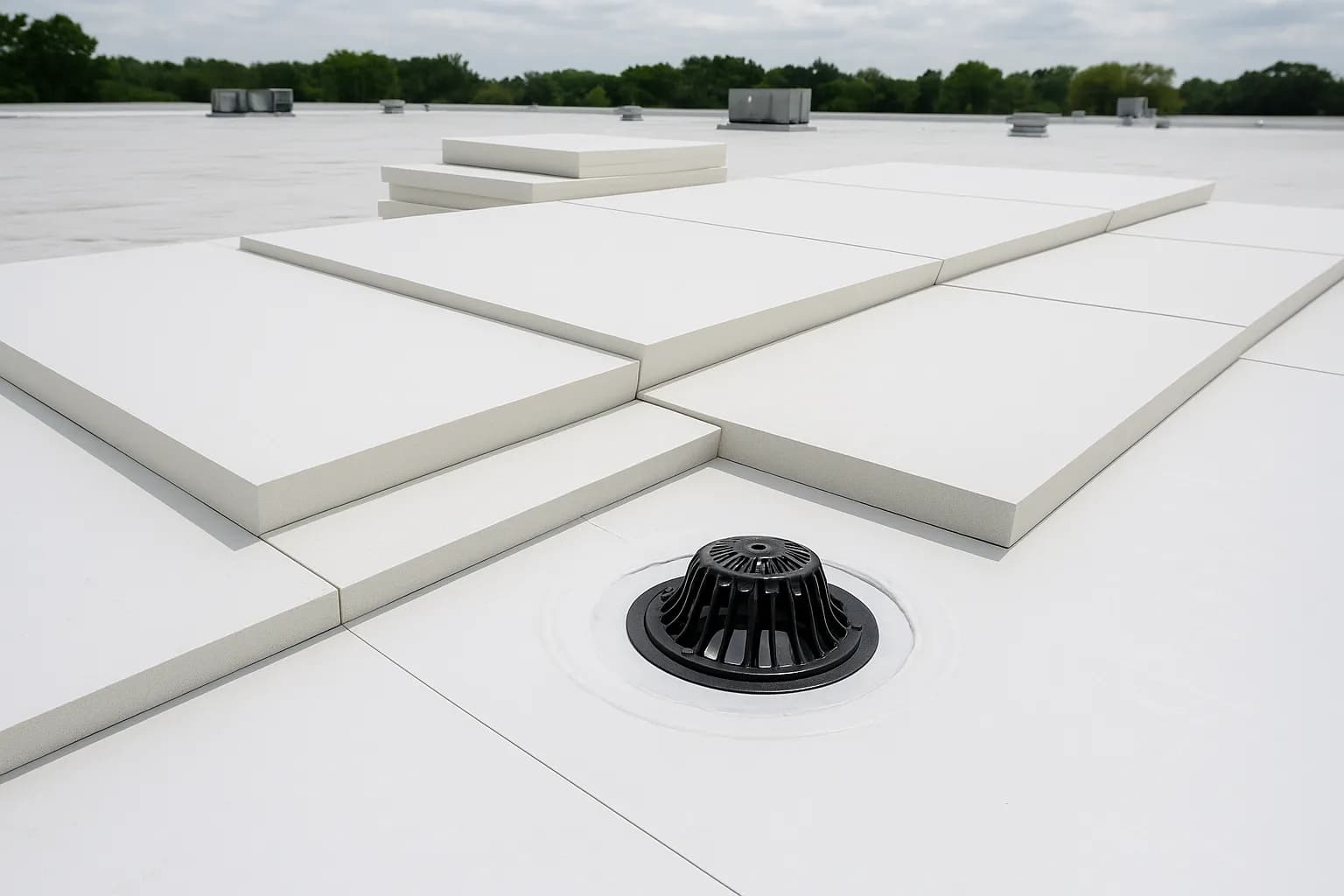
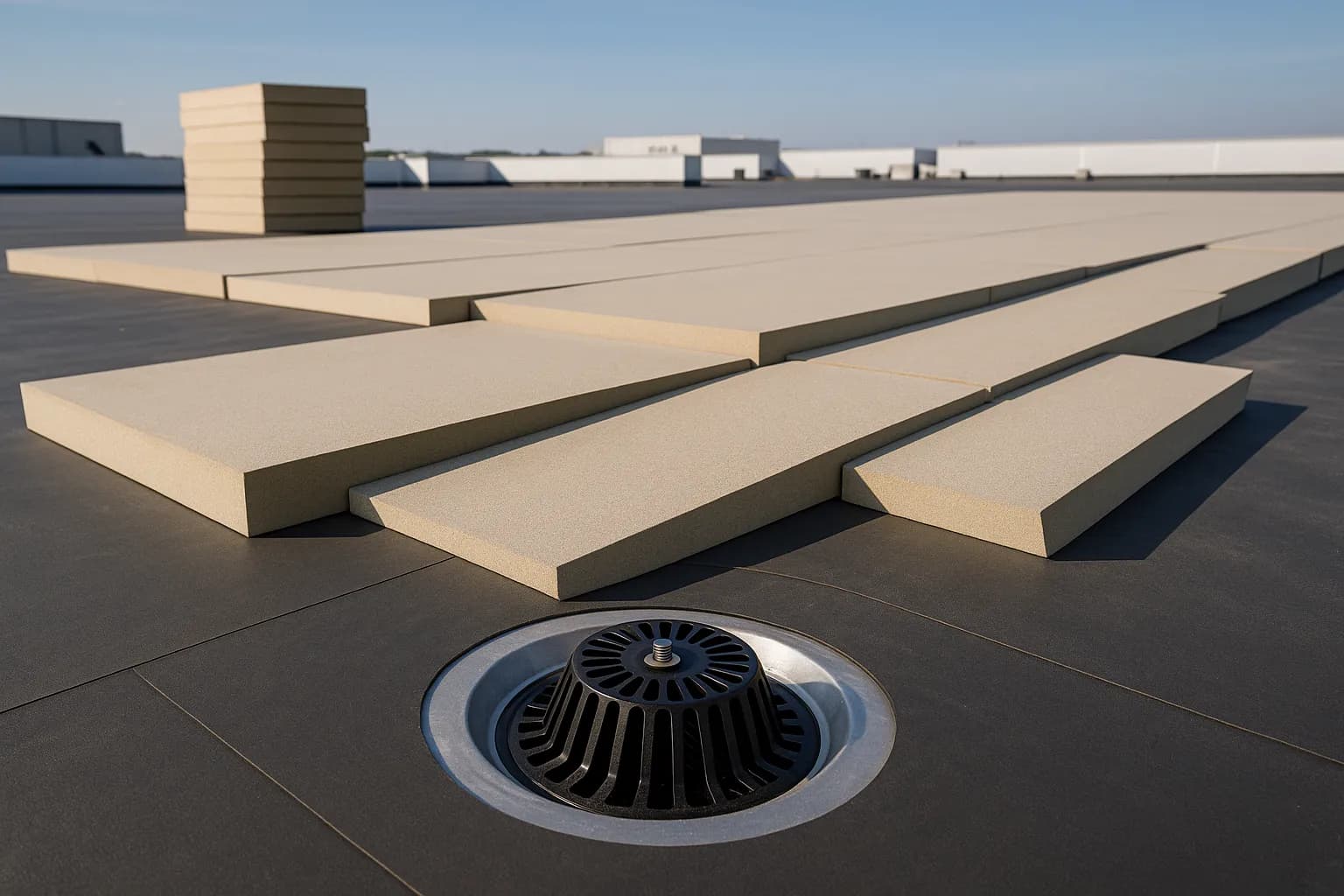
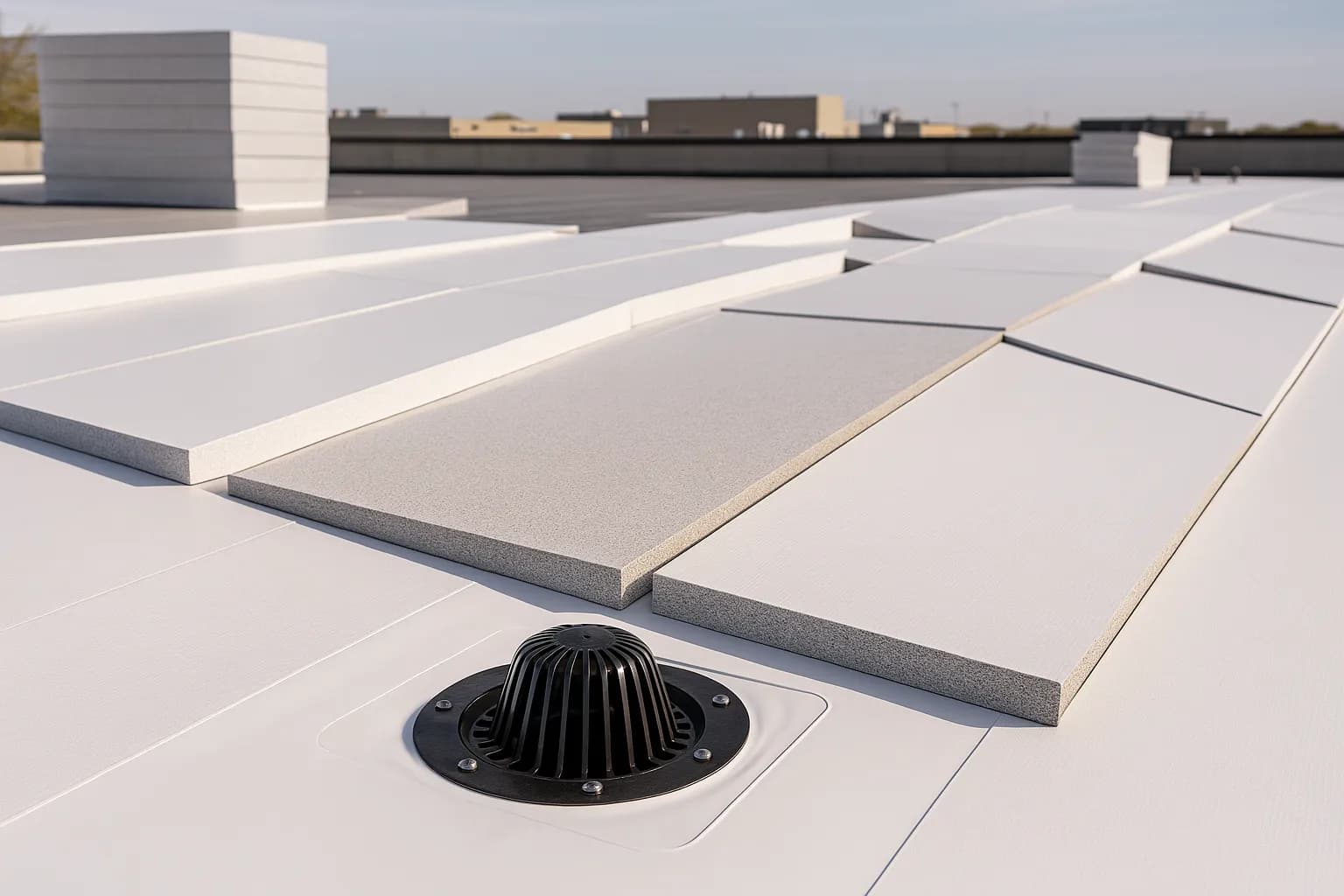
A TPO roofing installation typically includes substrate preparation, insulation and cover-board installation, membrane attachment by adhesive or approved fasteners, hot-air welding of seams, flashing installation, and final quality-control testing. The designer must coordinate drainage, penetrations, edge securement, wind uplift, fire ratings, and manufacturer warranty requirements before work begins.
How long does a commercial TPO roof last?
Commercial TPO service life depends on membrane quality, exposure, detailing, traffic, drainage, installation quality, and maintenance. A facility manager should evaluate the complete warranted assembly—not membrane thickness alone—and schedule inspections, seam checks, drain maintenance, and prompt repairs. Manufacturer warranties commonly vary by system, installer qualification, coverage, and selected term.
Is TPO a good choice for warehouses and office buildings?
TPO can suit warehouses, offices, retail properties, healthcare facilities, and other low-slope commercial buildings when the assembly is properly designed. Its heat-welded seams, reflective surface options, and compatibility with common insulation systems are advantages. Final selection should consider building use, wind exposure, rooftop traffic, chemical exposure, existing conditions, energy objectives, and warranty requirements.
TPO Roofing Installation Starts With Commercial Roof Assessment
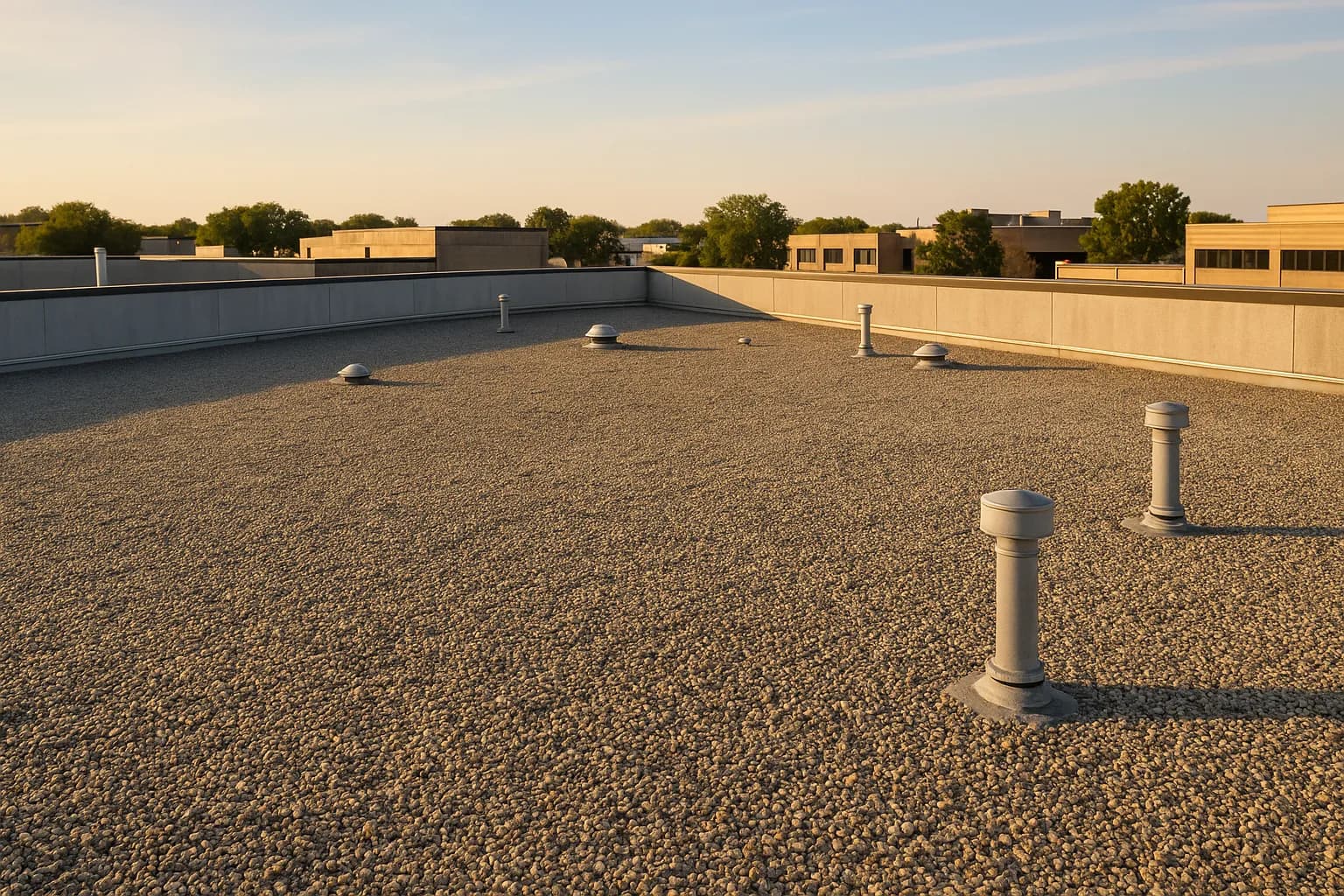
A successful tpo roofing installation begins before materials arrive. The property team, roofing contractor, and design professional should document the existing roof assembly, deck condition, insulation, drainage, rooftop equipment, penetrations, parapets, expansion joints, and edge conditions. A roof consultant can help determine whether a recover, partial replacement, or full tear-off is appropriate.
For offices, retail centers, warehouses, healthcare buildings, and institutional facilities, the installation plan must account for occupant protection, business continuity, access control, odors, noise, fire safety, and temporary weather protection. Ponding water, deteriorated decking, wet insulation, inadequate slope, and unstable curbs should be addressed rather than concealed beneath a new membrane.
- Confirm roof dimensions, slopes, drainage paths, scuppers, drains, and overflow provisions.
- Probe or scan insulation where moisture intrusion is suspected.
- Inspect metal edges, coping, counterflashings, penetrations, and rooftop equipment supports.
- Review structural capacity for new insulation, ballast, equipment, and construction loading.
- Define phasing and temporary tie-offs for occupied or operational buildings.
Choose the TPO Assembly, Attachment Method, and Details
TPO is a thermoplastic single-ply membrane whose seams are generally joined with hot-air welding. Commercial assemblies may be mechanically attached, adhered, or ballasted where permitted by the design and manufacturer. The specification should identify membrane thickness, reinforcement, insulation, cover board, fasteners, plates, adhesives, perimeter securement, flashing materials, and sheet-metal details.
Mechanically attached systems can support efficient installation across large warehouses and industrial roofs, while adhered systems may be selected where appearance, air-barrier continuity, or project-specific wind requirements make them appropriate. Ballasted assemblies require structural review and careful design around edges, penetrations, and service paths. The design must comply with applicable building codes, project specifications, wind-uplift criteria, fire requirements, and manufacturer instructions.
Compare TPO with other commercial systems before committing capital. PVC membrane may be advantageous where certain chemical exposures are expected. EPDM offers a long-established rubber membrane option, but seams and detailing use different materials and techniques. Modified bitumen and built-up roofing provide multi-ply asphaltic assemblies, while standing-seam metal can be appropriate for steep or low-slope metal applications when movement, sealants, drainage, and concealed conditions are fully evaluated.

Control Substrate Preparation and TPO Seam Welding
Installation surfaces must be clean, dry, secure, and suitable for the specified assembly. Wet insulation, loose decking, sharp projections, contaminated surfaces, and damaged nailers can compromise performance and warranty eligibility. Manufacturer guidance emphasizes removing moisture before installation and properly anchoring wood nailers and related perimeter components.
Sheets should be positioned to limit wrinkles and avoid excessive tension. Fasteners and plates must be installed at the specified spacing and depth, and adhesives must be applied within required temperature and coverage limits. TPO seams require consistent hot-air welding with appropriate equipment, settings, overlap, and operator technique. The contractor should test welds at the start of work and at planned intervals, then inspect completed seams for voids, fishmouths, contamination, and incomplete fusion.
- Require documented substrate and moisture checks before covering the deck or insulation.
- Verify fastener patterns, plate placement, adhesive coverage, and perimeter securement.
- Require test welds when conditions, equipment, membrane rolls, or operators change.
- Inspect seam intersections, corners, patches, penetrations, and termination bars carefully.
- Use manufacturer-approved accessories rather than mixing incompatible products.
Detail Flashings, Penetrations, Edges, and Drainage
Many commercial roof leaks originate at transitions rather than in the field membrane. The tpo roofing installation should include written details for parapet walls, curbs, drains, scuppers, skylights, pipes, pitch pockets, expansion joints, rooftop units, walk pads, edge metal, and termination points. Flashings must be securely attached, properly welded or sealed, and coordinated with wall and sheet-metal assemblies.
Drainage deserves special attention on low-slope roofs. TPO will not correct structural settlement or eliminate ponding caused by blocked drains, inadequate slope, deflection, or poorly placed equipment. The project team should correct drainage deficiencies where feasible and include overflow protection. Walk pads should protect service routes without obstructing drainage or creating vulnerable edges.
For facilities with frequent mechanical work, define rooftop traffic routes and service responsibilities. HVAC contractors, solar installers, sign contractors, and other trades should receive roof-access rules. Uncontrolled traffic can puncture membrane, damage flashing, and create disputes over warranty coverage.
Verify Contractor Qualifications, Specifications, and Warranty Terms
Do not select a contractor solely on the lowest bid. Manufacturer specifications commonly require qualified or certified installers for enhanced system guarantees. NRCA identifies its roofing manuals as resources covering installation guidance, industry practices, and building-code considerations, while manufacturer specifications can require documented installer experience and approved system components [5][2].
Request a proposal that clearly separates tear-off, disposal, deck repairs, insulation replacement, membrane work, sheet metal, safety, permits, testing, warranty inspections, and closeout documentation. Manufacturer warranty terms may distinguish a material warranty from an enhanced labor-and-material warranty or a broader system guarantee. Some guarantees cover workmanship only when an approved contractor installs the complete assembly in accordance with current requirements [1][2].
- Confirm the contractor’s current manufacturer authorization for the specified system.
- Require project references for comparable commercial roof size and building use.
- Review exclusions for ponding water, abuse, unauthorized alterations, and maintenance failures.
- Obtain product data, approved details, inspection reports, photographs, and as-built drawings.
- Make warranty issuance a closeout requirement, not a post-project assumption.
Budget TPO Roofing Installation Against Repair and Replacement Options
Pricing varies with roof area, access, tear-off requirements, deck repairs, insulation levels, attachment method, parapet complexity, equipment density, regional labor, disposal, and warranty selection. A small retail or office roof with many penetrations may require more detailing per square foot than a large, unobstructed warehouse. Healthcare and occupied facilities may also carry higher phasing, infection-control, and safety costs.
Compare three capital paths: targeted repair, preventative maintenance, and full replacement. Repair may be sensible when defects are isolated and the existing assembly remains serviceable. Maintenance can extend performance by keeping drains clear, repairing minor flashing defects, documenting changes, and identifying problems early. Replacement is more defensible when leaks are recurring, insulation is wet, seams are failing broadly, drainage is inadequate, or repairs no longer provide reliable risk control.
Evaluate ROI through avoided interior damage, reduced emergency calls, protection of inventory and equipment, tenant retention, operational continuity, energy objectives, and deferred capital planning. Reflective TPO may support cool-roof objectives, but energy results depend on climate, insulation, HVAC efficiency, roof color, building use, and maintenance. Avoid promising savings without a building-specific analysis.
Manage Closeout and Preventative Maintenance After Installation
Before accepting the roof, the owner’s representative should complete a final walk-through with the contractor and, where required, the manufacturer. Confirm that temporary patches, debris, excess fasteners, damaged membrane, incomplete flashing, and unsealed penetrations are corrected. Keep warranty documents, invoices, product data, photographs, test results, roof plans, and maintenance instructions in the facility record.
Schedule inspections at least twice yearly and after severe weather, major rooftop work, or reported leaks. Inspect seams, flashings, drains, edge metal, penetrations, walk pads, membrane damage, and signs of ponding. Clean drainage components using procedures that do not damage the membrane. Document every repair and require other trades to use approved access and protection methods.
- Create a roof asset register with system type, installation date, warranty, and contractor contacts.
- Assign responsibility for drain cleaning and rooftop access control.
- Photograph and map defects so recurring conditions can be tracked.
- Respond quickly to interior leaks while recognizing that visible stains may be remote from the entry point.
- Obtain manufacturer or qualified contractor review before modifying covered roof areas.
Frequently Asked Questions
What should a commercial property owner include in a TPO roofing installation specification?
Include the complete assembly, not only the membrane: deck preparation, insulation, cover board, attachment method, fastener patterns, perimeter securement, flashing, edge metal, drainage, rooftop equipment details, fire and wind requirements, testing, cleanup, closeout documents, and warranty criteria. Require current manufacturer details and an installer qualified for the exact system. Clear specifications reduce change orders and make competing bids easier to compare.
Does a TPO roof need a cover board?
A cover board is not automatically required for every TPO assembly, but it may improve puncture resistance, provide a more uniform substrate, support certain fire or wind designs, and protect insulation during construction. The appropriate board depends on the deck, insulation, attachment method, occupancy, rooftop traffic, and manufacturer-approved assembly. The design professional should document the decision rather than treating it as a generic upgrade.
What are common TPO roofing installation mistakes on commercial buildings?
Common failures include covering wet insulation, inadequate perimeter securement, inconsistent hot-air welds, poorly detailed penetrations, incompatible accessories, damaged membrane from other trades, blocked drains, and incomplete closeout inspections. Facility managers can reduce risk by requiring documented substrate checks, seam testing, approved details, controlled roof access, and prompt correction of punch-list items before warranty issuance.
Can TPO be installed over an existing commercial roof?
A TPO recover may be possible when the existing assembly is structurally sound, dry, compatible, and permitted by code and the manufacturer. Wet insulation, deteriorated decking, excessive trapped moisture, unstable membranes, or unsuitable existing materials may require removal. A recover can reduce disruption and disposal, but it must not conceal conditions that will continue causing leaks or compromise attachment.
How should facility managers compare TPO with EPDM, PVC, modified bitumen, BUR, or metal roofing?
Compare complete assemblies and lifecycle requirements rather than material labels. Review climate, chemical exposure, roof traffic, fire classification, wind uplift, drainage, appearance, repair methods, expected maintenance, warranty terms, and contractor availability. TPO and PVC use heat-welded thermoplastic seams; EPDM uses rubber membrane seams; modified bitumen and BUR are asphaltic multi-ply systems; metal requires careful movement, fastener, sealant, and drainage design.
What documents should be retained after TPO roof replacement?
Retain the signed contract, approved submittals, roof plans, insulation and membrane data, fastener patterns, manufacturer warranty, installer certification, inspection and weld-test records, photographs, change orders, repair maps, maintenance instructions, and final lien or payment documentation. These records help validate warranty claims, guide future penetrations, support capital planning, and demonstrate that maintenance responsibilities were assigned.
Related Reading on My Roofing Tech
- TPO Roofing Material: A Commercial Facility Manager’s Guide to Selection, Repair, and ROI
- Westlake Royal Consolidates US Tile and Newpoint Commercial Roofing Brands
Find a Qualified Commercial Roofing Contractor
Need help acting on this? Browse roofing contractors in your area, or explore commercial roofing services like preventative maintenance, inspections, and emergency response. Are you a contractor? List your business on My Roofing Tech to reach property and facility managers actively searching for help.