 My Roofing Tech
Sewer Line Replacement Cost: What Commercial Property Managers Need to Know
Quick Answers for Property & Facility Managers
What is the typical sewer line replacement cost for commercial properties?
For commercial properties, sewer line replacement cost typically ranges from $50 to $250 per linear foot, with full projects often running from $8,000 to $30,000+ depending on depth, access, and method (open trench vs. trenchless).[4][6][12][13] Larger, complex sites or long runs can exceed these ranges.[4][9][10]
Which factors most affect sewer line replacement cost on a commercial building?
Key cost drivers are pipe length and depth, soil conditions, access constraints, chosen repair method (open trench vs. trenchless), restoration needs for pavement or landscaping, and local labor rates.[4][6][9][12] For commercial buildings, utility congestion, traffic control, and permitting can further increase total project cost.[9][10]
How should facility managers budget for sewer line replacement vs. repair?
Minor repairs may cost $150 to $3,800, while full sewer line replacement commonly ranges from $3,000 to $25,000+ depending on length and method.[6][9][13] Facility managers should obtain camera inspections, detailed per‑foot pricing, and separate restoration estimates to decide whether targeted repair or full replacement offers better long‑term ROI.[4][6][9]
Understanding Sewer Line Replacement Cost on Commercial Sites
For commercial property managers, facility managers, and building owners, a failing sewer line is both an operational and financial risk. National data shows sewer line replacement costs typically run $50 to $250 per linear foot, with full projects often between $3,000 and $25,000+ depending on length, depth, and method.[6][9][12][13]
For 100 feet of pipe, traditional open-trench replacement usually ranges from about $8,000 to $30,000+, while trenchless approaches (pipe bursting or cured-in-place lining) often fall between $6,000 and $25,000+.[4][9] Complex urban or large commercial projects can significantly exceed these figures when deep excavation, traffic control, and site restoration are required.[9][10]
From a roofing perspective, sewer line work can impact rooftop penetrations, vent stacks, and storm systems that share routing with sanitary lines. Understanding the sewer line replacement cost and scope early allows you to coordinate with roofing vendors, avoid unnecessary disruption to TPO, PVC, EPDM, modified bitumen, BUR, and metal roof systems, and protect warranties.
Key Cost Drivers Facility Managers Must Evaluate
To accurately anticipate sewer line replacement cost for a commercial building, focus on the following technical and site-specific drivers.
1. Pipe length, depth, and location
National guidance indicates costs of $50–$250 per foot, with averages around $150 per foot including labor and materials.[6][12] Longer runs, greater depth, and lines beneath building slabs, parking lots, or landscaped courtyards push projects toward the upper end of that range or beyond.[4][9]
- Shallow runs (under turf or soft soils) often fall closer to $50–$125 per foot for open trench.[9]
- Deep lines under pavement or structures commonly reach $80–$300+ per foot, especially when saw-cutting, shoring, and restoration are required.[4][9][10]
- Large commercial campuses may require multiple segments and manholes, increasing both footage and complexity.
2. Replacement method: open trench vs. trenchless
Traditional open-trench work is typically quoted around $80–$300+ per foot, whereas trenchless rehabilitation (pipe bursting or lining) ranges about $60–$250+ per foot.[4][9][13] Trenchless methods reduce surface disruption but may require more specialized contractors and equipment.
- Open trench: Lower upfront tooling cost but higher surface restoration (pavement, landscaping, possible structural work).
- Trenchless (CIPP or pipe bursting): Often 10–25% less than full excavation on constrained sites and can avoid tearing up parking lots or entry drives.[4][5][10]
3. Site restoration and above-grade structures
Many estimates focus on the pipe work but undervalue restoration. Driveways, sidewalks, landscaping, retaining walls, and even building foundations can substantially increase the total sewer line replacement cost.[4][9]
For commercial buildings, also consider:
- Re-striping and patching asphalt parking lots.
- Concrete slab or sidewalk replacement near entrances.
- Landscape remediation, irrigation, and signage relocation.
- Potential interior slab repair if lines run below the building.
4. Coordination with roof systems and plumbing vents
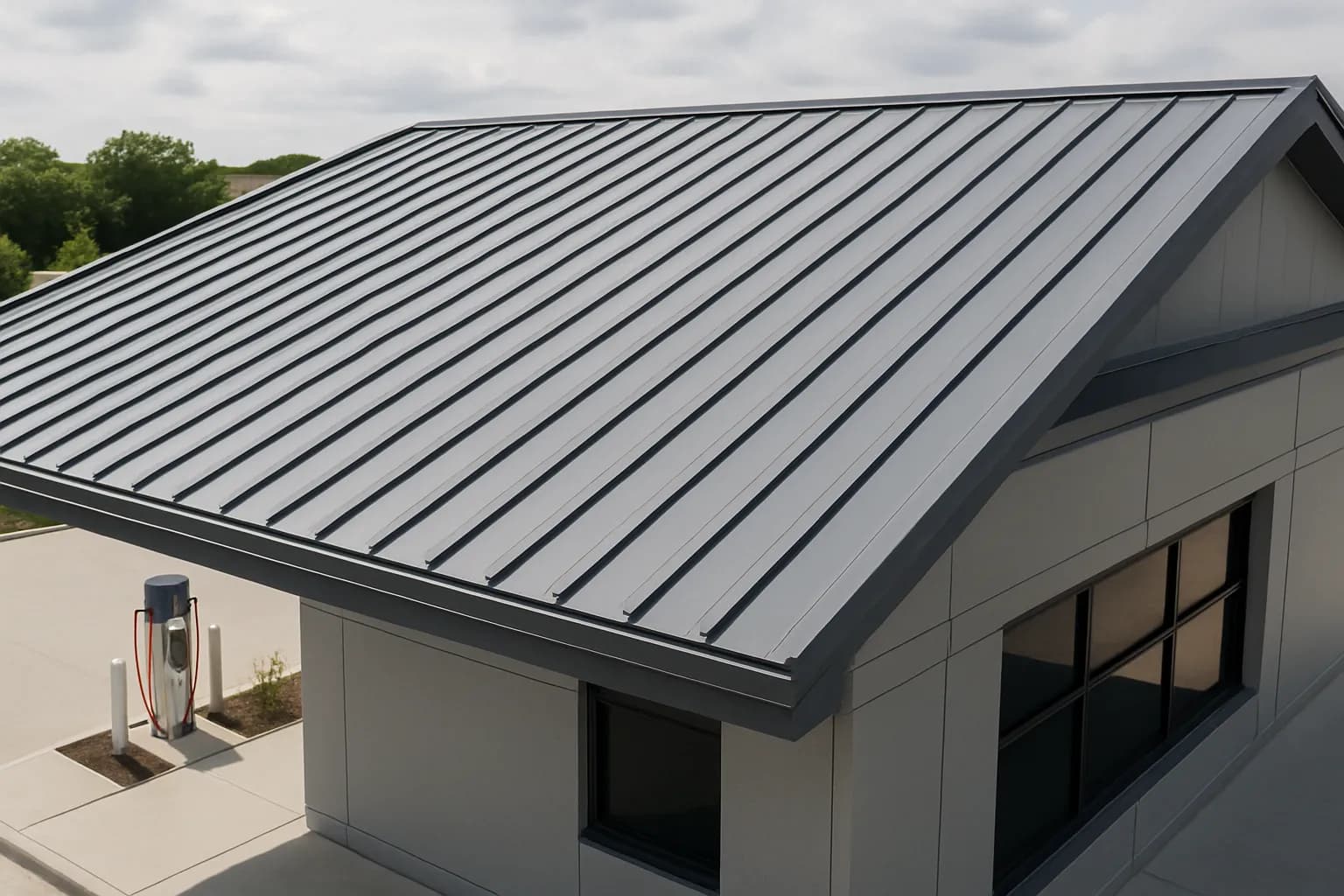
While the sewer lateral is below grade, its vertical connections and vent stacks pass through your roof. Any replacement or rerouting can impact penetrations in TPO, PVC, EPDM, modified bitumen, BUR, or metal roof systems.
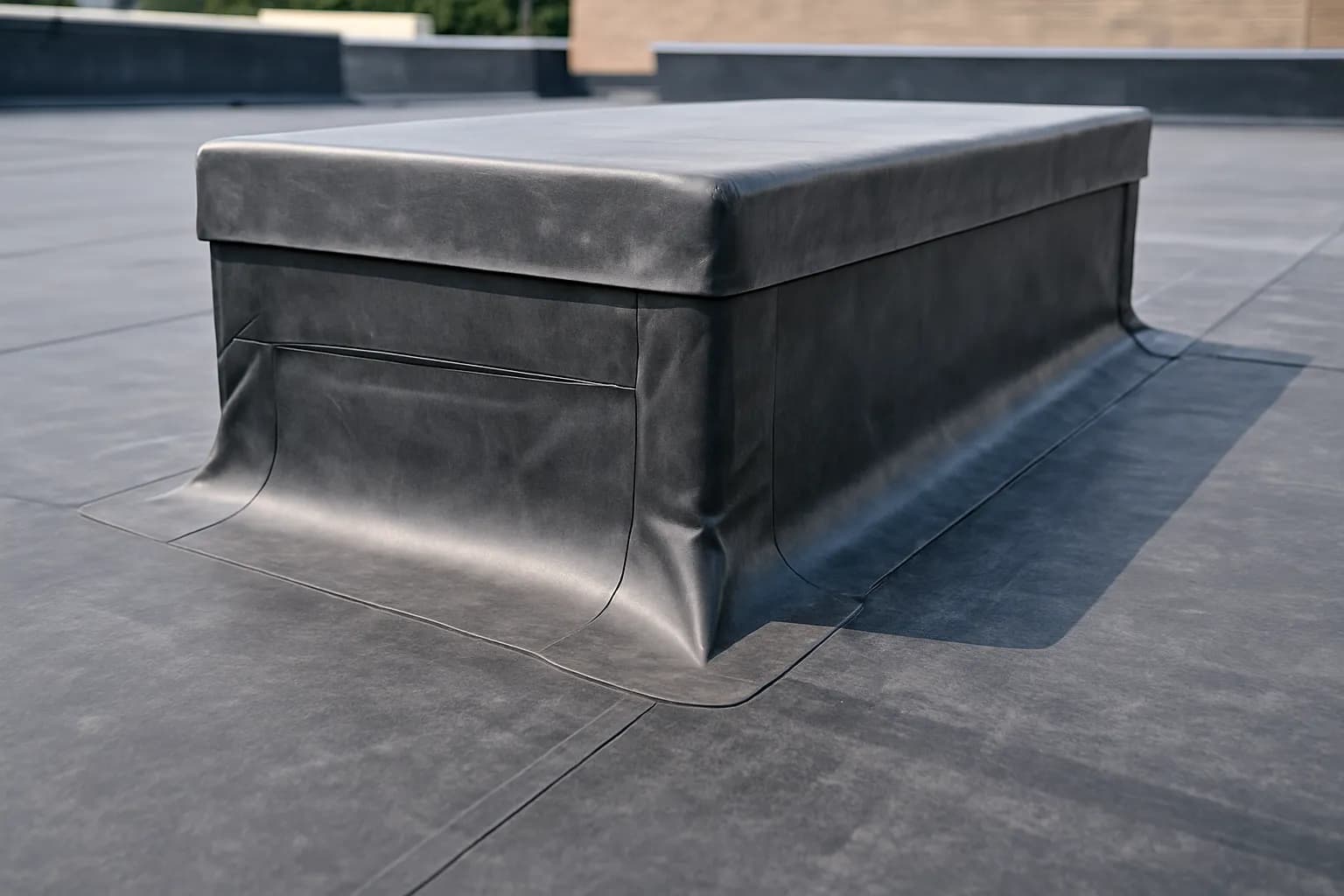
- TPO and PVC membranes: Penetration flashings must be re-welded or re-flashed using manufacturer-approved details to maintain warranties.
- EPDM and modified bitumen: New plumbing stacks require reinforced boots and proper tie-ins to prevent future leaks.
- BUR and metal/standing seam: Pay particular attention to pitch pockets, pipe boots, and sealants during and after plumbing work.
Budget a small roofing allowance for inspection and repair around vent stacks after sewer work, especially on older roofs.
Step-by-Step Planning Guide for Commercial Sewer Line Replacement
A structured process helps property and facility managers manage risk, control cost, and protect building operations and roof assets.
Step 1: Diagnose the problem with professional inspection
Sewer line issues often start with backups, slow drains, or foul odors. Before committing to a full replacement, arrange for a licensed plumber to perform:
- Video camera inspection of the line from the building to the municipal main.
- Location and depth measurements at key segments.
- Condition assessment (root intrusion, cracks, collapses, corrosion, bellies).
These diagnostics underpin accurate sewer line replacement cost estimates and reveal whether targeted repair is feasible.[2][6][9]
Step 2: Compare repair vs. full replacement
Data from national cost guides shows sewer line repairs can range from $150 to $3,800, while full replacements often fall between $3,000 and $25,000+ depending on scale and complexity.[6][9][13]
For commercial managers, weigh:
- Age and material of the existing line (clay, cast iron, PVC).
- Frequency of past repairs and known problem areas.
- Disruption risk if a partial repair fails later under a critical access road.
Often, a full replacement or trenchless rehabilitation offers better lifecycle ROI when the pipe is at or beyond its expected service life.
Step 3: Obtain detailed, apples-to-apples bids
To control sewer line replacement cost, request itemized proposals from at least two or three qualified contractors, specifying:
- Exact footage and depth.
- Chosen method (open trench vs. trenchless) and pipe materials.
- Separate line items for surface restoration (paving, concrete, landscaping).
- Traffic control, shoring, and permits.
Ask contractors to express costs per foot and total project cost, and to clarify exclusions like unexpected utility conflicts or additional manholes.[4][9][12]
Step 4: Coordinate with roofing and building operations
Before mobilization:
- Review plumbing drawings and confirm any vent or stack work that could affect roof penetrations.
- Notify your commercial roofing contractor to inspect and prepare flashing details for TPO, PVC, EPDM, modified bitumen, BUR, or metal roofs where penetrations may change.
- Plan access routes for excavators or trenchless rigs to avoid damaging rooftop equipment, canopies, or sensitive hardscapes.
On healthcare, retail, or office buildings, sequence noisy or disruptive work to minimize impact on occupants and critical operations.
Step 5: Monitor execution and document changes
During the project, facility managers should:
- Confirm depths and alignments match plans.
- Verify materials and fittings are as specified.
- Document any scope changes and associated cost impacts.
After installation, require a final camera inspection and keep videos and plans on file—helpful for future tie-ins, roof drain routing, and capital planning.
Cost, ROI, and Capital Planning for Commercial Sewer Line Work
From a portfolio perspective, sewer line replacement is a capital event similar in scale to a major roof project. National averages for full replacement frequently cluster around $3,319 to $8,000 for typical properties, but complex commercial sites and long laterals can reach or exceed $20,000+.[9][12][13][15]
Integrating sewer replacement with roof and site upgrades
To optimize ROI:
- Align large sewer line projects with planned roof replacements on TPO, PVC, EPDM, modified bitumen, BUR, or metal assemblies so penetrations and stacks can be re-flashed under new membranes.
- Combine parking lot or sidewalk rehab with sewer work to spread mobilization and restoration costs.
- Use the opportunity to correct site drainage or add cleanouts that simplify future maintenance.
Budgeting and contingency planning
Because subsurface conditions can be unpredictable, set a contingency (often 10–20% of projected sewer line replacement cost) to cover unknown utilities, unsuitable soils, or necessary design tweaks.[4][9] On institutional or healthcare facilities, build in extra contingency for infection control measures and access restrictions.
For portfolios, track sewer line age and material across sites and prioritize replacements at properties with chronic backups or known structural defects. This approach reduces unplanned outages and emergency premiums.
Practical Checklists for Property and Facility Managers
Pre-Project Planning Checklist
- Obtain camera inspection and written condition report for the sewer line.
- Map line routing, depth, and conflicts with parking areas, utilities, and building slabs.
- Identify roof penetrations and vents tied to the line; notify roofing contractor.
- Decide preferred method (open trench vs. trenchless) based on disruption tolerance.
- Request itemized, per‑foot bids with clear restoration line items.
- Verify permits, traffic control plans, and safety requirements.
Construction Phase Checklist
- Confirm pipe material, diameters, and fittings match specifications.
- Monitor excavation depth and ensure proper bedding and backfill.
- Coordinate with roofing vendor for vent stack flashing or boot replacement.
- Inspect restoration of pavements, sidewalks, and landscaping.
- Collect final camera inspection footage and as‑built documentation.
Post-Project and Roof Coordination Checklist
- Schedule roof inspections focusing on plumbing penetrations and flashings.
- Update asset register with sewer line replacement details and warranty terms.
- Integrate sewer line condition into long‑term capital plans alongside roof system life expectancy.
- Implement periodic sewer maintenance (jetting, inspections) to extend service life.
By approaching sewer line replacement cost as a strategic investment—and coordinating closely with roofing and site management—commercial property and facility managers can reduce operational risk, protect building assets, and avoid disruptive emergency failures.
Frequently Asked Questions
How much should a commercial property budget per foot for sewer line replacement?
Most national cost guides place sewer line replacement between $50 and $250 per linear foot, with typical averages around $150 per foot including labor and materials.[6][12] Commercial projects at greater depth, under pavement, or requiring trenchless methods tend toward the higher end, so managers should also include contingency for restoration and unknown subsurface conditions.[4][9]
Is trenchless sewer line replacement more cost-effective for commercial buildings?
Trenchless methods (pipe bursting and lining) often cost about $60–$250+ per foot and can reduce surface restoration compared with open trench.[4][9][13] On commercial sites with extensive paving or tight access, this can improve overall ROI by limiting disruption, speeding completion, and preserving parking or landscaping, even if per‑foot costs are similar to traditional methods.[4][5]
How does sewer line replacement interact with commercial roof systems and warranties?
While the lateral is below grade, vent stacks and penetrations tied to the sewer line pass through roof systems such as TPO, PVC, EPDM, modified bitumen, BUR, and metal. Any change to these penetrations requires manufacturer-compliant flashing repairs. Coordinating plumbing and roofing contractors prevents leaks and avoids voiding roof warranties during sewer work.
When is full sewer line replacement better than repeated spot repairs?
If camera inspections show widespread deterioration, multiple bellies, or recurring root intrusion, full replacement often delivers better lifecycle ROI than repeated spot repairs. While repairs may range from $150 to $3,800, full replacements from $3,000 to $25,000+ can eliminate chronic failures and business interruption for high-occupancy or critical-use commercial buildings.[6][9][13]
What compliance and risk factors should facility managers consider?
Managers must account for local plumbing codes, permitting, and inspection requirements, as well as OSHA and trench safety standards. Ignoring failing sewer lines risks health code violations, tenant complaints, and costly emergency work. Proactive replacement, documented inspections, and coordination with roof and site management reduce liability and long-term operational risk.
Related Reading on My Roofing Tech
- Commercial Roofing Lawsuit Highlights Insurance Risk for Property Managers
- EV Charging Station Installation for Commercial Properties: Roof & Site Planning Guide
Find a Qualified Commercial Roofing Contractor
Need help acting on this? Browse roofing contractors in your area, or explore commercial roofing services like preventative maintenance, inspections, and emergency response. Are you a contractor? List your business on My Roofing Tech to reach property and facility managers actively searching for help.