 My Roofing Tech
Commercial Drain Cleaning: Practical Roof Drain Maintenance for Facility Managers
Quick Answers for Property & Facility Managers
What is commercial drain cleaning and why does it matter for flat roofs?
Commercial drain cleaning is the inspection and removal of debris, sludge, and blockages from roof and storm drains using mechanical, vacuum, or hydro‑jetting tools.Clean drains prevent ponding water, leaks, structural loading issues, and costly emergency repairs on commercial flat roofs.
How often should commercial roof drains be cleaned on offices, retail, and warehouses?
Most commercial facilities should inspect roof drains at least monthly during wet seasons and schedule professional commercial drain cleaning one to four times per year, depending on debris load, nearby trees, and local rainfall.[3][5] Higher‑risk sites (dense trees, heavy storms) need more frequent service.
What is the difference between preventative drain cleaning and emergency clog removal?
Preventative commercial drain cleaning uses scheduled inspections, flushing, and camera or hydro‑jetting to keep lines clear before problems occur.[3][6] Emergency service responds to active backups, flooding, or overflowing roof drains, focusing on fast restoration of flow rather than long‑term optimization.[4]
Why Commercial Drain Cleaning Is Mission-Critical for Flat Roofs
For property managers and facility managers, commercial drain cleaning is not just a plumbing task—it is a core risk-control strategy for every low-slope roof. Blocked roof drains and leaders trap water on the membrane, driving leaks, structural loading issues, and costly business interruption.
Industry guidance for commercial properties emphasizes regular inspection, planned cleaning, and access to emergency drain services to prevent blockages and backups.[3][4] Storm drains and catch basins must also be cleaned frequently and monitored for performance over time.[5] When you coordinate roof and plumbing maintenance, you dramatically reduce leak calls and extend roof life.
On TPO, PVC, EPDM, modified bitumen, BUR, and metal roofs, drains and scuppers are the weakest links in the waterproofing chain. A small clog at a strainer, internal drain bowl, or vertical leader can quickly turn a minor maintenance issue into a major leak claim.
Core Methods Used in Commercial Drain Cleaning
Commercial drain cleaning vendors use a mix of manual and advanced technologies. Understanding these helps you ask the right questions and scope the right level of service for your building.
- Mechanical snaking (cabling): Steel cables with cutting heads are used to physically break up clogs and roots in drain lines and laterals.[7] Selecting the proper cable size and blade is critical for effective cleaning.[7]
- Hydro‑jetting (high‑pressure water jetting): High‑pressure water scours interiors of pipes to remove grease, sludge, and mineral buildup without excavation.[3][4][9] For larger commercial lines, this is often the preferred deep-clean method when piping condition allows.
- Vacuum-assisted debris removal: Industrial vacuum trucks (often called Vactor trucks) remove silt, leaves, and trash from storm drains and catch basins during commercial storm drain cleaning.[5][9]
- Camera inspections: Sewer cameras allow technicians to see inside drain and sewer lines, locate blockages, and inspect pipe condition.[6][7] Running tools “blind” increases risk, so reputable pros use cameras whenever the line history is unknown.
- No-touch foam and detergent cleaners: In sensitive environments, such as food manufacturing, foam-based cleaners and low-pressure rinsing minimize aerosolizing contaminants while cleaning drains.[2]
For roof drains, the most common combination is manual debris removal at the drain bowl and strainer, followed by mechanical snaking or hydro‑jetting in vertical leaders and horizontal storm lines when backing up. For storm drains at grade, vacuum trucks and hydro‑jetting are typically used together.[5][9]
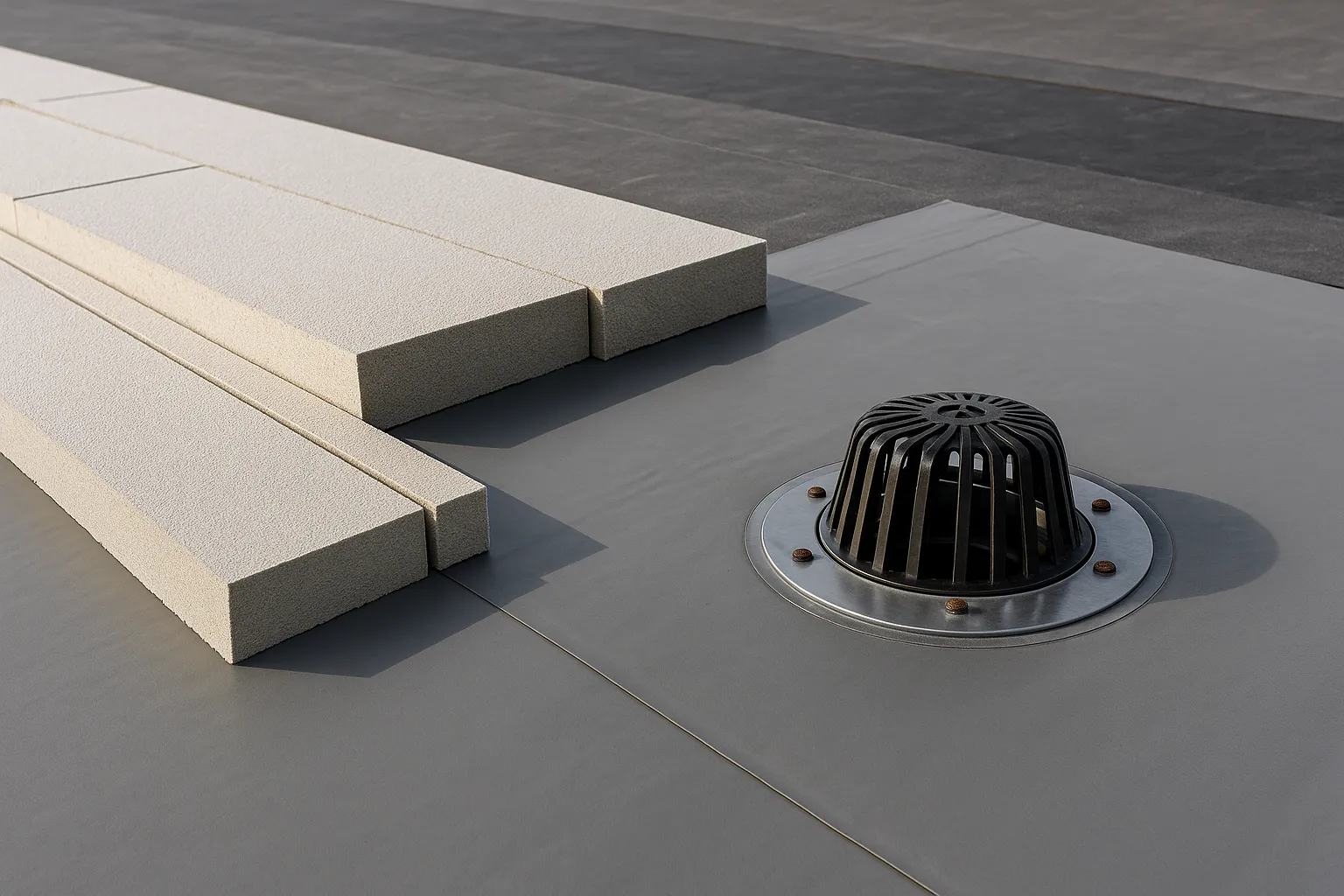
Step-by-Step Roof Drain Cleaning Process for Commercial Buildings
While licensed plumbing and roofing professionals should perform invasive work, facility teams can manage a structured inspection and light cleaning program that dramatically cuts emergency calls.
1. Pre-planning and safety
- Verify roof access, fall protection, and weather conditions; avoid drain work during lightning or high winds.
- Review roof drawings to identify all roof drains, scuppers, overflows, and storm leaders.
- Check with your plumbing contractor on any known line defects before scheduling hydro‑jetting in older piping.
2. Roof-level drain and scupper inspection
- Walk the roof and map each drain, scupper, and overflow for every roof section.
- Look for ponding water, membrane staining, and debris mounds near drains, which indicate flow restrictions.
- For each drain, inspect the strainer, clamping ring, and surrounding flashing for cracks, gaps, and loose hardware.
3. Manual debris removal at the drain
- Remove drain covers and strainers where safe and permitted.[2]
- Hand-remove leaves, trash, loose ballast, and organic buildup from the drain bowl.[2][5]
- Clean drain covers and strainers according to facility policy; re-install securely.[2]
4. Line cleaning and flushing
- If drains are slow or backing up, have your commercial drain cleaning vendor snake the line with appropriately sized cable, using camera inspection to locate choke points.[7]
- For deeper buildup, schedule hydro‑jetting in storm lines and laterals, focusing on heavy-use or historically problematic areas.[3][9]
- After mechanical cleaning, run low-pressure water to confirm flow and help remove loosened debris.[7]
5. Sanitizing and documentation
- Where sanitation is a concern (healthcare, food processing), flood drains with approved sanitizing solutions after cleaning and verify pH and temperature of sanitizers.[2]
- Document each drain’s condition, cleaning method, and any pipe deficiencies found via camera.[3]
- Update digital maintenance records and tie findings into your roof asset management plan.[3][6]
This process should be integrated with regular roof walks and leak response protocols so that drain problems are caught before they create membrane failures or structural issues.
Roof System Specifics: How Drains Interact with TPO, PVC, EPDM, Modified Bitumen, BUR, and Metal
Each roof system has unique vulnerabilities around drains and scuppers. Commercial drain cleaning must be coordinated with roof membrane inspection to avoid damage.
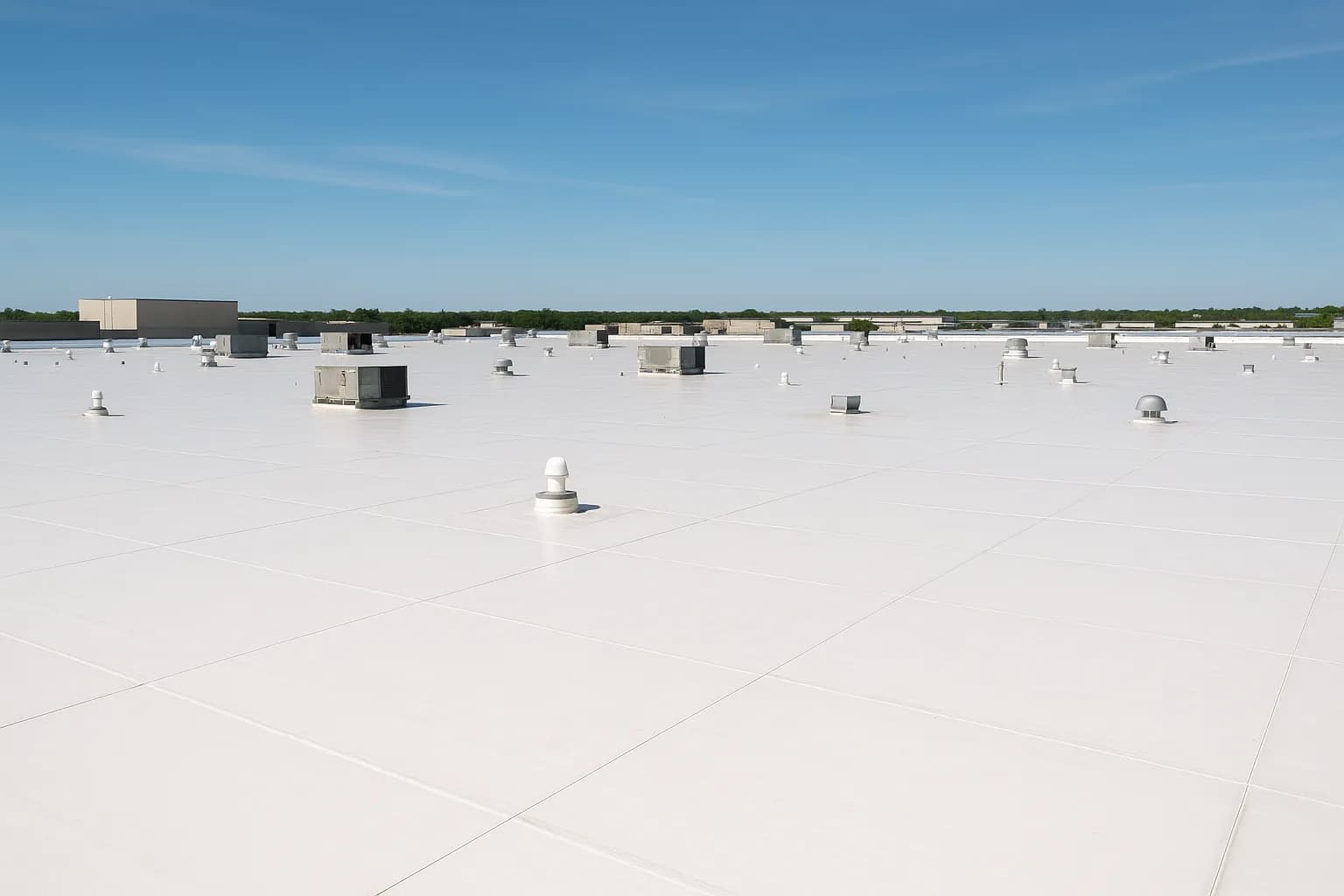
- TPO and PVC (thermoplastic single‑ply): Drain assemblies are typically heat‑welded to the membrane. Standing water from clogs accelerates plasticizer loss and seam stress, and aggressive tools can damage welded flashings. Focus on keeping strainers clear and use controlled hydro‑jetting downstream, not at the membrane interface.
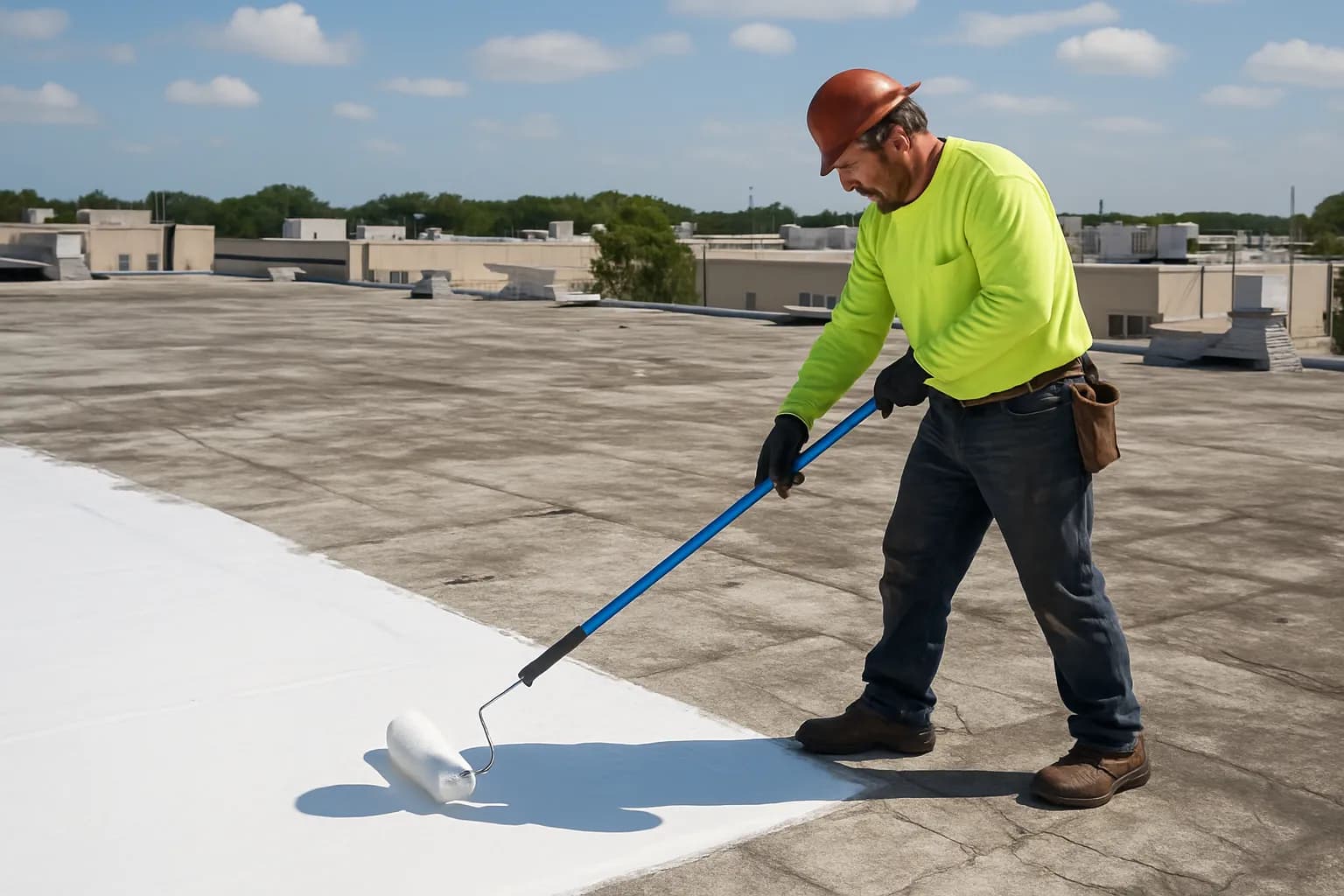
- EPDM (rubber): EPDM relies heavily on adhesives and compression seals around drains. Long-term ponding from blocked drains stresses seams and can lead to interior leaks. Avoid harsh chemicals that may affect rubber, and monitor drain seals whenever lines are cleaned.
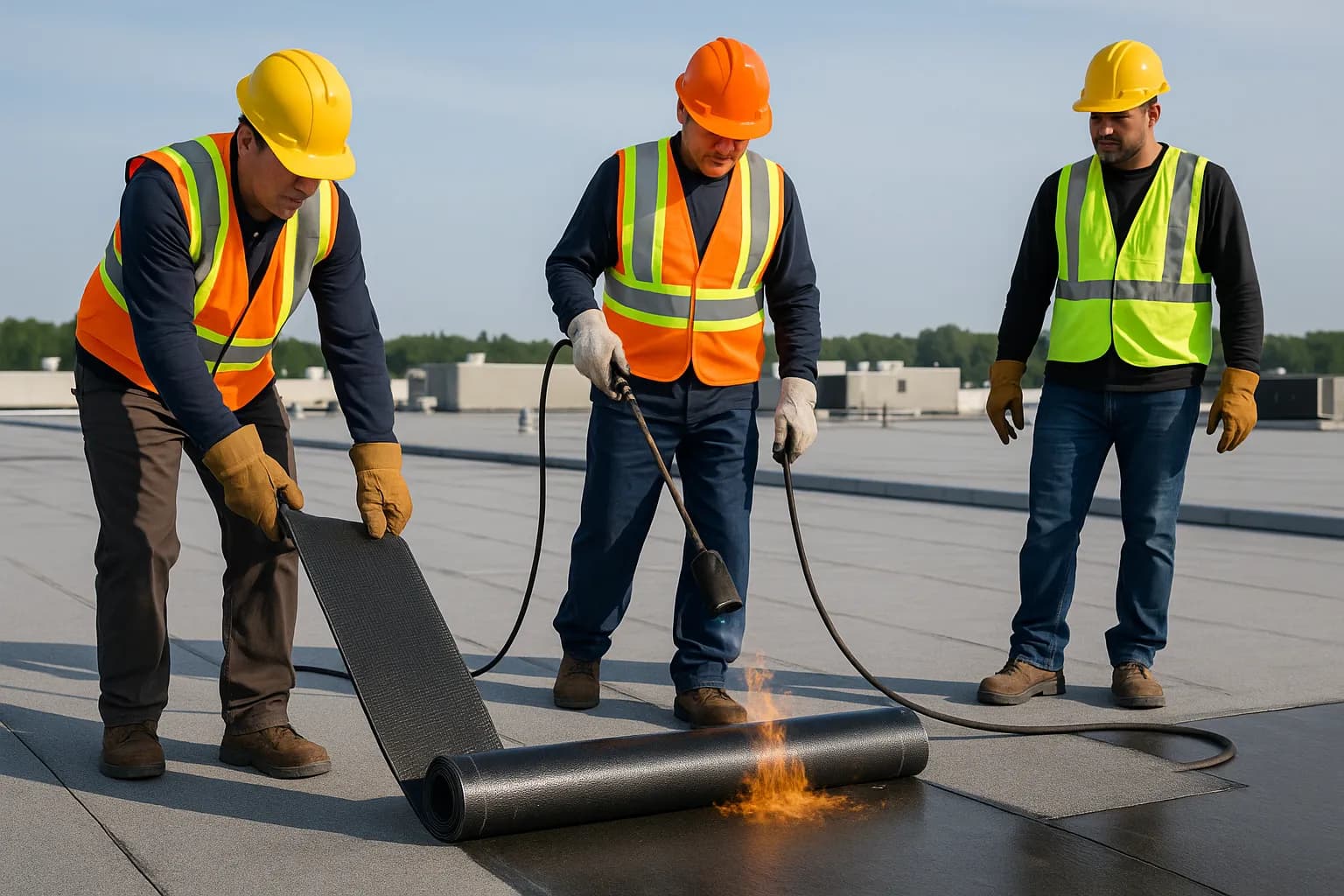
- Modified Bitumen: Drains are usually set in reinforced bituminous flashings. Debris around drains can trap moisture and degrade surfacing. Cleaning must include inspection of the drain sump and flashing for splits and blisters, especially after severe ponding.
- Built-Up Roofing (BUR): BUR systems may have heavy aggregate that migrates toward drains. Clogged drains can submerge felts, causing interply damage. Part of commercial drain cleaning on BUR roofs is redistributing loose gravel after cleaning to prevent re-clogging.
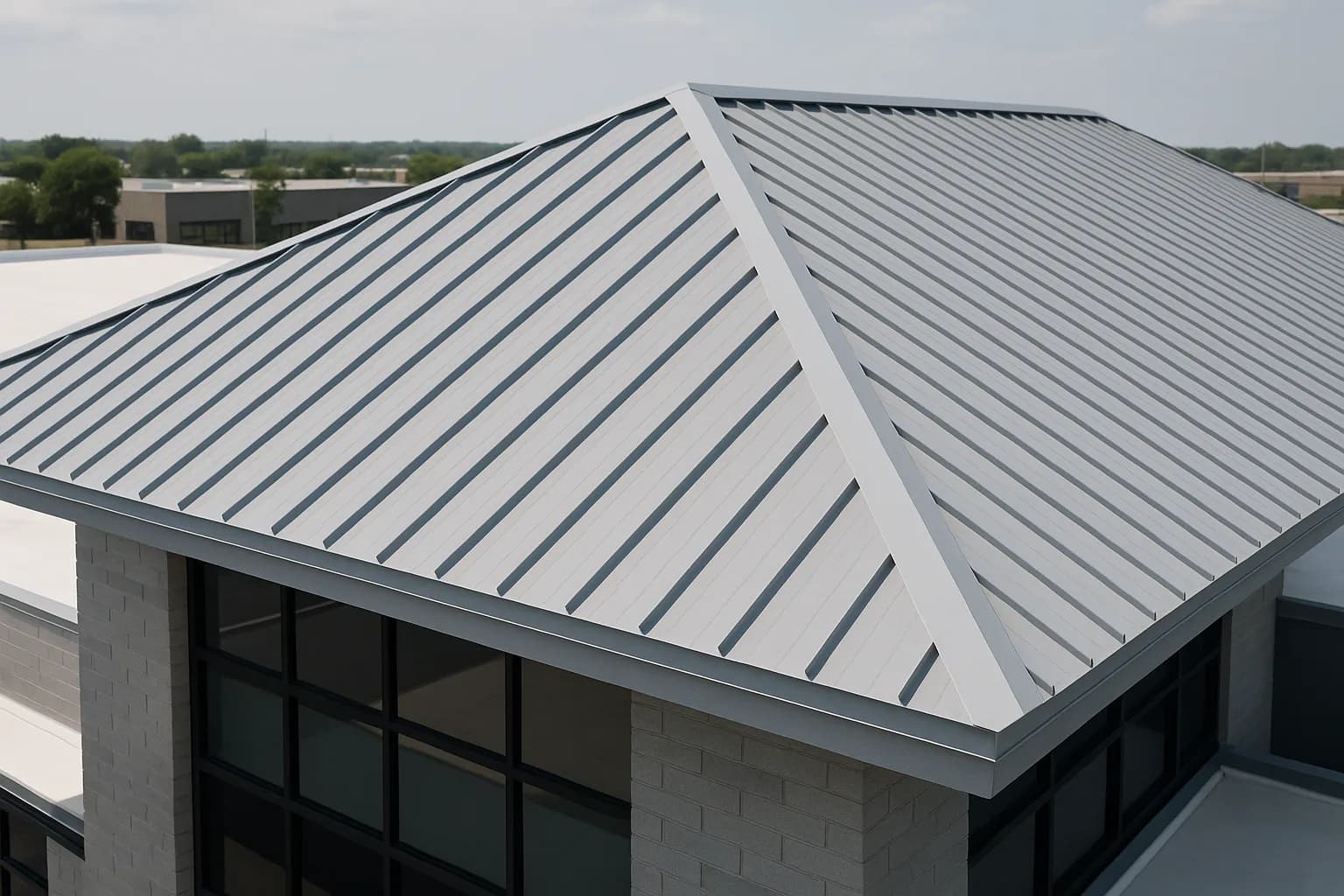
- Metal and standing seam roofs: These often rely on gutters, scuppers, and downspouts rather than traditional internal drains. Blocked gutters or leaders cause overflow into walls and behind facades. Routine gutter and downspout cleaning, plus storm drain maintenance, is essential in these assemblies.
For facility managers, the key is to schedule drain cleaning in lockstep with semi-annual roof inspections and immediately after major storm events. That minimizes the chance that a plumbing issue becomes a roofing failure.
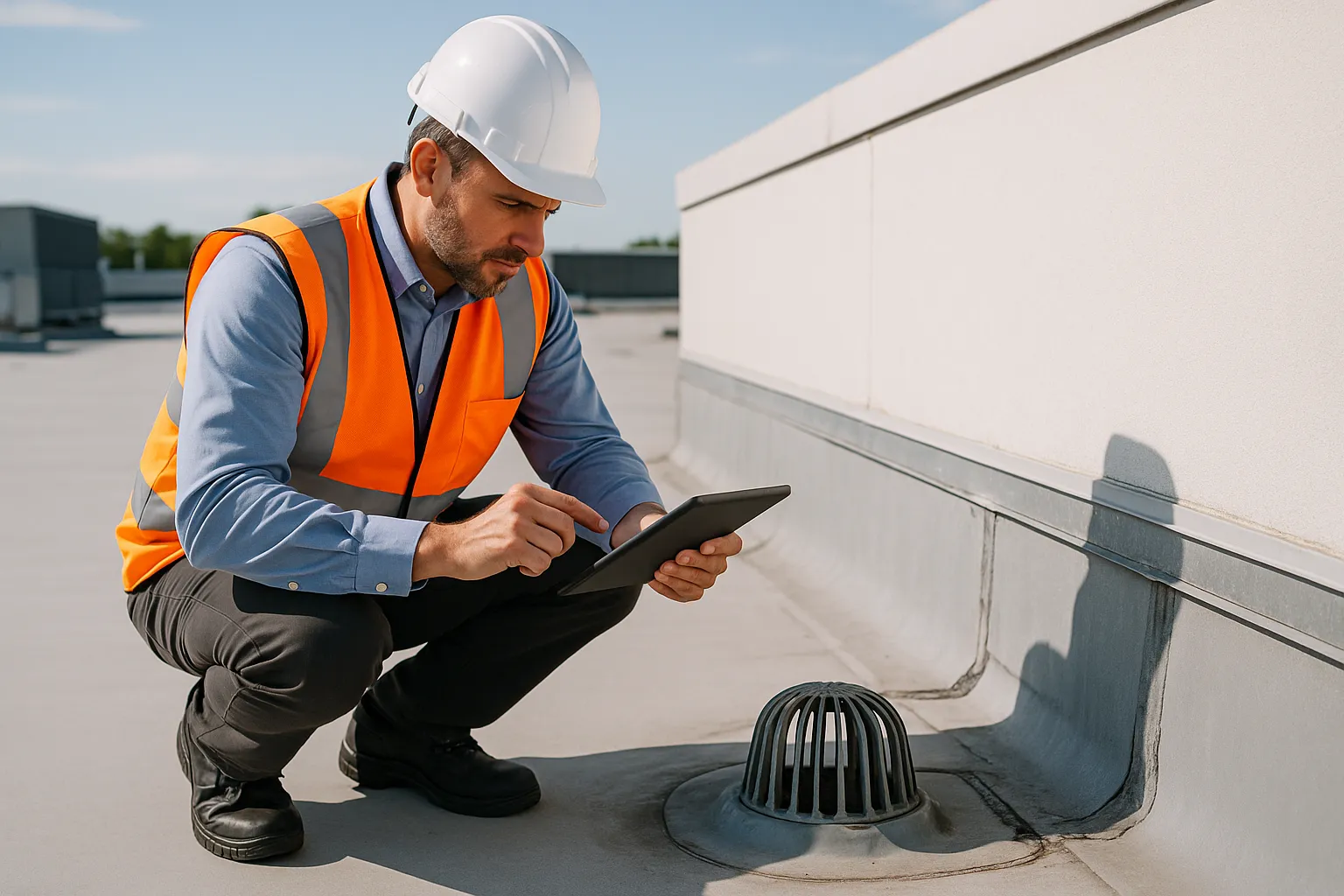
Maintenance vs. Emergency Cleaning: Cost and ROI for Commercial Properties
Commercial sources stress the value of planned maintenance for drains—monthly inspections, quarterly cleaning, and annual hydro‑jetting or comprehensive inspections.[3][4] Planned maintenance exposes developing problems before they escalate, and hydro‑jetting sessions can reset the system’s performance in heavy-use buildings.[3]
For property managers, the ROI comes from fewer emergency call-outs, reduced interior damage, and extended roof and plumbing service life. Frequent storm drain cleaning is recommended when blockages or flooding happen regularly, with increased frequency in heavy rain or snow periods.[5] Maintaining areas around drains (sweeping leaves, trimming branches, cleaning trash) can reduce how often professional cleaning is required.[5]
Emergency commercial drain cleaning, by contrast, is required when roof drains back up, storm drains overflow, or sanitary lines impact operations. Emergency services are emphasized for commercial properties because sudden blockages can halt operations, damage inventory, and trigger code or health violations.[4]
In budget planning, consider:
- Preventative cleaning: predictable line item tied to roof and plumbing PM, lower unit cost per drain.
- Emergency response: premium rates, potential overtime, plus interior restoration and business interruption costs.
- Lifecycle impact: well-maintained drains reduce premature roof replacement and structural repairs, especially on older EPDM, modified bitumen, and BUR systems.
Predictive and proactive strategies—regular inspections, camera surveys, and data-driven scheduling—are increasingly used to prevent downtime in facilities.[6] Tying drain cleaning records to your asset management platform supports capital planning for both roofs and plumbing systems.
Practical Checklists for Property and Facility Managers
Monthly roof and drain inspection checklist
- Walk all roof areas; note ponding, debris accumulations, and visible membrane damage.
- Inspect each roof drain, scupper, and overflow; ensure strainers and covers are in place and intact.[2]
- Remove visible debris from drain bowls and surrounding roof, especially near trees or HVAC equipment.[5]
- Check gutters and downspouts on metal roofs for obstructions and secure attachments.
- Review interior ceilings below roof drains for signs of leaks or staining.
Quarterly commercial drain cleaning checklist
- Schedule professional drain cleaning to clear buildup and inspect line condition.[3]
- Clean strainers, screens, and drain covers thoroughly to prevent debris buildup.[3]
- Conduct targeted camera inspections in lines with prior issues or slow drainage.[6][7]
- Review staff training on waste disposal and drain use to minimize grease and solids entering the system.[4]
- Update maintenance logs with findings and recommendations for roof or plumbing repairs.
Annual deep-clean and compliance checklist
- Perform comprehensive plumbing inspection, including all storm and roof drain lines.[3]
- Schedule at least one hydro‑jetting session for high‑use or historically problematic lines.[3][9]
- Verify that drain maintenance meets local regulations for wastewater disposal and stormwater management.[4]
- Assess roof system condition around drains and scuppers and plan repairs before the next wet season.
- Review maintenance records for trends and integrate them into capital planning for roof and plumbing replacements.[3][6]
Integrating these checklists into your facility management program ensures that commercial drain cleaning becomes a predictable, manageable process rather than a series of emergencies.
Frequently Asked Questions
How should property managers scope a commercial drain cleaning contract for a multi-building campus?
For campuses, specify roof drain, storm drain, and sanitary line cleaning frequencies by building type and risk, require camera inspections for problem lines, and include emergency response terms.[3][4][5] Ask about hydro‑jetting capability, vacuum trucks, and digital reporting so you can track performance and align cleaning with roof and plumbing lifecycle planning.[6]
What are the compliance and safety considerations around commercial drain cleaning?
Facilities must follow local regulations on wastewater disposal, stormwater management, and backflow prevention.[3][4] Safety protocols include fall protection on roofs, controlled water pressure to avoid aerosolizing contaminants,[2] and careful chemical use to protect pipe and membrane materials. Work with vendors who document procedures and meet regulatory standards.
How does commercial drain cleaning impact roof replacement decisions?
Consistent drain cleaning reduces chronic ponding and associated membrane and structural damage, often allowing property owners to defer full roof replacement in favor of targeted repairs. When cameras and inspections reveal failing piping or chronic backups, upgrading drains and leaders alongside roof replacement can deliver better long-term ROI than roof-only work.[3][6]
Is hydro‑jetting safe for older commercial buildings with legacy piping?
Hydro‑jetting is widely used for commercial drain cleaning, but older or corroded piping must be assessed first.[3][9] Vendors should perform camera inspections to confirm pipe condition and adjust pressure settings accordingly.[6][7] In some cases, mechanical snaking or partial line replacement may be safer than full-pressure jetting.
How can facility managers reduce the frequency and cost of professional storm drain cleaning?
Regularly maintaining areas around storm drains—sweeping leaves, removing trash, trimming branches—reduces debris entering catch basins and lowers cleaning frequency.[5] Monitoring drains for performance during rain events and adjusting schedules seasonally allows you to target vendor visits where they deliver the highest ROI.
Related Reading on My Roofing Tech
- Section 179 Expensing and Commercial Roofing: What Property Managers Need to Know
- Roof Drain Cleaning & Flat Roof Drainage: A Facility Manager's Guide
Find a Qualified Commercial Roofing Contractor
Need help acting on this? Browse roofing contractors in your area, or explore commercial roofing services like preventative maintenance, inspections, and emergency response. Are you a contractor? List your business on My Roofing Tech to reach property and facility managers actively searching for help.