 My Roofing Tech
Roof Coating Guide for Commercial Buildings: When to Repair, Restore, or Replace
Quick Answers for Property & Facility Managers
When does roof coating make sense for a commercial roof?
A roof coating usually makes sense when the roof is still structurally sound but shows weathering, minor cracking, seam stress, or recurring maintenance issues. For facility managers, the key question is whether coating can extend service life, reduce leaks, and delay replacement without hiding deeper substrate problems.
What is the biggest benefit of roof coating for property managers?
The biggest benefit is usually a combination of restoration and cost control. Roof coating can add a protective, seamless layer that helps reduce water intrusion, improve reflectivity, and delay full replacement, which can lower disruption for occupied commercial buildings and support better lifecycle budgeting.
How do I know if my building is a good candidate for roof coating?
A building is a better candidate if the deck is dry, the roof has no major structural failure, and the existing system can be cleaned, repaired, and properly prepared. A coating is not a substitute for fixing wet insulation, saturated assemblies, or major movement issues, so a pre-project inspection is essential.
Roof coating for commercial buildings: what it is and why it matters
Roof coating is a liquid-applied protective layer used on low-slope commercial roofs to help reduce water intrusion, slow UV damage, and improve surface performance without a full tear-off. For facility managers, property managers, and commercial real estate professionals, that matters because coatings can preserve capital, reduce downtime, and extend the useful life of an otherwise serviceable roof system. Roof coatings are widely used as restoration tools on commercial, industrial, and institutional buildings where minimizing disruption is a priority.
Coatings are especially relevant when a roof is aging but not yet at end of life. They can help restore waterproofing, improve reflectivity, and create a more seamless surface over the existing roof. Industry sources note that coatings can help reduce energy load and avoid tear-off in many restoration scenarios, but they are not a cure for structural failure or wet insulation.
How to decide whether roof coating is the right strategy
Start with a condition-based decision, not a product-first decision. The question for a commercial building owner or manager is whether the existing roof is repairable and dry enough to justify restoration. A roof coating may be a strong option when the membrane is aging, seams need reinforcement, leaks are localized, and the roof assembly is otherwise stable.
- Confirm the roof deck and insulation are not saturated.
- Identify active leaks, seam splits, flashing failures, and ponding areas.
- Determine whether the existing system can be cleaned and repaired to accept coating.
- Compare the cost of coating against recurring repairs and replacement timing.
- Review warranty requirements, manufacturer approvals, and substrate compatibility before committing.
For commercial portfolios, this is also a budgeting decision. Coating can be treated as a restoration project that may delay replacement, reduce tenant disruption, and support a phased capital plan. If the roof is beyond restoration, coating becomes a short-term patch rather than a lifecycle strategy.
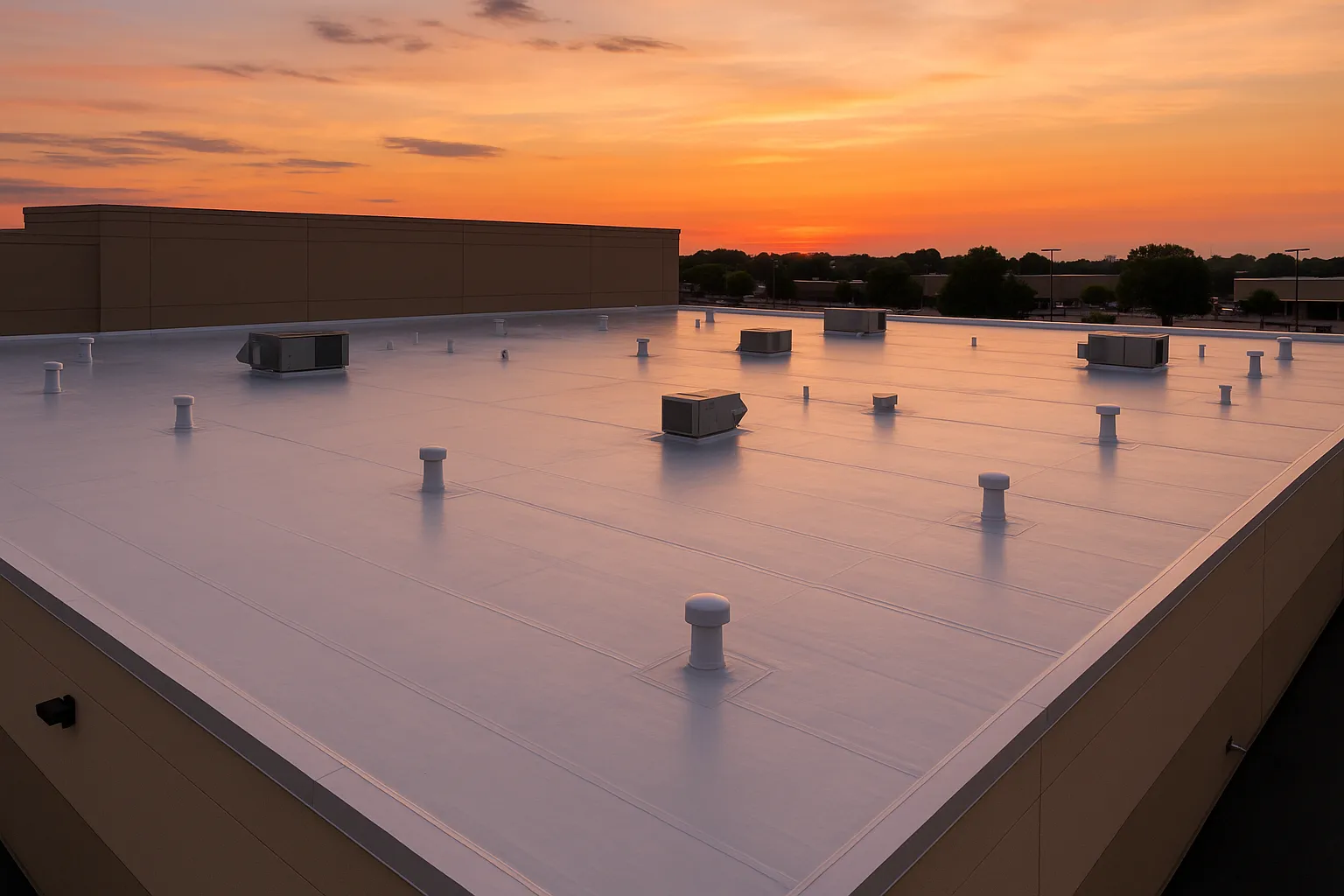
Roof system compatibility: TPO, PVC, EPDM, modified bitumen, BUR, and metal
Different roof systems need different coating approaches. Compatibility, surface prep, and primer selection matter more than the coating brand alone.
TPO and PVC membrane roofs
TPO and PVC are common low-slope membranes in commercial buildings, but not every coating bonds equally well to them. A successful project usually depends on detailed surface cleaning, adhesion testing, and using a manufacturer-approved system. For facility teams, this means verifying whether the coating is designed for thermoplastic membranes and whether the warranty will remain valid after application.
EPDM rubber roofs
EPDM often needs careful preparation because its surface can be slick and contaminated by chalking or field-applied treatments. Coating can be useful when the membrane is otherwise sound, but proper primer and adhesion testing are essential. EPDM roofs with widespread seam failure or wet insulation usually need more than coating alone.
Modified bitumen roofs
Modified bitumen is often a strong candidate for roof coating when the surface is dry and stable. Coatings can help reinforce aging seams, add UV resistance, and reduce surface deterioration. For property managers, this can be an efficient way to extend service life on a roof that still has useful structural capacity.
Built-up roofing (BUR)
BUR systems often respond well to coating because the roof already has multiple plies and a history of low-slope performance. Coating can reduce weathering and improve waterproofing, but the roof must be inspected for blisters, open seams, and wet areas first. On occupied buildings, BUR restoration can be attractive because it may avoid the disruption of a tear-off.
Metal and standing seam roofs
Metal roofs can be coated to reduce corrosion, seal fasteners, and improve reflectivity. Standing seam roofs require special attention at seams, penetrations, and fastener conditions. For warehouse and industrial owners, coating is often considered when the roof is structurally sound but showing oxidation, thermal movement stress, or minor leaks around details.
Step-by-step roof coating project process for facility teams
A commercial roof coating project should follow a controlled process, not a field guess. The goal is to build a durable, inspection-friendly restoration plan.
- Step 1: Commission a full roof inspection and moisture assessment.
- Step 2: Map leaks, seam issues, flashing defects, drains, and ponding zones.
- Step 3: Verify substrate compatibility and manufacturer requirements.
- Step 4: Perform targeted repairs before any coating work begins.
- Step 5: Clean the roof thoroughly to remove dirt, chalking, oils, and loose material.
- Step 6: Test adhesion in representative roof areas.
- Step 7: Apply primer if required by the roof system or coating manufacturer.
- Step 8: Reinforce seams, penetrations, transitions, and flashings with approved detail materials.
- Step 9: Apply the coating at the specified thickness and coverage rate.
- Step 10: Document the work, inspection results, warranty terms, and maintenance schedule.
For occupied buildings, sequence the work to limit disruption at loading docks, entrances, rooftop HVAC zones, and tenant-sensitive areas. A coating project is often faster and less disruptive than replacement, but only when the prep work is disciplined.
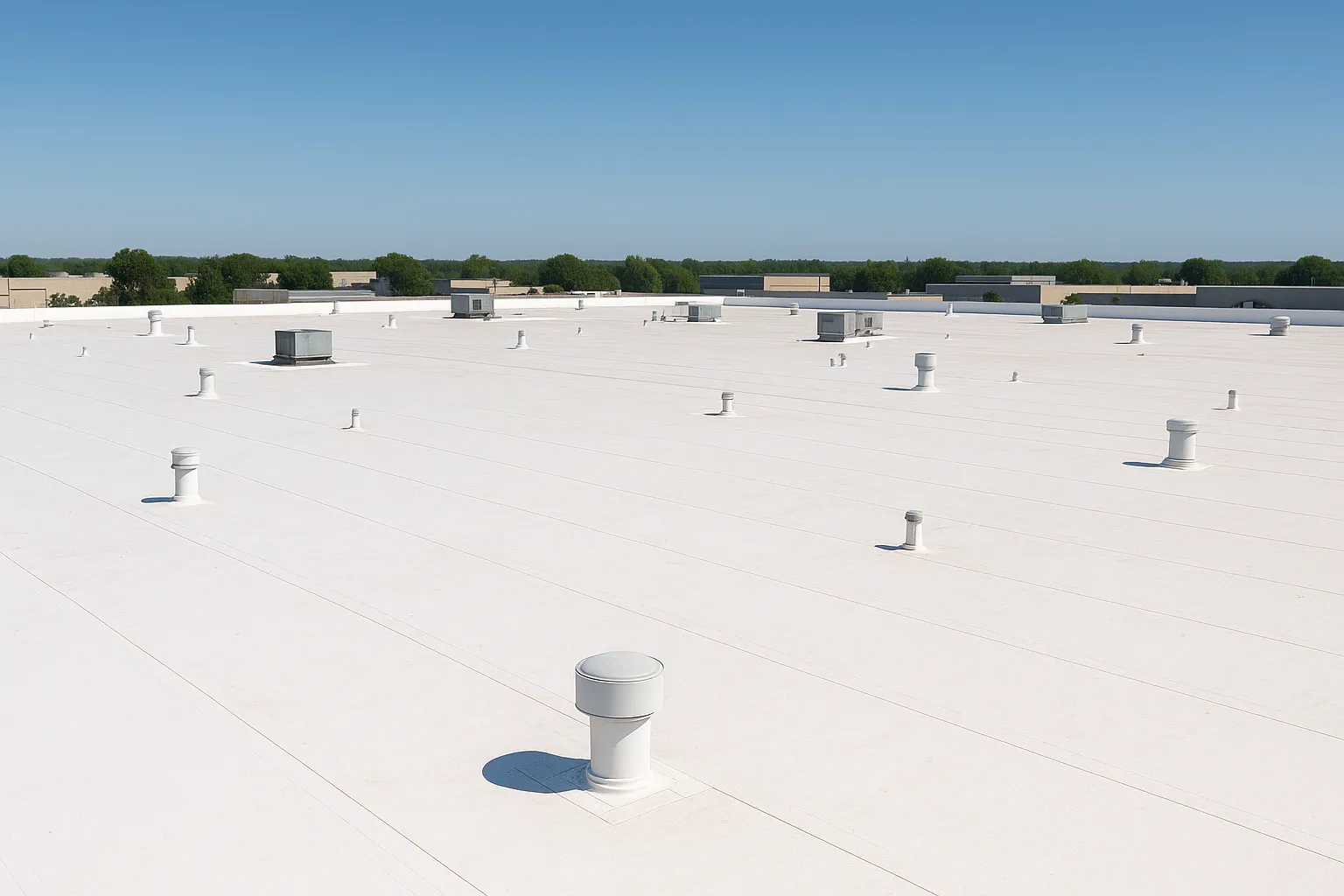
Roof coating checklist for commercial property managers
Use this checklist before approving a roof coating project:
- Roof age and history reviewed
- Leak locations documented
- Moisture scan completed
- Core cuts or substrate confirmation completed if needed
- Drainage and ponding areas identified
- Repairs to seams, flashings, and penetrations specified
- Manufacturer-approved coating system selected
- Warranty terms reviewed in writing
- Budget compared against repair and replacement alternatives
- Maintenance plan established after application
If any of these items are missing, the project risk rises quickly. A coating that is applied to a compromised roof can fail early and create a false sense of security.
Cost, ROI, and lifecycle planning: repair vs. maintenance vs. full replacement
For commercial real estate professionals, the financial value of roof coating is not just upfront cost. It is the relationship between current repairs, avoided downtime, and deferred capital replacement. Industry sources consistently position coatings as less disruptive and less expensive than full replacement for roofs that are still viable, with potential energy and maintenance benefits as well.
Use this framework when evaluating ROI:
- Repair is best for isolated defects, urgent leaks, or localized damage.
- Maintenance is best for extending life through inspections, cleaning, and small corrective work.
- Roof coating is best when the roof is aging but still structurally usable and you want to restore performance.
- Replacement is best when the deck, insulation, or membrane system has failed beyond economical restoration.
Coating can be especially compelling for large roof areas on office, retail, warehouse, healthcare, and institutional buildings because even modest reductions in energy use, repairs, and tenant disruption can improve total project value. For finance and facilities teams, the right question is whether coating delays replacement long enough to justify the restoration spend while keeping operational risk under control.
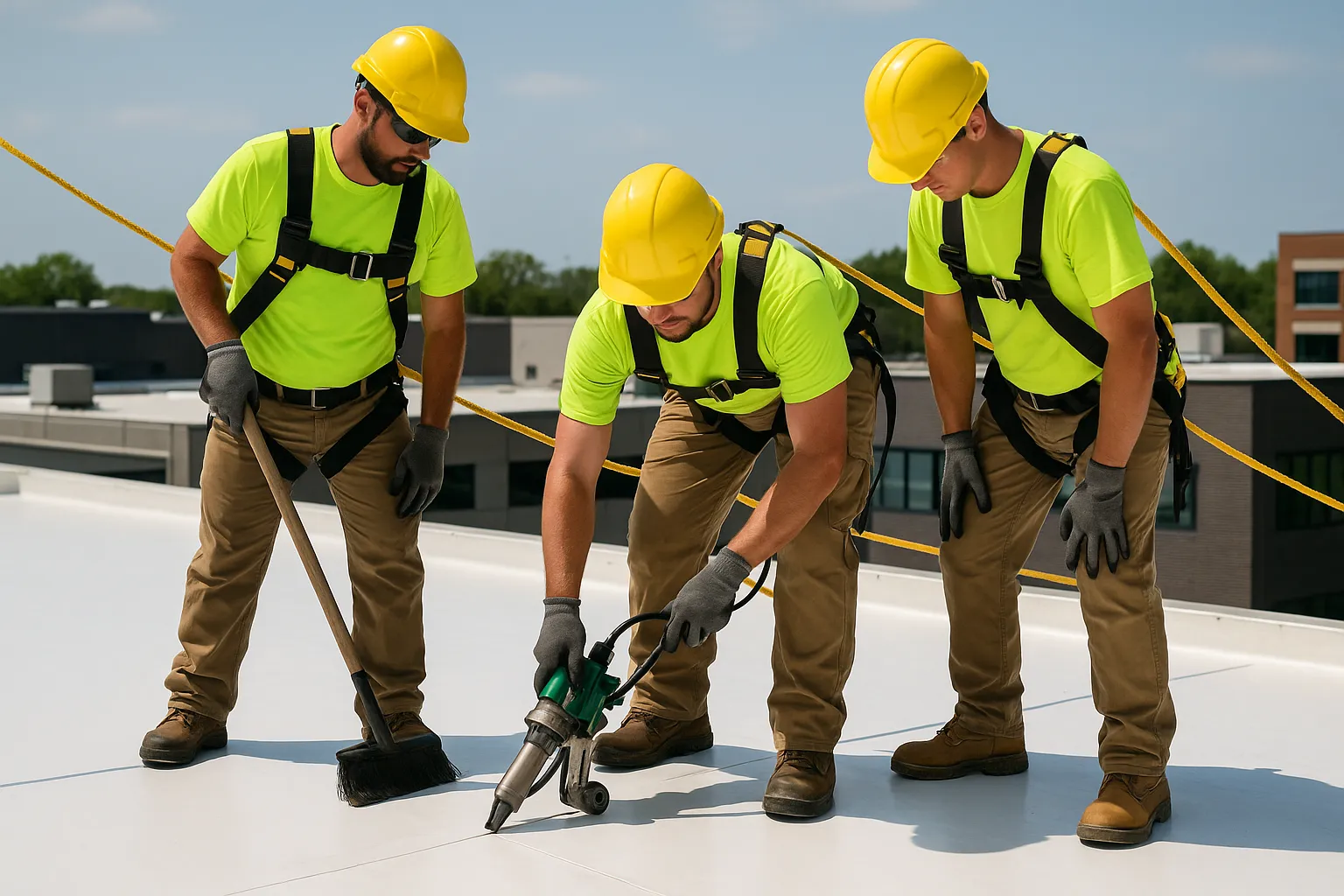
Maintenance after roof coating: how to protect the investment
A roof coating is not a one-and-done asset. The building still needs inspection and maintenance to preserve performance. The best-performing commercial portfolios treat coating as part of a broader roof asset management program.
- Inspect the roof at least twice per year and after major storms.
- Keep drains, scuppers, and gutters clear.
- Monitor ponding areas and check for coating wear.
- Document all penetrations added after the coating project.
- Repair mechanical damage, punctures, and flashing issues promptly.
- Track warranty requirements and any recoat intervals.
That maintenance discipline matters most on facilities with rooftop equipment, frequent service traffic, or large exposure to solar load and thermal cycling. The roof coating can only perform as well as the building’s ongoing inspection program.
What commercial buyers should ask before approving a roof coating contractor
Before awarding a project, ask for proof of system compatibility, surface prep method, detail treatment, and warranty support. You should also ask how the contractor will handle wet areas, terminations, ponding water, and post-installation inspection. A qualified commercial contractor should be able to explain why coating is appropriate for your specific roof type and building use, not just sell the product.
For facility managers and property managers, the most valuable roof coating proposal is the one that clearly shows risk reduction, expected service-life extension, maintenance assumptions, and how the project fits into a larger capital plan.
Frequently Asked Questions
How long does a commercial roof coating last?
Service life depends on the roof condition, coating chemistry, thickness, climate, and maintenance program. In practice, roof coating is best viewed as a restoration layer that can extend useful life when installed on a sound substrate. For commercial owners, the real value is whether the coating delays replacement long enough to improve lifecycle cost and reduce disruption.
Is roof coating a substitute for full roof replacement?
No. Roof coating is a restoration strategy, not a fix for a failed roof assembly. If the deck is wet, insulation is saturated, or the membrane is beyond repair, replacement is usually the right decision. Coating is most effective when the existing system still has enough life left to justify restoration.
Does roof coating help with energy costs?
Yes, reflective roof coating can reduce heat gain on low-slope commercial roofs and may lower cooling demand, especially on large facilities with significant HVAC loads. The value is highest when the roof has strong sun exposure, the building is air-conditioned, and the coating is selected and maintained for reflectivity performance.
What roof types are best suited for coating on commercial buildings?
Common candidates include modified bitumen, BUR, certain metal roofs, and some membrane systems such as EPDM, TPO, and PVC when compatibility is verified. The deciding factors are moisture condition, surface prep, adhesion, and whether the manufacturer approves the full system. Roof type alone does not determine suitability.
What should a facility manager verify before approving roof coating work?
Verify moisture conditions, substrate compatibility, repair scope, warranty terms, and contractor experience with commercial low-slope systems. You should also confirm how the project will address seams, flashings, penetrations, drains, and ponding areas. Those details often determine whether the coating delivers lasting value or fails early.
Related Reading on My Roofing Tech
- SRS Distribution Acquires CORCO Commercial Roofing Division: What Chicago Facility Managers Need to Know
- Flat Roof Replacement Guide for Commercial Buildings: Systems, Costs, and ROI
Find a Qualified Commercial Roofing Contractor
Need help acting on this? Browse roofing contractors in your area, or explore commercial roofing services like preventative maintenance, inspections, and emergency response. Are you a contractor? List your business on My Roofing Tech to reach property and facility managers actively searching for help.