 My Roofing Tech
Commercial Roof Leak Repair: Step‑By‑Step Guide for Facility Managers
Quick Answers for Property & Facility Managers
How should facility managers handle commercial roof leak repair when a leak appears during business hours?
Start commercial roof leak repair by protecting people and equipment, isolating slippery areas, and moving or covering inventory under the leak.[2][3] Capture water with buckets, document damage with photos, then call a licensed commercial roofing contractor to locate the source and design a compliant repair scope.[3][5]
What are the main steps in professional commercial roof leak repair on a flat or low-slope roof?
Professional commercial roof leak repair typically includes interior damage documentation, roof access safety assessment, visual surface survey, moisture mapping, and core sampling to identify wet insulation.[5] The contractor then defines repair scope, removes saturated materials, repairs deck and insulation, and installs compatible membrane patches before testing and closing permits.[5]
When does a commercial roof leak mean full replacement instead of simple repair?
If moisture mapping and core cuts show widespread saturated insulation, multiple leaks, or structural deck damage, spot repairs are no longer cost-effective.[5] In those cases, contractors often recommend section replacement or full reroof, especially on aging membranes with recurring seam and flashing failures.[5][6]
Why Commercial Roof Leak Repair Matters for Managed Properties
For offices, warehouses, retail centers, and healthcare facilities, a roof leak is not just a maintenance issue—it is a business risk. Uncontrolled leaks can damage inventory and equipment, disrupt tenants, trigger safety incidents, and compromise warranties and insurance coverage.[3][2] Facility and property managers need a structured, defensible process for commercial roof leak repair that prioritizes safety, preserves asset value, and controls lifecycle cost.
Effective commercial roof leak repair starts with protecting occupants and operations, then moves through systematic investigation, roof-system-specific repairs, and long-term prevention planning.[2][5][10]
Immediate Safety and Damage Control When a Leak Appears
The first minutes of a leak event are about controlling risk inside the building, not climbing on the roof.[2][3] As a manager, your action items are:
- Protect people first. Isolate slippery floor areas with cones or barriers, redirect foot traffic, and keep staff away from sagging ceilings or visible bulges.[2][3]
- Check electrical exposure. If water is near lighting, panels, or equipment, de-energize affected circuits and escalate to appropriate qualified trades; water and electricity are a critical safety hazard.[2][3]
Relocate inventory and electronics where possible, or cover them with plastic tarps or waterproof sheeting to limit damage.[2][3][8] - Capture and contain water. Place buckets or collection tubs under active drips and use plastic sheeting or absorbent materials to keep water from spreading across floors.[2][3][8]
- Document conditions. Take time-stamped photos of interior damage, water paths, ceiling staining, and any standing water; these records support insurance claims and repair scoping.[2][3][5]
- Map the location. Mark the interior leak location relative to columns, walls, and grid lines so roof technicians can find the probable rooftop search area more quickly.[2]
Once the situation is stable, contact a licensed commercial roofing contractor with experience in your roof system type—DIY patches by staff often void manufacturer warranties or mask deeper moisture problems.[3][5]

Professional Leak Investigation: How Contractors Diagnose Commercial Roof Leaks
Successful commercial roof leak repair depends on accurate diagnosis. Modern contractors follow a structured investigation process for low-slope systems.[5][6][7]
1. Roof access and safety compliance
Before anyone goes onto the roof, contractors verify fall protection and access safety per OSHA requirements, especially around edges and near skylights or fragile deck sections.[5][7] As the manager, confirm your rooftop has safe access ladders and anchor points and that your contractor follows OSHA 29 CFR standards.[5]
2. Visual rooftop survey
Technicians document membrane condition, seams, flashings, penetrations, drains, and ponding areas, focusing within the probable leak zone mapped from inside.[5][6][7] Typical visual checks include:
- Loose or open seams and laps on TPO, PVC, EPDM, and modified bitumen.[4][7]
- Cracked or shrunken sealant at HVAC curbs, pipe penetrations, and skylights.[6][7]
- Damaged or displaced flashing along parapet walls, edges, and transitions.[7]
- Ponding water that remains more than 48 hours after rainfall, which often signals low areas or clogged drains.[6]
- Foot-traffic damage around rooftop equipment, such as punctures or crushed insulation.[6]
3. Moisture mapping and core sampling
Because water often travels within insulation and deck assemblies, contractors use specialized tools to locate hidden moisture. This can include infrared thermography under appropriate temperature conditions or nuclear moisture meters.[5] Once wet zones are identified, 3–5 core samples in suspect areas confirm the presence and extent of saturation, insulation type, and deck condition.[5]
4. Repair scope determination
Using survey and testing data, the contractor classifies the project as spot repair, sectional replacement, or full overlay/replacement.[5] They also check whether the leak work triggers permit thresholds under building codes and whether an existing manufacturer warranty requires an authorized applicator.[5]
For facility managers, this diagnostic phase is where scope, cost range, and schedule become clear. Ask for written findings, photos, and a moisture map so you can justify decisions to owners and tenants.[5]
Commercial Roof Leak Repair by System Type
Repair methods vary significantly by roof system. Understanding basic approaches helps managers evaluate contractor proposals and ensure work is compatible with existing materials.
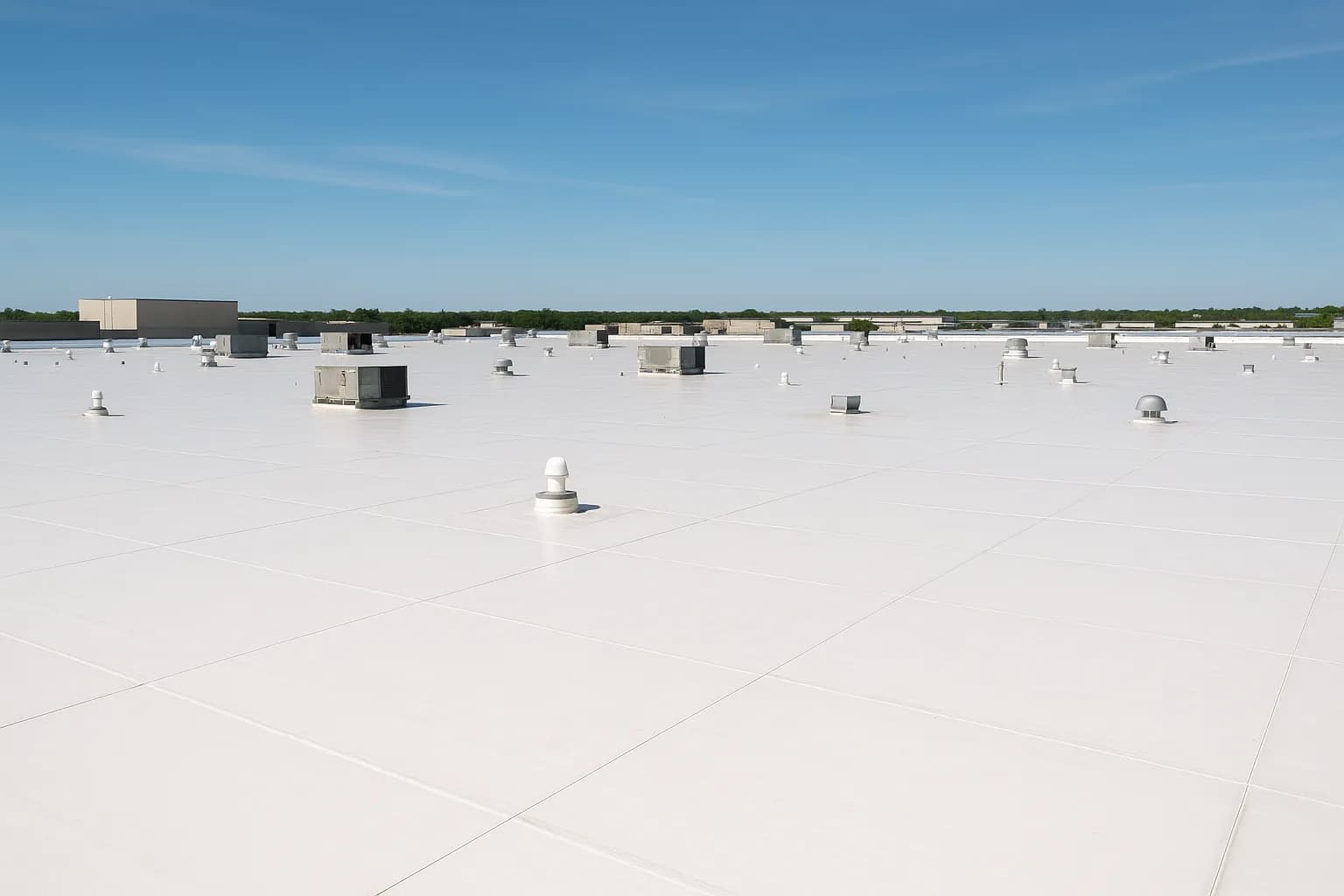
TPO and PVC thermoplastic membranes
Leaks often occur at seams, penetrations, and punctures. Typical repair steps include:
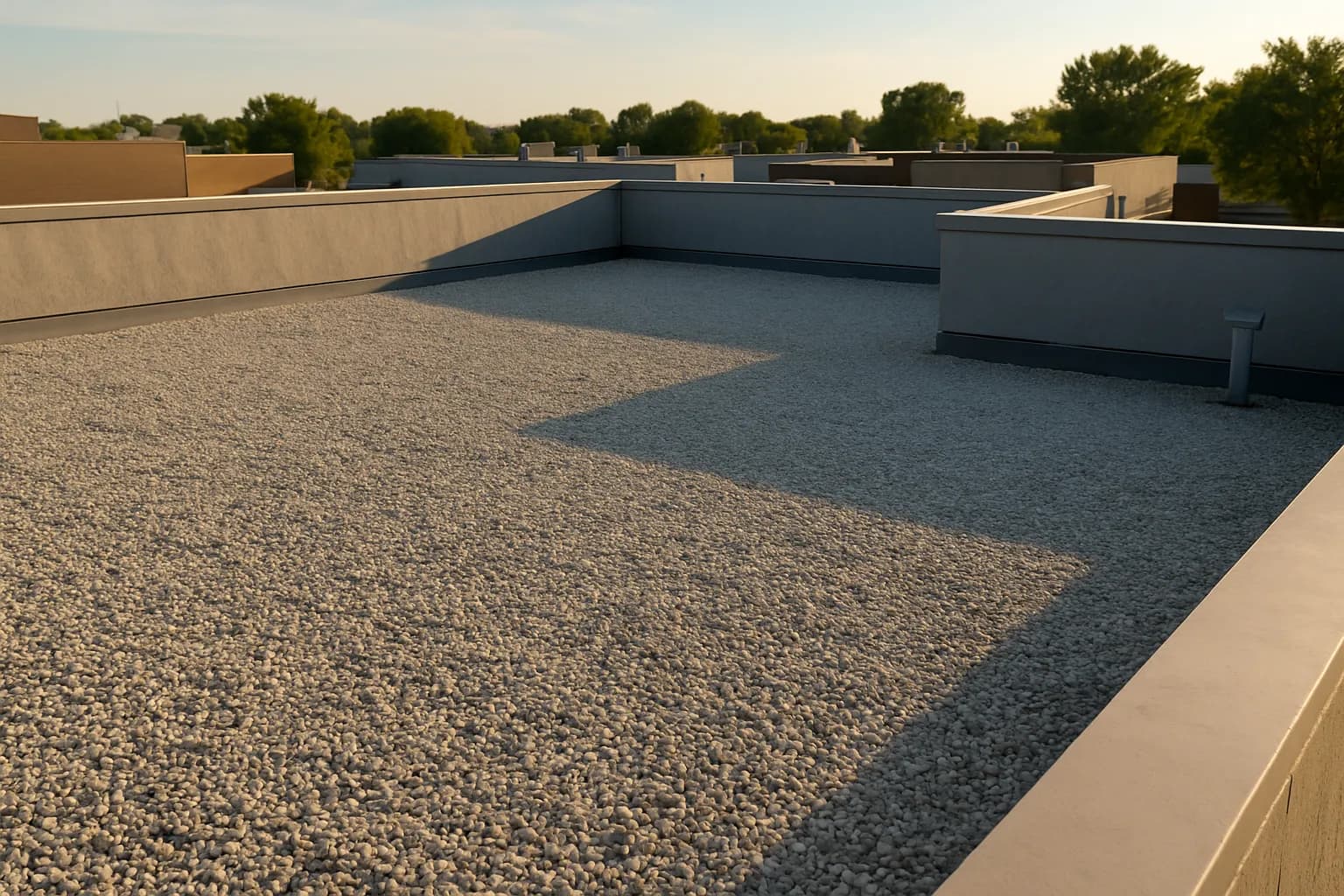
- Clear debris and clean. Remove loose gravel, dirt, and contaminants; clean with manufacturer-approved cleaner and a stiff brush.[4][7]
- Dry completely. The membrane must be dry for adhesives or welding to bond correctly.[4]
- Seam and patch work. For open seams, technicians clean, prime if required, and re-adhere using manufacturer-specific adhesives or hot-air welding, often reinforcing with a wider strip of compatible membrane.[4] Punctures are patched with factory membrane and minimum 6-inch overlaps, welded around the perimeter.[4][5]
Done correctly, local TPO/PVC repairs can extend roof life by several years and are often more cost-effective than premature replacement, particularly on relatively young membranes.[4][5]
EPDM (rubber) roofs
EPDM leaks typically stem from seam separation, punctures, or aged flashing. Repair methods include cleaning the area, applying appropriate primer, and installing EPDM patch material or seam tape with sufficient lap and roller pressure.[4][7] Sealant may be renewed around penetrations, but structural defects require membrane patching rather than caulk-only fixes.[4]
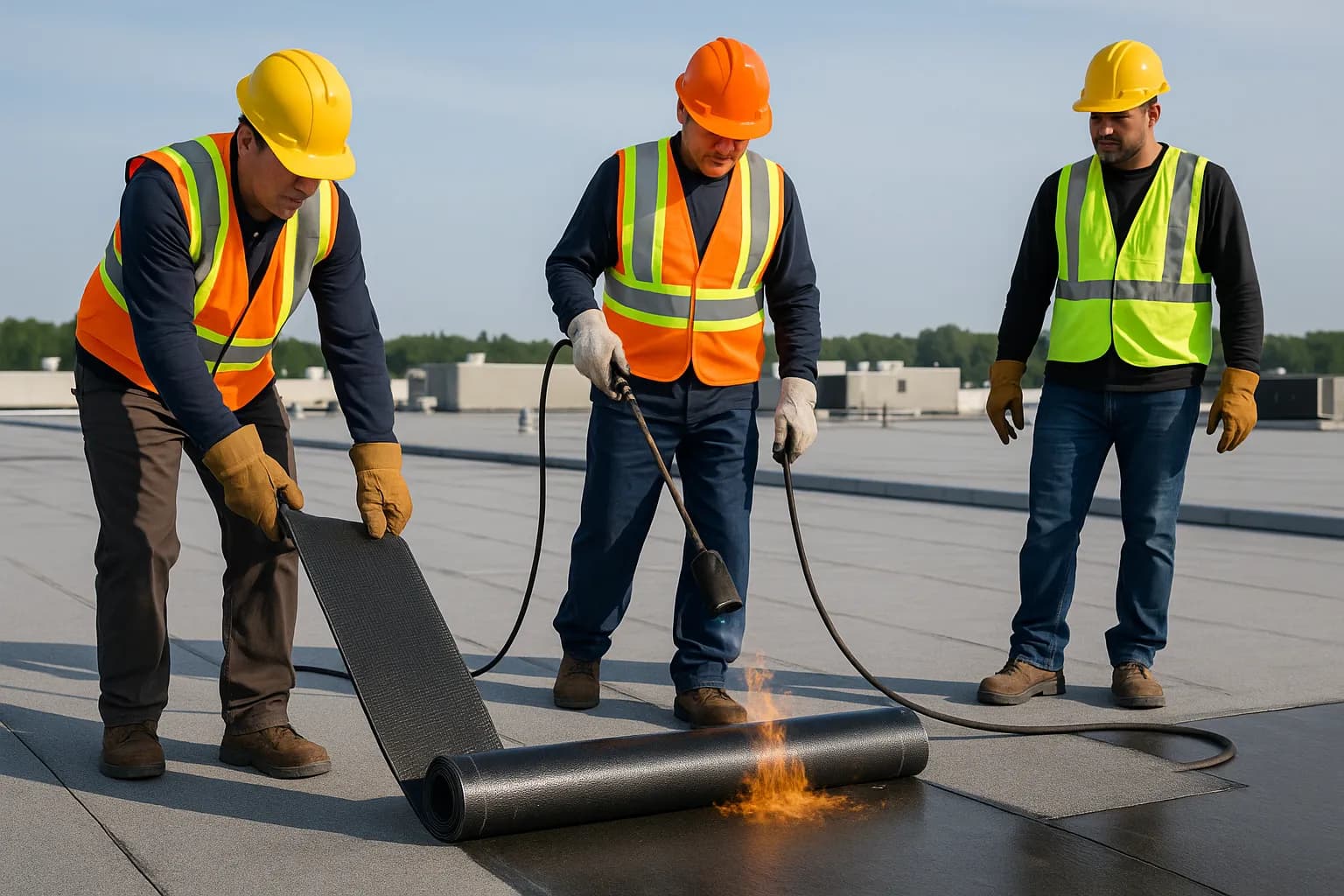
Modified bitumen and built-up roofing (BUR)
These asphalt-based systems may fail at blisters, splits, and flashing details. Common repair steps include:
- Cutting and removing blistered or saturated plies to a dry boundary.[5]
- Repairing or replacing damaged insulation and confirming deck integrity.[5]
- Installing new modified bitumen plies or BUR layers with proper adhesion and staggered laps, then reinforcing flashing transitions.[4][5]
Because these systems often conceal moisture within multiple plies, the investigation stage is critical; superficial patches over wet insulation rarely perform long-term.[5]
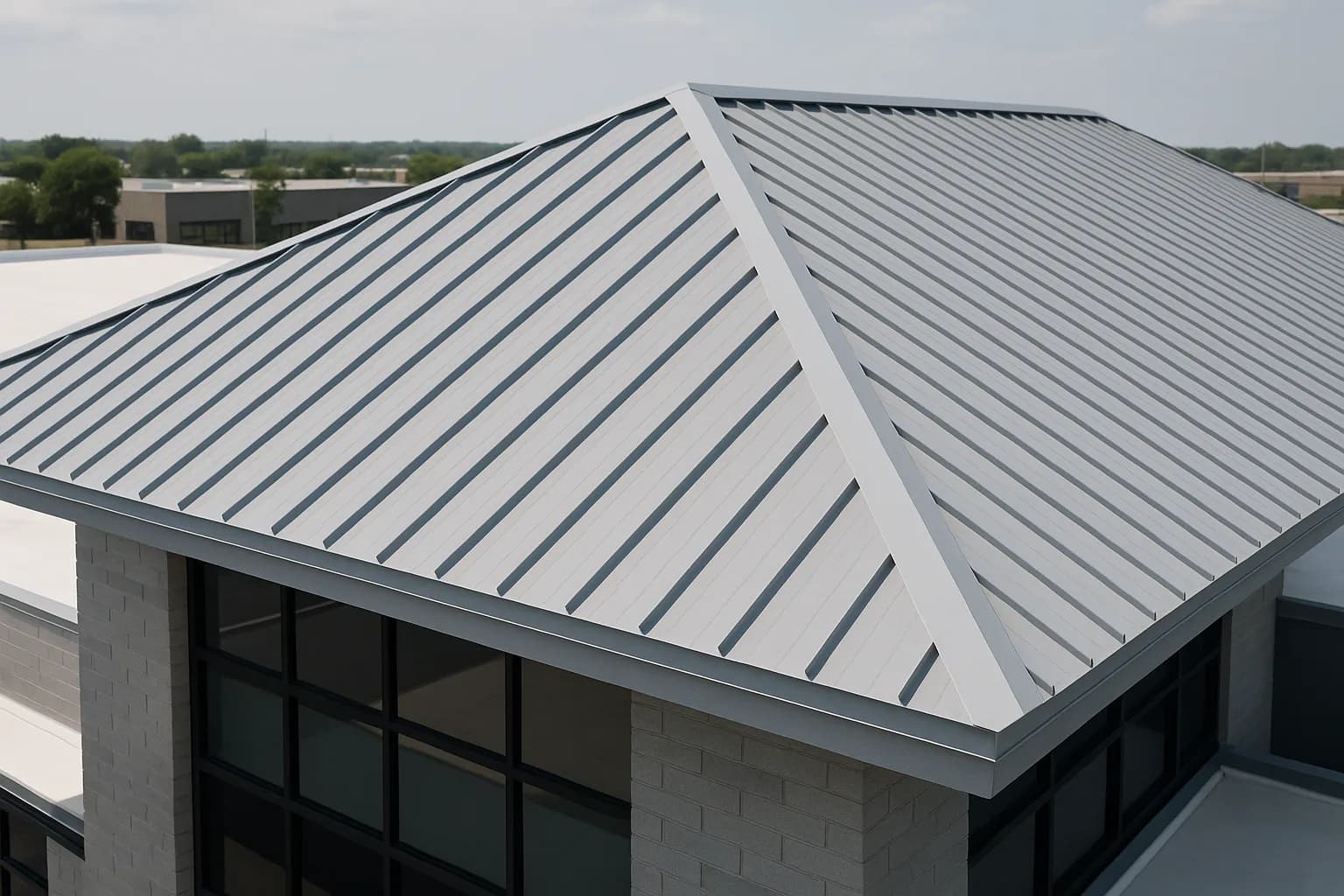
Metal and standing seam roofs
On metal roofs, leaks are frequently associated with failed fasteners, movement at panel laps, or deteriorated sealant at penetrations. Repairs can include installing new gaskets or fasteners, re-sealing panel joints with compatible, UV-stable sealant, and replacing or upgrading penetration flashings.[7] For widespread issues, an elastomeric coating system can sometimes be applied after preparation and priming to improve watertightness, though this must follow manufacturer guidelines.[8]

From Emergency Fix to Long-Term Strategy: Repair vs. Maintenance vs. Replacement
For commercial roof leak repair, the immediate goal is dry-in, but your asset strategy should consider lifecycle cost and risk.[2][3][5]
Spot repair and localized remediation
When leaks are limited and moisture mapping shows small saturated zones, spot repairs with compatible patches and localized insulation replacement are often the most economical path.[5] This approach minimizes disruption and can be completed quickly, which is critical for occupied office, retail, and healthcare environments.
Industry guidance notes that responding within 24–48 hours to leaks and performing proper repairs is typically far less expensive than dealing with extensive interior damage and mold remediation later.[3]
Preventative maintenance
Many commercial roof leaks are avoidable with routine inspections and proactive maintenance. Best practices include inspecting roofs at least twice a year (spring and fall) and after major storms, clearing drains and gutters, checking seams and flashings, and addressing minor defects before they become leaks.[6][10]
For managers, establishing a documented maintenance program supports warranty compliance, reduces emergency calls, and helps demonstrate due diligence to owners and insurers.[10]
Sectional or full replacement
When diagnostics reveal extensive saturated insulation, multiple failure points, or deck corrosion, continuing to patch often becomes a false economy.[5] In such cases, contractors may recommend:
- Section replacement to remove and rebuild heavily damaged areas while preserving the rest of the roof.[5]
- Full reroof or overlay when the membrane is at the end of its service life, or when code requirements and warranties favor complete replacement.[5]
Though capital-intensive, replacement can reset leak risk, improve energy performance with new insulation, and reduce ongoing maintenance costs, especially on very old or poorly installed roofs.[5][10]
Practical Checklist for Facility and Property Managers
Use this condensed checklist to manage commercial roof leak repair across your portfolio:
During the leak event
- Secure the area, protect occupants, and control slip and electrical hazards.[2][3]
- Move or cover inventory and electronics; capture water with containers.[2][3][8]
- Photograph interior damage, water paths, and affected areas for records.[2][3][5]
- Map interior leak location using building grid lines or landmarks.[2]
- Notify tenants about temporary restrictions and expected timelines.[2]
- Contact a qualified commercial roofing contractor and share documentation.[3][5]
During investigation and repair
- Confirm the contractor’s safety plan and roof access procedures.[5][7]
- Request a written roof survey, photos, and moisture map.[5]
- Ask how proposed repairs align with manufacturer specifications and warranties.[5]
- Verify whether permits or inspections are required by the local authority.[5]
- Ensure saturated insulation and compromised deck sections are fully removed and replaced, not just covered.[5]
- Require post-repair hose or flood tests to confirm watertightness.[4][5]
For long-term prevention
- Implement semiannual roof inspections and post-storm checks.[6][10]
- Maintain clear drains and scuppers to prevent ponding.[6]
- Standardize rooftop access controls to reduce foot-traffic damage.[6][7]
- Keep organized records of all inspections, repairs, and warranty documents.[5][10]
By following these structured steps and aligning with qualified commercial roofing professionals, facility and property managers can treat commercial roof leak repair as a manageable, repeatable process rather than a recurring emergency.
Frequently Asked Questions
What does commercial roof leak repair typically cost and how should managers evaluate ROI?
Costs range widely depending on leak severity, roof type, and how much insulation or deck must be replaced.[5] Localized repairs are usually far less expensive than interior damage from unresolved leaks.[3] Managers should compare repair proposals with moisture-map data and remaining roof life, weighing reduced risk, warranty compliance, and avoided business disruption.[5][10]
Can in-house maintenance staff perform commercial roof leak repair without voiding warranties?
Many manufacturer warranties require that leak repairs be performed or supervised by authorized contractors.[5] In-house staff can safely manage interiors, documentation, and basic drain cleaning, but membrane patches or flashing work may void coverage if not done per specifications. Always review warranty terms and consult the manufacturer before authorizing internal repairs.[3][5]
How quickly should facility managers respond to a commercial roof leak to minimize damage?
Industry guidance emphasizes acting within 24–48 hours to prevent water from spreading through insulation and structural materials.[3] Immediate steps include protecting occupants, moving or covering assets, documenting damage, and calling a qualified commercial roofer for emergency dry-in. Prompt response greatly reduces interior damage, mold risk, and tenant disruption.[2][3]
What inspection schedule helps prevent future commercial roof leaks on low-slope roofs?
Best practice is to inspect commercial roofs at least twice per year—commonly in spring and fall—and after major storm events.[10] Inspections should focus on drains, ponding areas, seams, flashings, and penetrations, as well as signs of interior staining.[6][10] A documented inspection program supports early defect detection and warranty compliance.
How should managers prioritize roof leak repair projects across a multi-building portfolio?
Prioritize buildings where leaks threaten safety, critical operations, or high-value inventory, such as healthcare, data, or major retail.[2][3] Use moisture mapping and core data to classify each roof as spot-repair, sectional replacement, or full reroof.[5] Allocate capital toward roofs with recurring leaks or widespread saturation, while using preventative maintenance to extend life elsewhere.[5][10]
Related Reading on My Roofing Tech
- 9 Major Commercial Roofing Developments Facility Managers Must Watch
- EnergySmart Roofing Membranes Upgraded for 2026 Cool-Roof Codes
Find a Qualified Commercial Roofing Contractor
Need help acting on this? Browse roofing contractors in your area, or explore commercial roofing services like preventative maintenance, inspections, and emergency response. Are you a contractor? List your business on My Roofing Tech to reach property and facility managers actively searching for help.